











A PROJECT WITNESS SERIES · MICROSHORT STORIES
EPISODE 1
The Forger
An eighteen-year-old Jewish forger in occupied Paris races to produce nine hundred identity papers for three hundred children marked for deportation — because every hour he sleeps, thirty people die.
Showing lesson plan for Grades 9–10.
About This Film
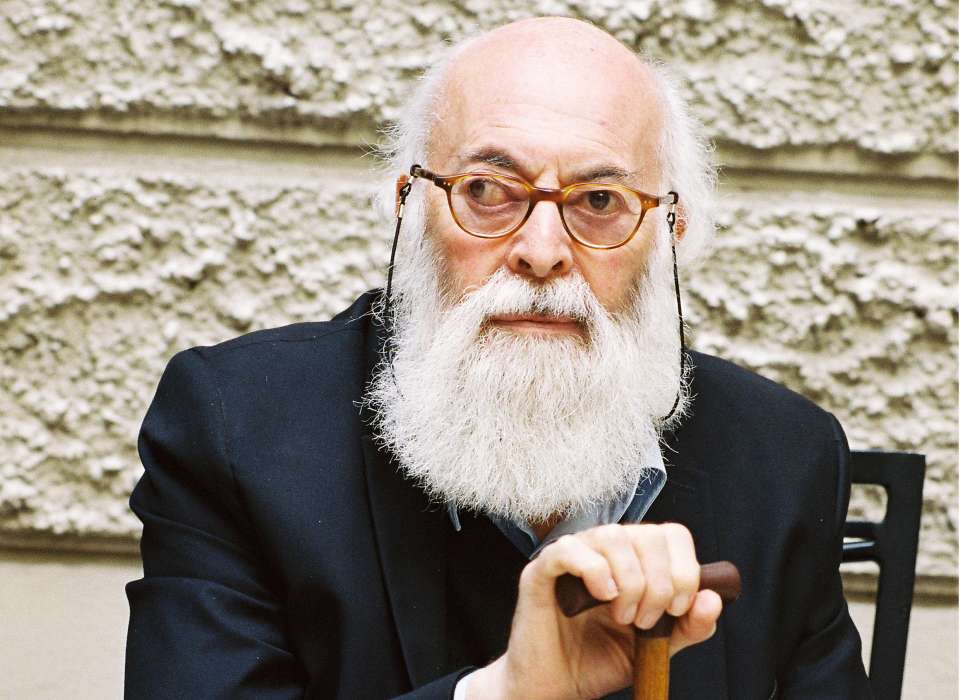
Adolfo Kaminsky (1925–2023), Paris
Adolfo Kaminsky was eighteen years old, Jewish, and hiding in a Paris attic he had disguised as an artist’s studio. His survival depended on invisibility. Before the war, he had worked in a dye shop, and in learning the chemistry of color, he made a discovery that would define the rest of his life: a solution of lactic acid — found in ordinary milk — could erase the official inks stamped on French identity documents. If you could erase an ink, you could change a name. If you could change a name, you could save a life. Kaminsky began forging papers for the French Resistance.
Then a courier arrived at his door with a list. Three hundred Jewish children were living in orphanages and convents across Paris. The Nazis knew where they were. Deportation orders had been signed. Each child required three forged documents: an identity card, a ration card, and a certificate of non-Jewish status. Nine hundred documents in total. Three days. Kaminsky was alone. He sat down and did the arithmetic: he could produce thirty documents per hour. If he slept for one hour, thirty people would die. He did not sleep.

The list arrives — 300 children, 900 documents, three days

Kaminsky, as depicted in The Forger, working through the night
By the end of the war, Kaminsky’s forgeries were estimated to have saved fourteen thousand lives. He never accepted a single franc in payment. He lost partial sight in one eye from the strain of close work under lamplight. After liberation he continued forging — for Algerian independence fighters, for anti-apartheid activists in South Africa, for refugees who needed to become someone else in order to survive. He lived quietly in Paris, nearly unknown, until a 2009 book by his daughter brought his story to public attention. Adolfo Kaminsky died on January 9, 2023, at the age of ninety-seven.
About This Lesson Plan
This lesson plan is designed around a single 90-second microshort film — a format that combines the emotional power of documentary storytelling with the time constraints of a real classroom. It follows a four-step structure: Watch (pre-viewing context and the film itself), Analyze (discussion and close reading), Create (structured creative response), and Reflect (personal connection and exit thinking). Each step is differentiated across three grade bands (7–8, 9–10, 11–12) so a single film can serve an entire department. Extension activities and full standards alignment are available in the dedicated tabs above.