The persecution began earlier. The scale began on September 1, 1939, when
Germany invaded Poland and began the occupation of Europe's largest Jewish community.
This page follows two clocks through the same two days: one in Poland, one in Washington.
Every figure on it is sourced, and where the historians disagree we show the disagreement.
Project Witness records and preserves Holocaust survivor testimony. This page is free to use,
in classrooms and out of them.
Written for readers 14 and up. Some passages describe bombing, shootings and the deaths of
civilians.
Two clocks, six hours apart
Warsaw
Friday, September 1
4:30 to 5:40 a.m.
Washington
Thursday, August 31
10:30 to 11:40 p.m.
1 of 9
Warsaw: Friday, September 1, 4:30 to 5:40 a.m.Washington: Thursday, August 31, 10:30 to 11:40 p.m.
The sources disagree on this time, so the dials show the whole span.
In Poland. Wieluń. The first bombs fall on a town with no military target. The time is disputed: as early as 4:30 in accounts collected by the historian Tadeusz Olejnik, 4:40 in those of the town’s inhabitants and Polish border guards, 5:40 in Luftwaffe documents and in the 2011 finding of Poland’s Institute of National Remembrance.
In Washington. It is still Thursday night. The first word will reach the President at 2:50 a.m.
Warsaw: Friday, September 1, about 4:45 a.m.Washington: Thursday, August 31, about 10:45 p.m.
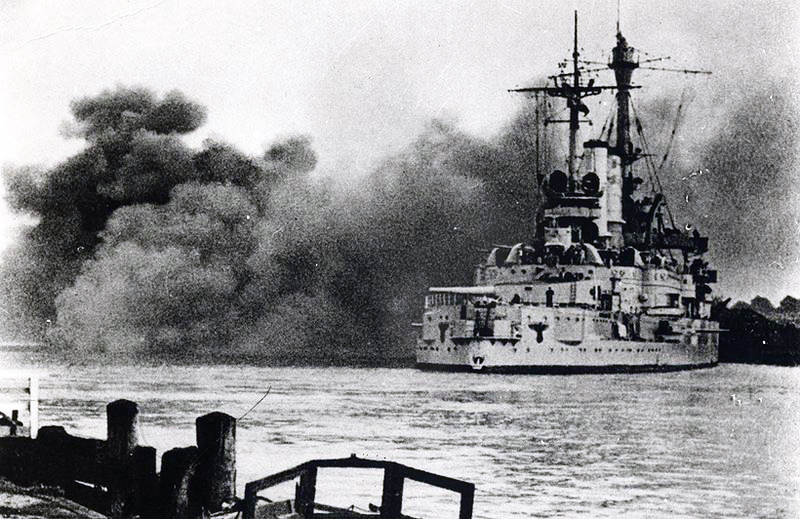
In Poland. Danzig. The battleship Schleswig-Holstein opens fire on the Polish garrison at the Westerplatte, the moment usually given as the opening of the Second World War.
Warsaw: Friday, September 1, 8:50 a.m.Washington: Friday, September 1, 2:50 a.m.
In Poland. The raid on Wieluń goes on until about 2 p.m.
In Washington. The telephone wakes the President. Ambassador Biddle in Poland, through Ambassador Bullitt in Paris: Germany has invaded Poland, and four cities are being bombed.
Warsaw: Friday, September 1, 9:05 a.m.Washington: Friday, September 1, 3:05 a.m.
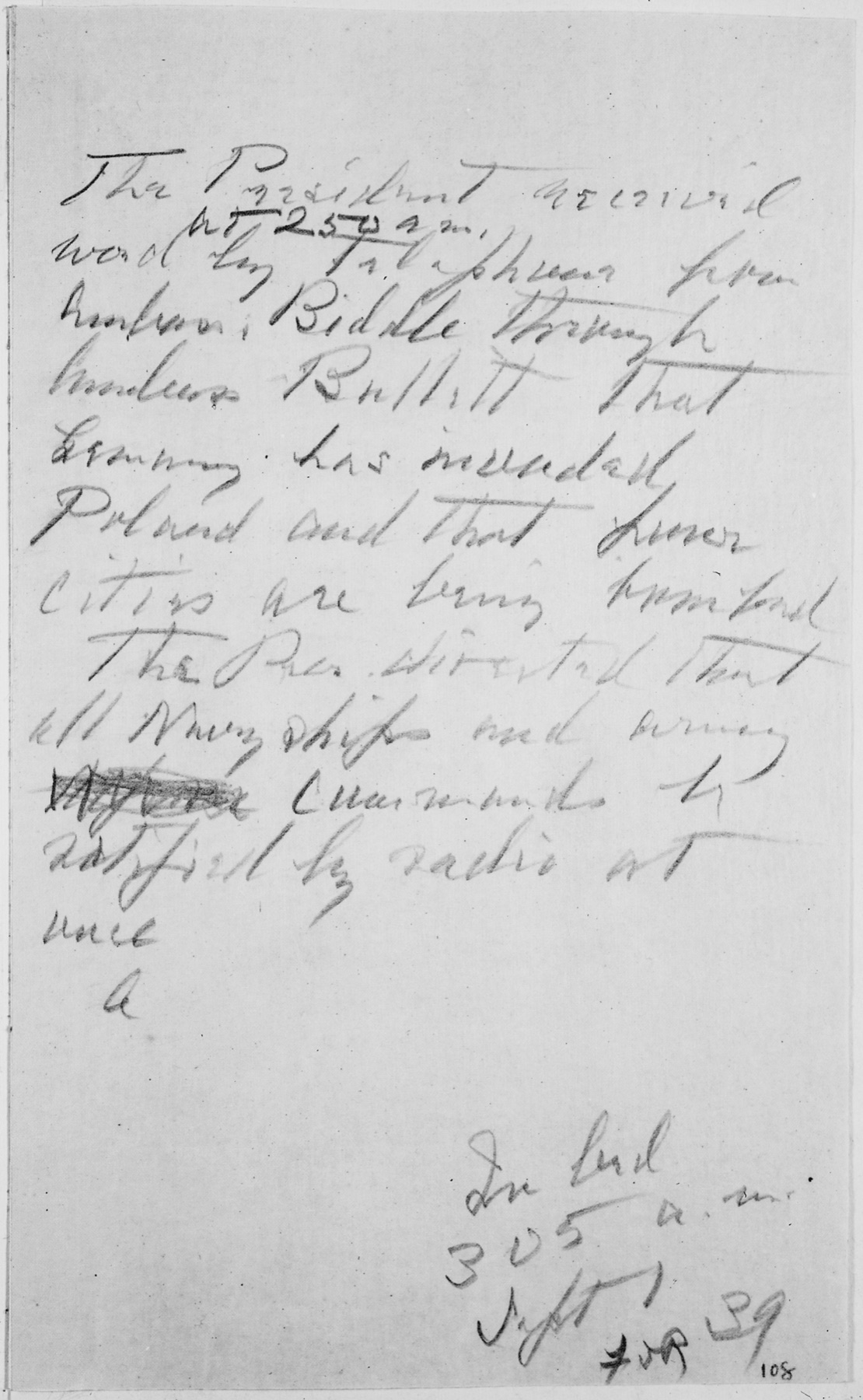
In Washington. In bed, he writes it down: the time of the call, who it came from, and his order that all Navy ships and Army commands be notified by radio at once. He signs it “In bed 3:05 a.m. Sept 1 ’39 FDR.”
Warsaw: Friday, September 1, about 2:00 p.m.Washington: Friday, September 1, about 8:00 a.m.
In Poland. The raid on Wieluń ends. About 70 percent of the town is destroyed, the synagogue and the hospital among the ruins. Investigators could later confirm 127 dead; estimates run from several hundred to 2,000.
Warsaw: Sunday, September 3, 1:00 a.m.Washington: Saturday, September 2, 7:00 p.m.
In Poland. Meanwhile German troops are driving on Warsaw. They reach it within about a week of the invasion.
In Washington. Five guests come for the evening: cocktails the President mixes himself, dinner, then poker in his second-floor study. The White House usher logs them from 7:00 p.m. to 12:30 a.m.
Warsaw: Sunday, September 3, about 4:00 a.m.Washington: Saturday, September 2, about 10:00 p.m.
In Poland. On the roads east, hundreds of thousands of people, Jews and non-Jews, are fleeing ahead of the German army.
In Washington. A cable from Ambassador Kennedy in London is delivered. The President reads it and tells the table, “Gentlemen, by noon tomorrow, war will have been declared.”
Warsaw: Sunday, September 3, 5:45 a.m.Washington: Saturday, September 2, 11:45 p.m.
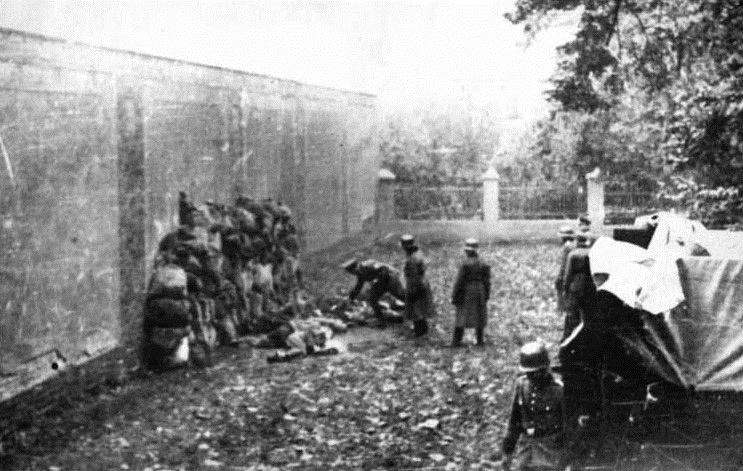
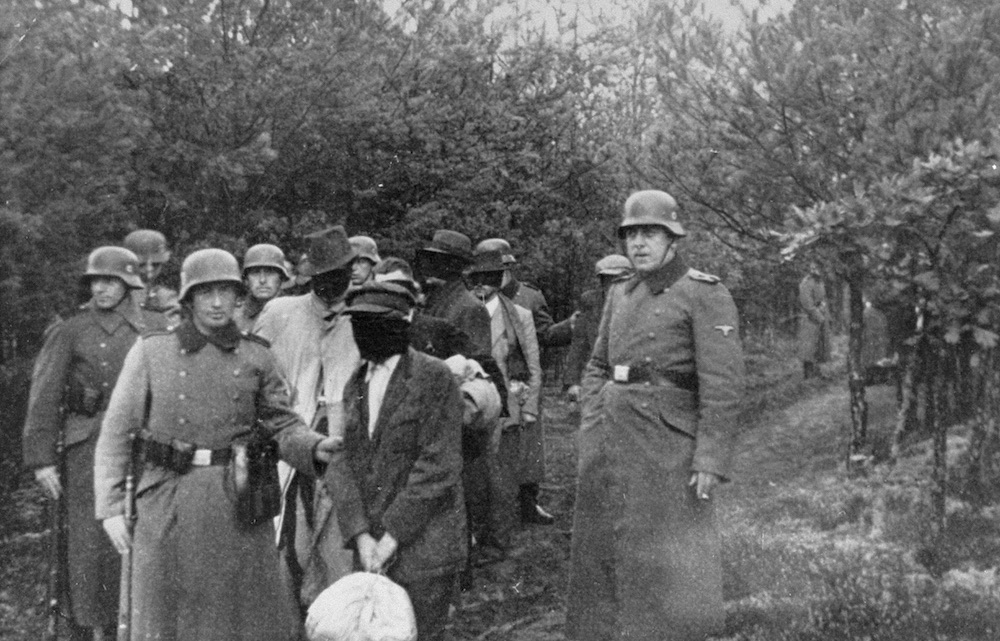
In Poland. Behind the front, the Einsatzgruppen have followed the army in. In these first weeks they shoot thousands of Jews and tens of thousands of members of the Polish elites.
In Washington. The game ends. His doctor had called time at 11:00; the President objected and got until 11:45.
Warsaw: Monday, September 4, 3:00 a.m.Washington: Sunday, September 3, 9:00 p.m.
In Washington. Britain and France have declared war on Germany. On the radio, from 9:00 to 9:12 p.m., the President tells the country, “This nation will remain a neutral nation, but I cannot ask that every American remain neutral in thought as well.”
Washington’s clock runs on minutes written down at the time: a note in the President’s hand and the White House usher’s diary. Poland’s runs on accounts that disagree by an hour, and on a death toll investigators could confirm only at 127, against estimates of up to 2,000.
The short answers
When did the Holocaust start?
There is no single start date, and anyone who gives you one is simplifying. Persecution of Jews in Germany began in 1933. Mass shooting of Jews in occupied territory began in September 1939. Systematic murder across Europe was set in motion from 1941. This page is about the day the scale changed: September 1, 1939.
When did the Second World War start?
Germany invaded Poland at dawn on September 1, 1939. Britain and France declared war on Germany on September 3. The United States stayed out for another twenty-seven months, entering in December 1941.
Why does the invasion of Poland matter to the Holocaust?
Before it, Nazi rule covered a few hundred thousand Jews and the policy was still to force them to emigrate. Poland held about three million Jews, the largest Jewish community in Europe. Occupying it changed the arithmetic of what the Nazi state had set itself to do.
Why does Wieluń matter?
Wieluń, a town of about sixteen thousand people some 20 kilometers from the German border, had no significant military target. German bombers struck it on the morning of September 1 and destroyed around seventy percent of it, including its synagogue and its hospital. It is often called the first attack of the war to kill civilians, though German dive bombers had already hit Tczew that morning.
Did the killing of Jews really begin that early?
Yes. The Einsatzgruppen followed the army into Poland in September 1939 and, with other German units and local collaborators, shot thousands of Jews and tens of thousands of members of the Polish elites. The common belief that the killing started in 1941 is wrong.
What did the American government know, and when?
President Roosevelt was woken at 2:50 in the morning on September 1 and told Germany had invaded Poland. He wrote the news down by hand at 3:05 and ordered the Navy and Army notified at once. That document survives and is on this page.
The two days, in two places at once
Nine records, from the last ordinary day to the first weeks of the occupation. Move through
them with the arrows, the numbered rail, or the arrow keys. Open any image to read its full
caption, its source and its rights.
Turning Points · Episode 01
September 1, 1939
The invasion of Poland put Europe’s largest Jewish community, about three million people, in the path of the German state. Western and central Poland were occupied within weeks; the Soviet-occupied east followed in June 1941. This is the day the scale of the Holocaust changed, told through two clocks running at once.
Phase 01
The last ordinary day
On August 31, 1939, Poland was a country of thirty-five million people, and the largest Jewish community in Europe lived inside it. In Washington a secretary made a telephone call about a social evening.
Phase 02
Two days
From first light on September 1 to a Saturday night in the White House study. The same hours, kept in two archives of very unequal completeness.
Phase 03
What followed
Britain and France declared war. The United States declared neutrality. Behind the front line, the killing had already started.
Before
Warsaw
The country that existed the day before
Poland held the largest Jewish community in Europe: about three million people in 1933, roughly one in ten. Germany had about 525,000. That ratio is the whole reason this date matters.
Context: Keep the arithmetic in view. Everything that follows in this series happens to a community of this size.
The President's appointments secretary telephoned Solicitor General Robert Jackson, who was visiting his mother in Jamestown, and asked him back to Washington for a social evening on the Saturday. Jackson agreed, and left Jamestown the next evening.
Context: Jackson would open the case against the major war criminals at Nuremberg six years later. In August 1939 he was a lawyer being called back from a visit to his mother.
Some of the first bombs of the war fell on Wieluń, a town of sixteen thousand with no significant military target. They destroyed about seventy percent of it, the hospital and the synagogue among the ruins.
Context: The exact minute is disputed. Polish accounts give 4:40 in the morning. Luftwaffe documents and other testimony give 5:40, and the Polish Institute of National Remembrance, in an investigation opened in 2004 and closed in 2011, also put it at 5:40. The popular claim that Wieluń was struck five minutes before the Westerplatte rests on the earlier reading, so this page does not repeat it as settled. The death toll is unsettled too: a published range runs from 700 to 2,000, while the Institute of National Remembrance could confirm only 127 dead and said the true figure could have been several hundred.
The shells usually given as the opening of the war
The battleship Schleswig-Holstein opened fire on the Polish garrison at the Westerplatte. This is the moment usually given as the opening of the Second World War.
Context: Many of the photographs of these weeks were taken by the invading side.
Six hours behind Warsaw the telephone rang at ten to three in the morning. Roosevelt ordered the Navy and Army notified at once, then wrote down what had happened, in bed, at 3:05.
Context: Read the document itself in the evidence viewer. The times, the two ambassadors and the order to the Navy are legible in Roosevelt’s own hand. The reading of the handwriting given here is ours.
Jackson drove alone through the night to Washington. Inside Poland, hundreds of thousands of people were moving the other way. Both journeys happened in the same twenty-four hours. One was written down.
Context: About 300,000 Jewish refugees from the German zone ended up in Soviet-held territory after the partition. More than half of those who got out of Poland altogether went to Romania and Hungary, and 15,000 to Lithuania.
Five guests, cocktails mixed by the President, dinner, then poker in the second-floor study. His doctor said the cards would stop at eleven. The President overruled him and got until quarter to twelve.
Context: We know all of this because it was recorded and because a scholar went looking. The details of the evening come from John Q. Barrett’s work on Robert Jackson and from the White House Usher’s Log. For Wieluń, bombed the day before, even the hour of the first bombs is disputed.
Britain and France declared war. That evening Roosevelt told the country it would stay neutral, and added that he could not ask any American to be neutral in thought.
Context: The United States entered the war on December 8, 1941, twenty-seven months later. Everything this series covers next happened inside that gap.
The Einsatzgruppen followed the army in and killed from the start. Forced labor and the marking of Jews began within two months. The belief that the murder of Polish Jews began in 1941 is simply wrong.
Context: The first ghetto followed within months, which is where Episode 02 picks up. What made all of it possible was the arithmetic of the first day.
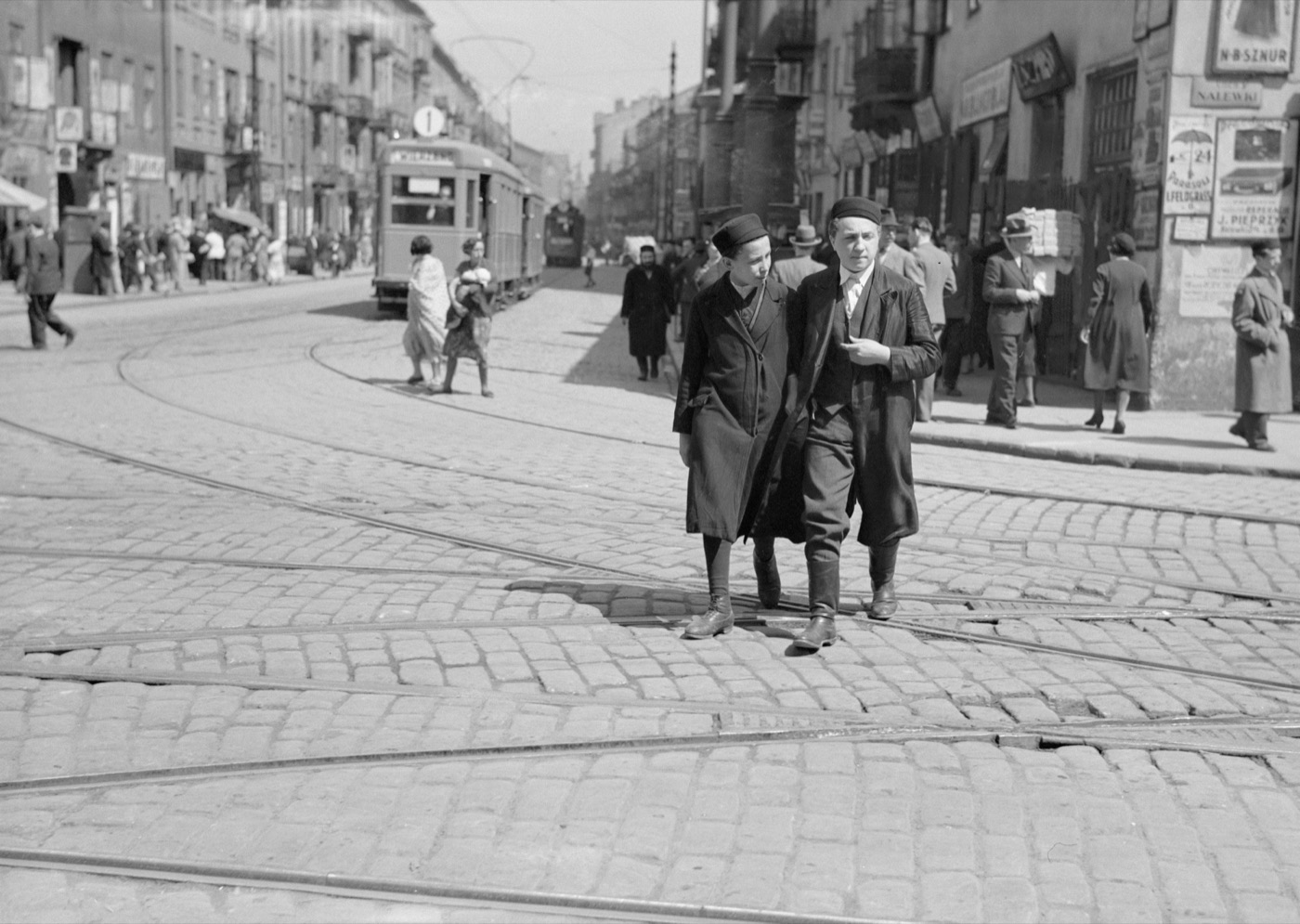
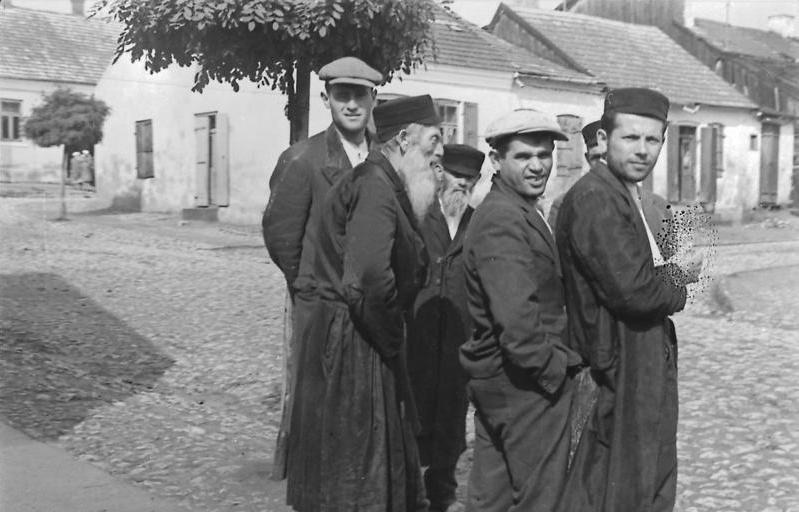
The Jewish quarter of Warsaw before the war. Roughly three million Jews lived in Poland, about one person in ten.
Willem van de Poll · CC0Nationaal Archief, The Hague · Public domain
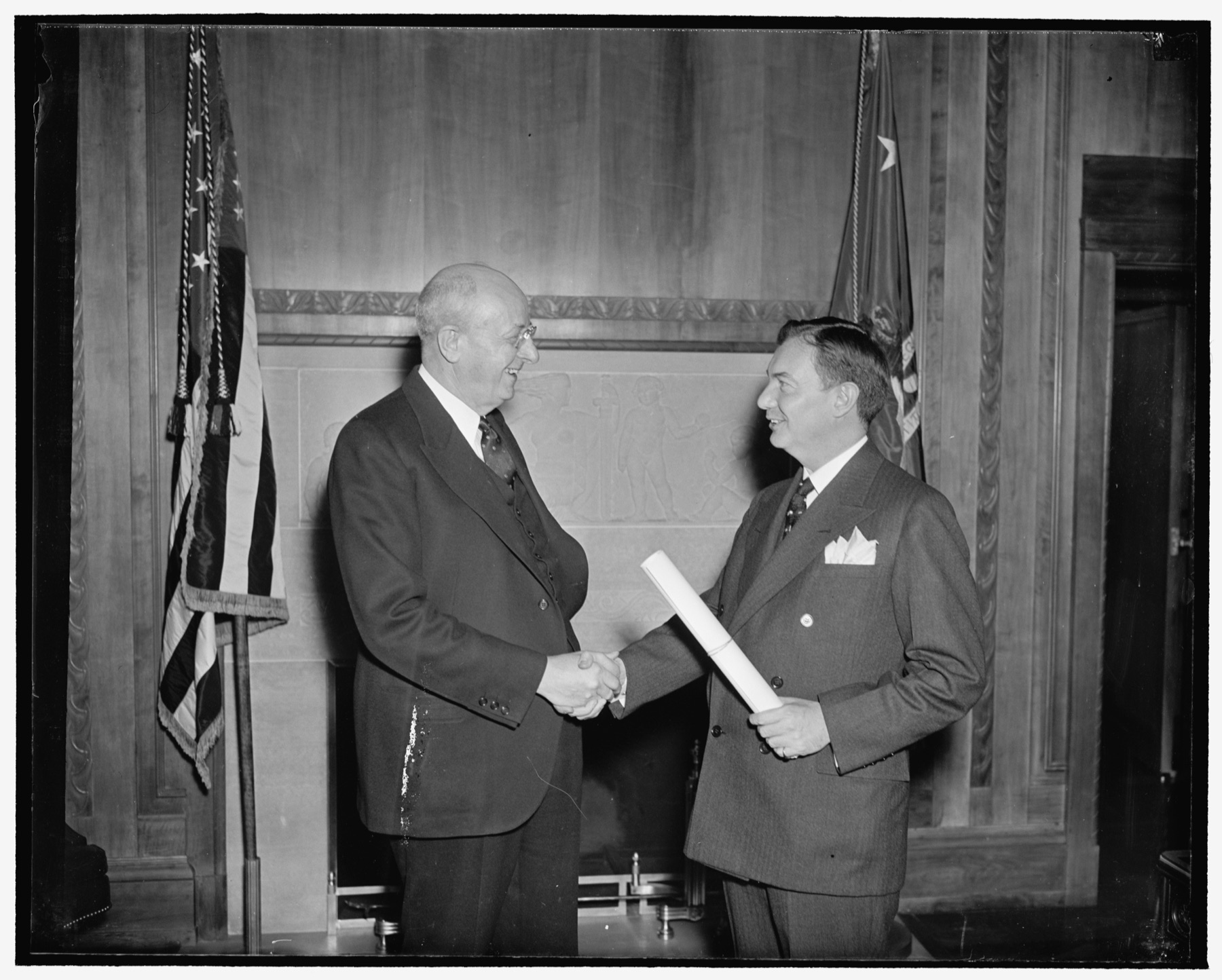
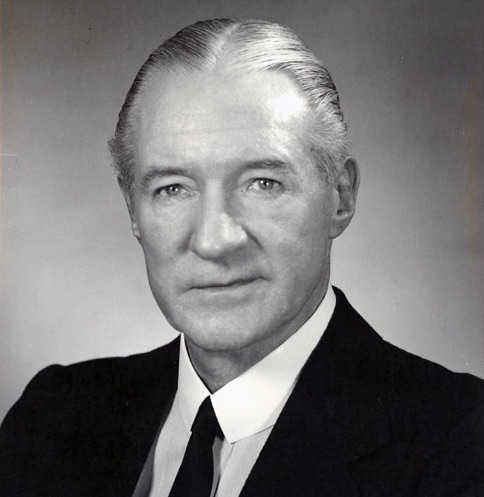
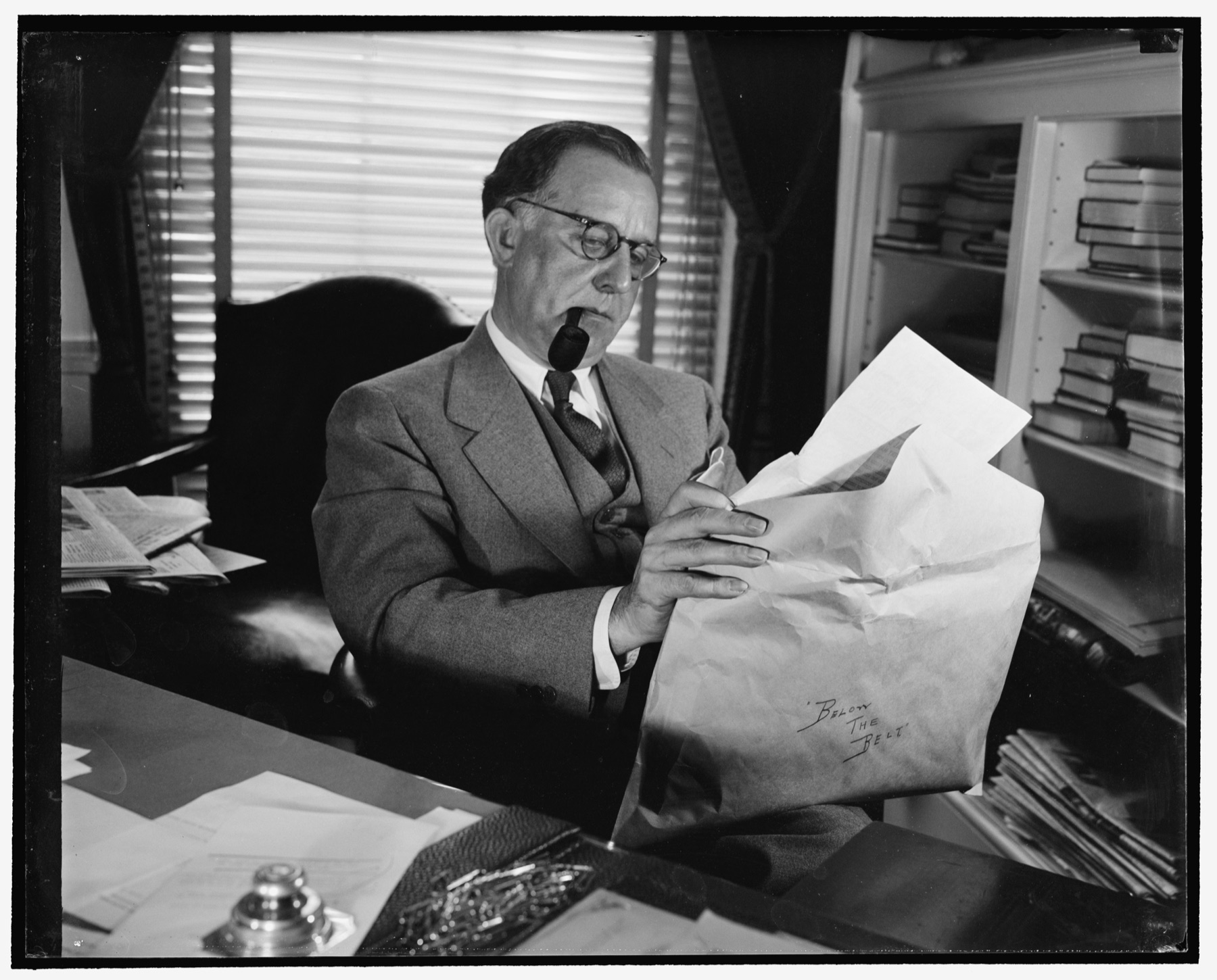
Robert H. Jackson being congratulated on becoming Solicitor General. He held that office on September 1, 1939.
Harris & Ewing, photographer · Public domainLibrary of Congress, Harris & Ewing Collection · Public domain
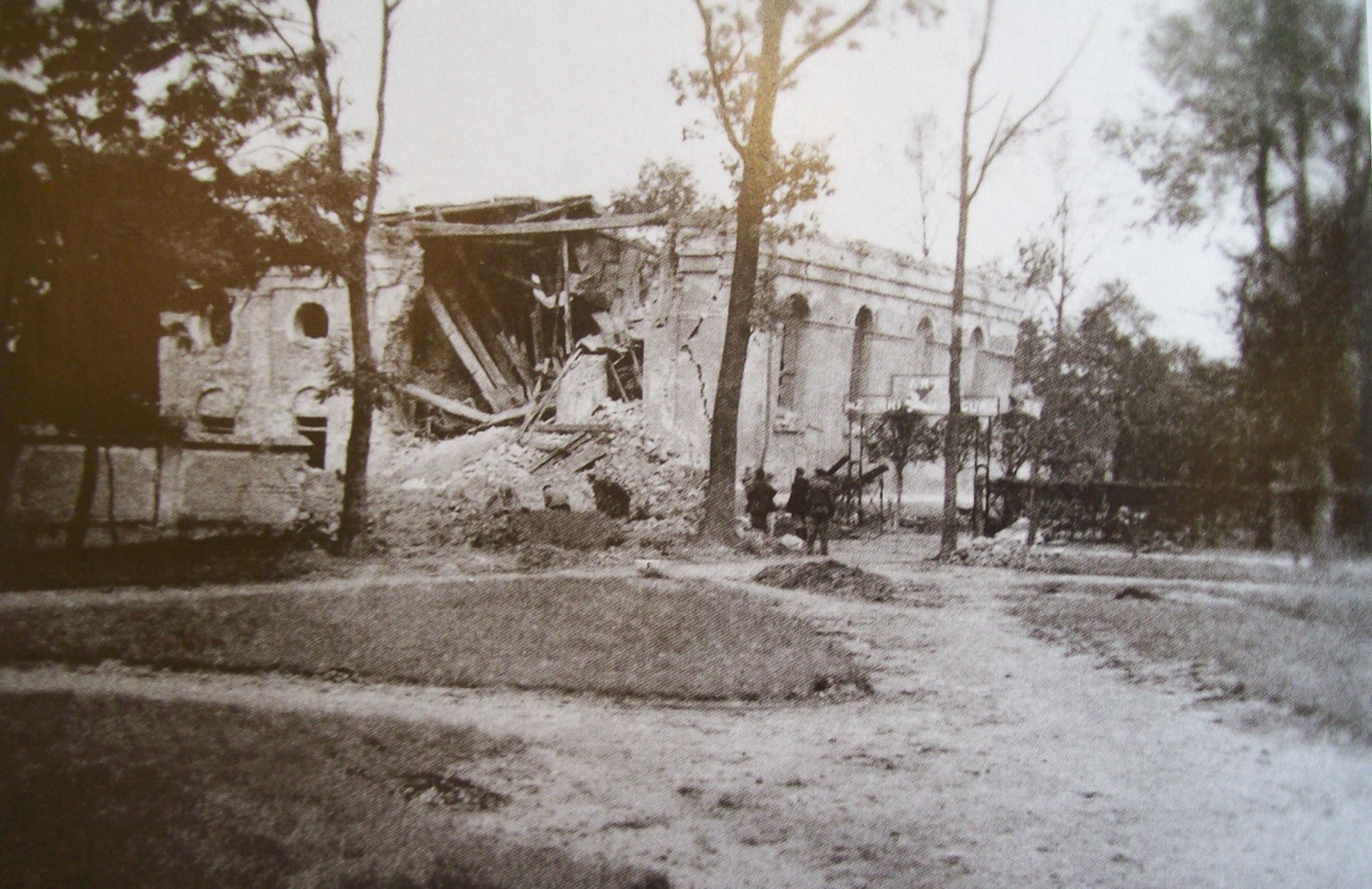
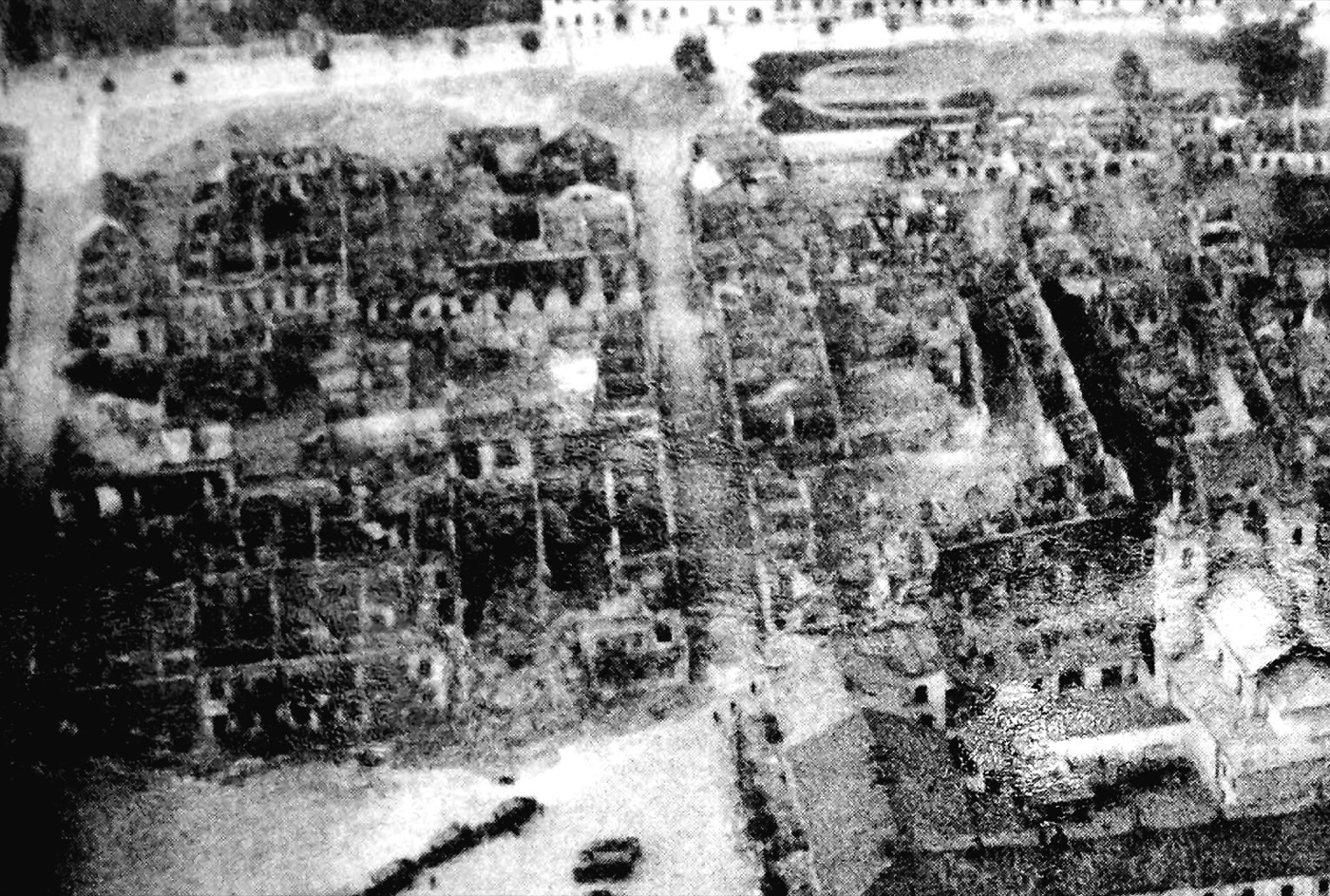
The synagogue of Wieluń, destroyed in that raid. The photograph is dated only to 1939 and the photographer is unknown, so we cannot say it was taken on the first morning.
Photographer unknown · Public domainWikimedia Commons, from a Polish postcard series · Public domain
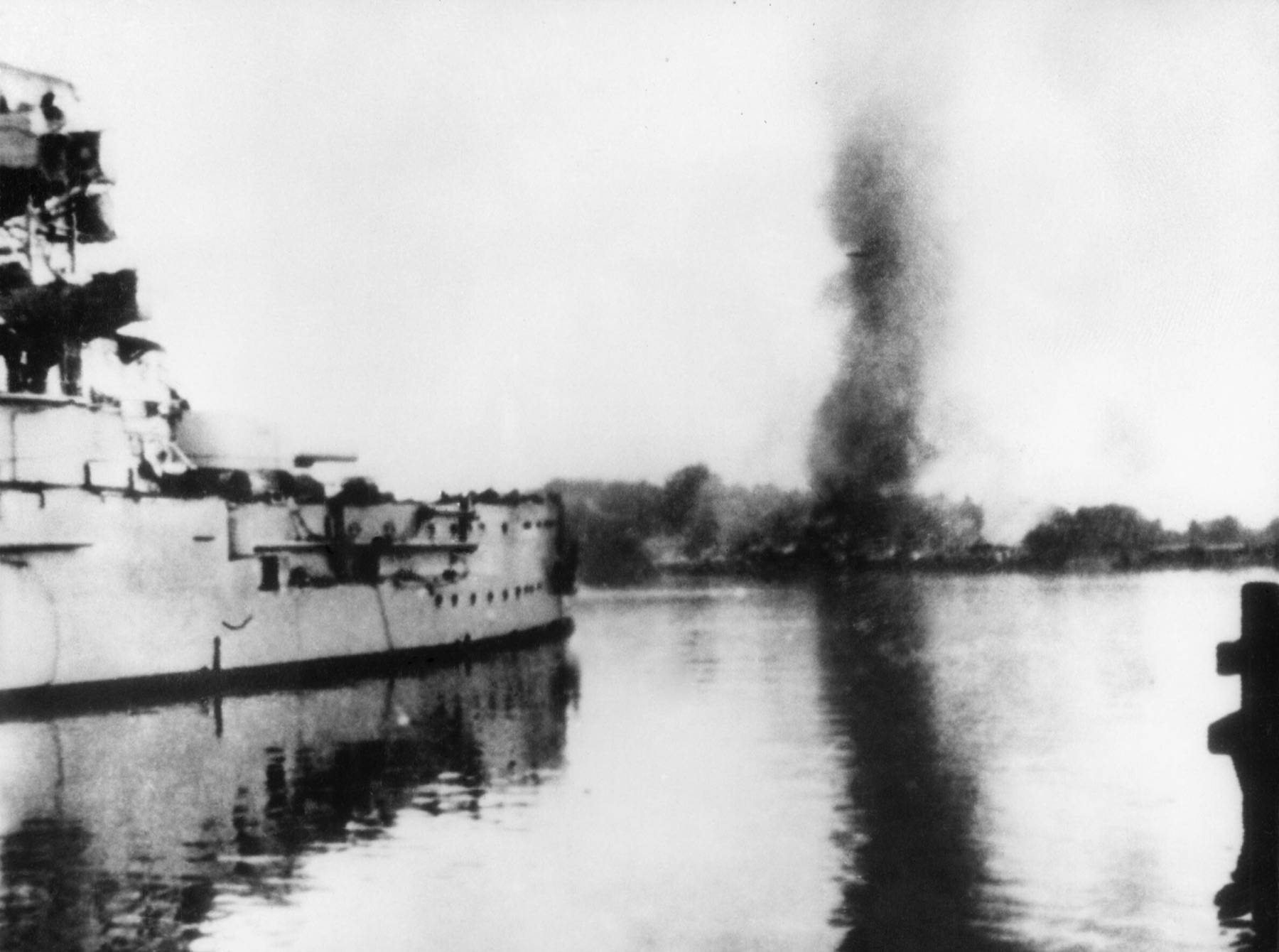
The Schleswig-Holstein firing, September 1939. The record gives only the month, and the photograph has been captioned both as the Westerplatte and as Gdynia. Its shelling of the Westerplatte on September 1 is usually given as the opening of the war.
Photographer unknown · Public domainReproduced in Apoloniusz Zawilski, Bitwy Polskiego Września (1972) · Public domain
Roosevelt wrote this in bed fifteen minutes after being woken. It records the time the call came, who it came from, and the order he gave.
Franklin Delano Roosevelt · Public domainU.S. National Archives and Records Administration · Public domain
The invasion, September 1939.
Associated Press photographer · Public domainImperial War Museum · Public domain
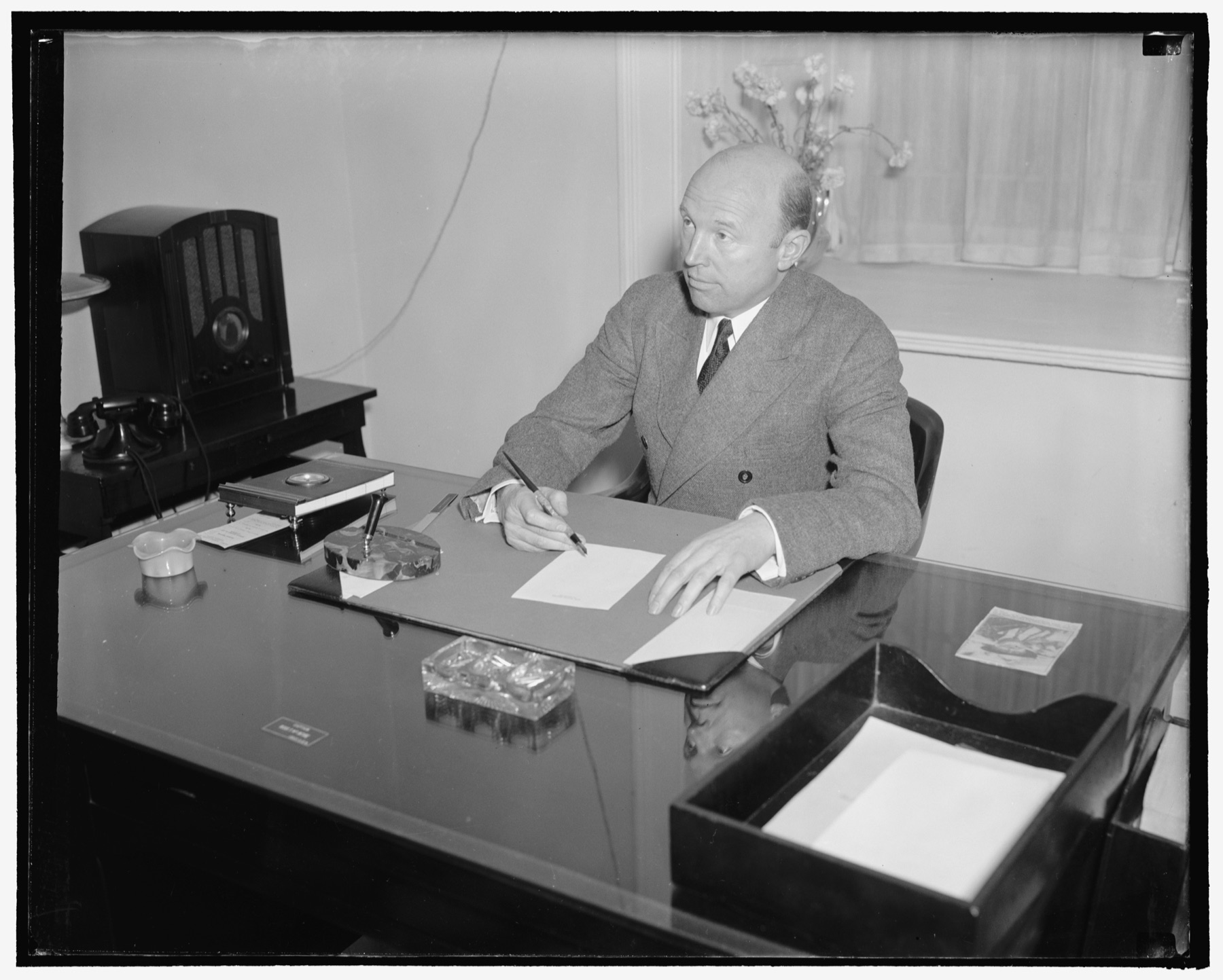
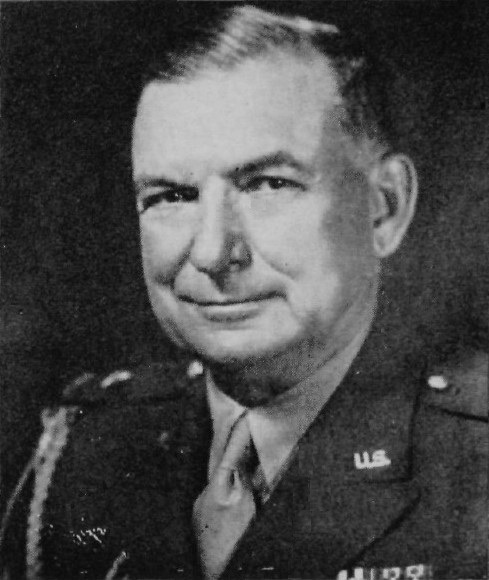
Rear Admiral Ross T. McIntire, the President's doctor. He announced that the cards would stop at eleven, and was overruled.
Harris & Ewing, photographer · Public domainLibrary of Congress, Harris & Ewing Collection · Public domain
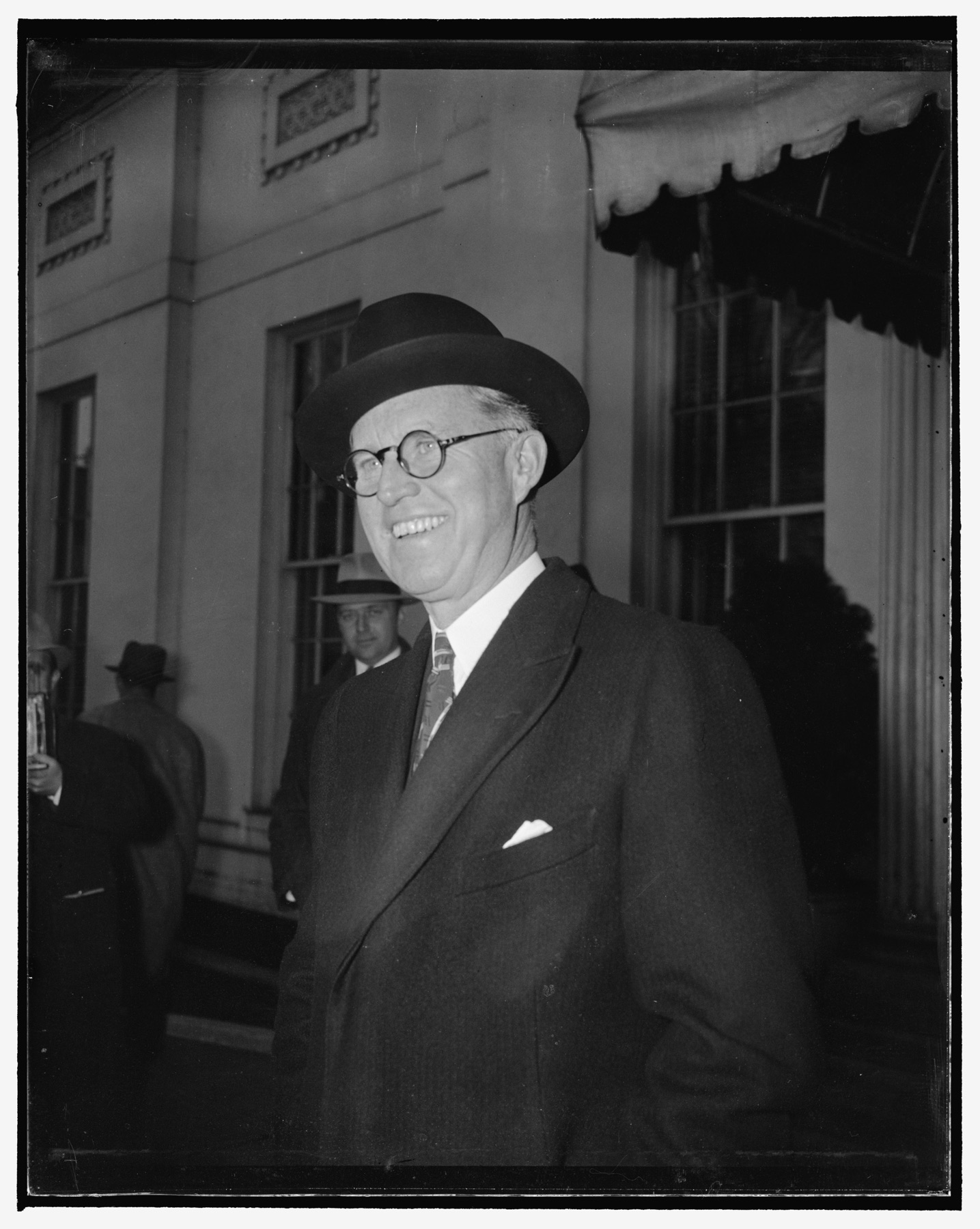
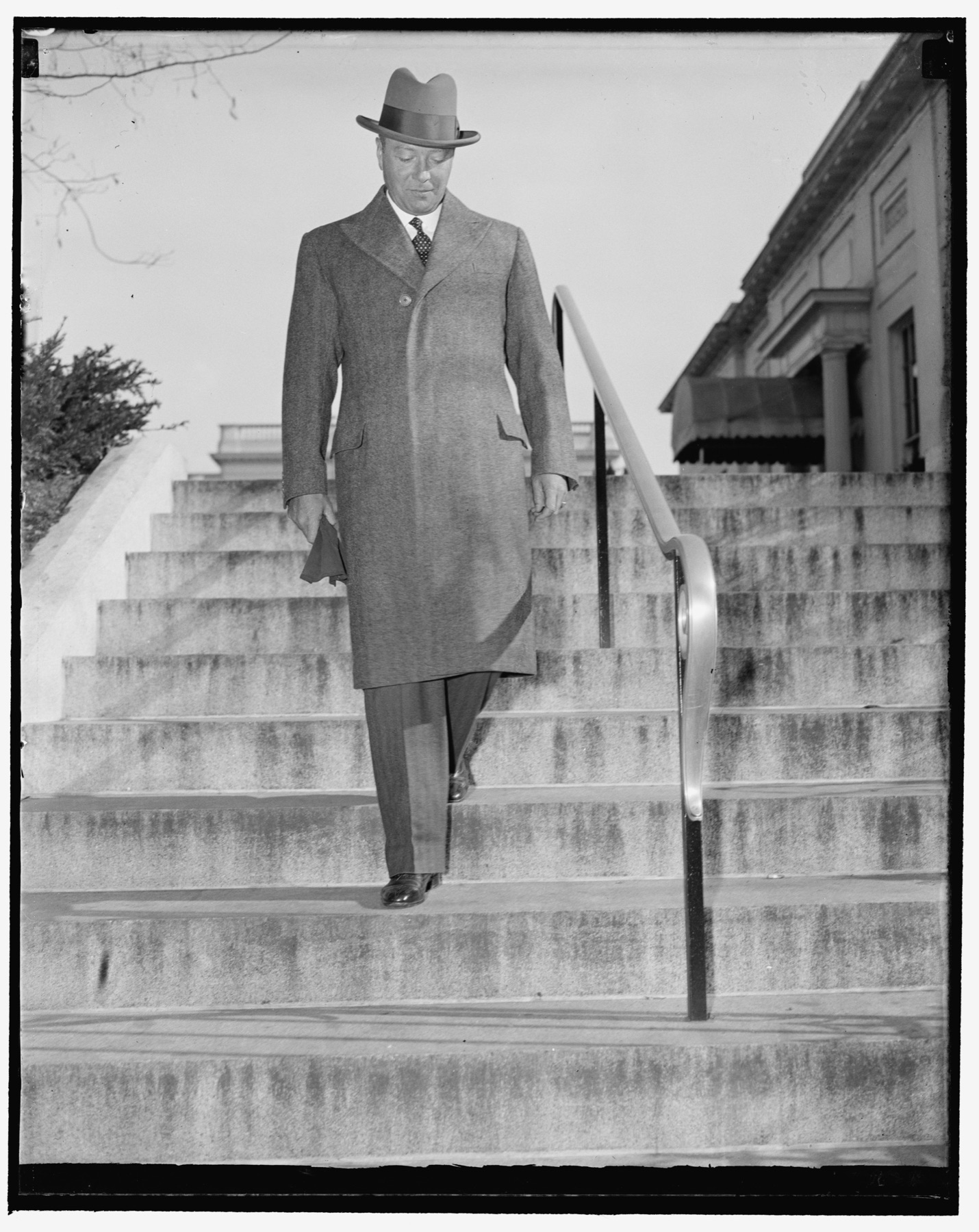
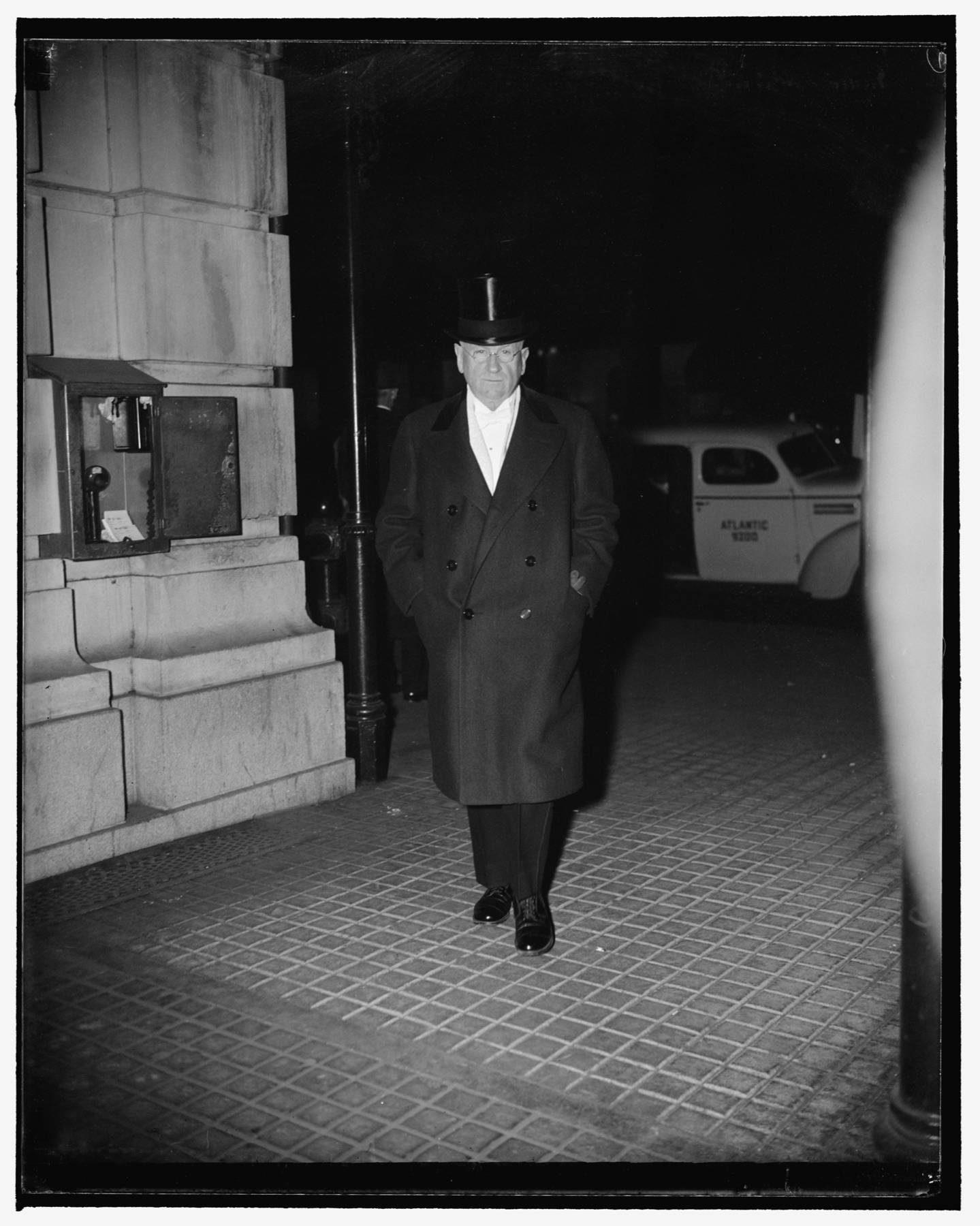
Joseph P. Kennedy, ambassador in London. His cable reached the White House while the game was still going.
Harris & Ewing, photographer · Public domainLibrary of Congress, Harris & Ewing Collection · Public domain
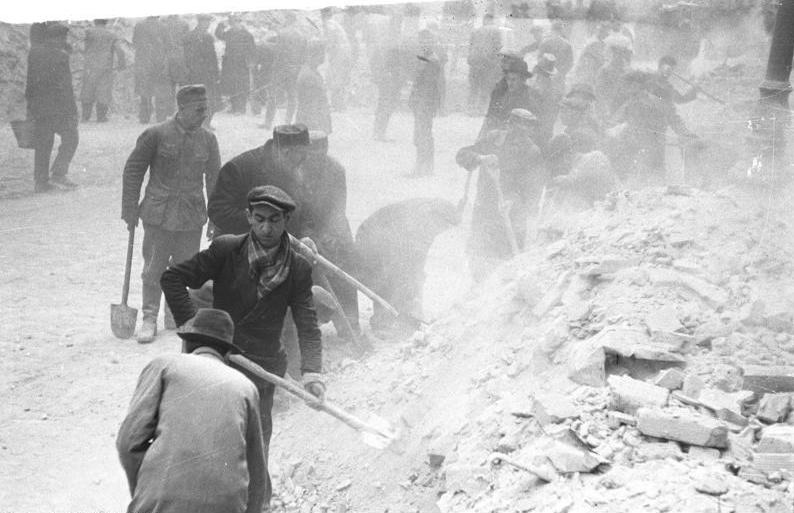
Jews put to forced clearing work in Warsaw. A German propaganda-company photograph, autumn 1939.
August 31, 1939. The country that existed the day before Phase The last ordinary day. Event
1 of 9.
Read the complete chronology and evidence notes
The last ordinary day
The country that existed the day before
Poland held the largest Jewish community in Europe: about three million people in 1933, roughly one in ten. Germany had about 525,000. That ratio is the whole reason this date matters.
Context: Keep the arithmetic in view. Everything that follows in this series happens to a community of this size.
Research record: F004 · F005 · F006
Image: The Jewish quarter of Warsaw before the war. Roughly three million Jews lived in Poland, about one person in ten. Willem van de Poll · CC0 Nationaal Archief, The Hague ·
Public domain
The President's appointments secretary telephoned Solicitor General Robert Jackson, who was visiting his mother in Jamestown, and asked him back to Washington for a social evening on the Saturday. Jackson agreed, and left Jamestown the next evening.
Context: Jackson would open the case against the major war criminals at Nuremberg six years later. In August 1939 he was a lawyer being called back from a visit to his mother.
Research record: F018
Image: Robert H. Jackson being congratulated on becoming Solicitor General. He held that office on September 1, 1939. Harris & Ewing, photographer · Public domain Library of Congress, Harris & Ewing Collection ·
Public domain
Some of the first bombs of the war fell on Wieluń, a town of sixteen thousand with no significant military target. They destroyed about seventy percent of it, the hospital and the synagogue among the ruins.
Context: The exact minute is disputed. Polish accounts give 4:40 in the morning. Luftwaffe documents and other testimony give 5:40, and the Polish Institute of National Remembrance, in an investigation opened in 2004 and closed in 2011, also put it at 5:40. The popular claim that Wieluń was struck five minutes before the Westerplatte rests on the earlier reading, so this page does not repeat it as settled. The death toll is unsettled too: a published range runs from 700 to 2,000, while the Institute of National Remembrance could confirm only 127 dead and said the true figure could have been several hundred.
Research record: F011 · F012 · F013 · F014 · F015
Image: The synagogue of Wieluń, destroyed in that raid. The photograph is dated only to 1939 and the photographer is unknown, so we cannot say it was taken on the first morning. Photographer unknown · Public domain Wikimedia Commons, from a Polish postcard series ·
Public domain
The shells usually given as the opening of the war
The battleship Schleswig-Holstein opened fire on the Polish garrison at the Westerplatte. This is the moment usually given as the opening of the Second World War.
Context: Many of the photographs of these weeks were taken by the invading side.
Research record: F001 · F002
Image: The Schleswig-Holstein firing, September 1939. The record gives only the month, and the photograph has been captioned both as the Westerplatte and as Gdynia. Its shelling of the Westerplatte on September 1 is usually given as the opening of the war. Photographer unknown · Public domain Reproduced in Apoloniusz Zawilski, Bitwy Polskiego Września (1972) ·
Public domain
Six hours behind Warsaw the telephone rang at ten to three in the morning. Roosevelt ordered the Navy and Army notified at once, then wrote down what had happened, in bed, at 3:05.
Context: Read the document itself in the evidence viewer. The times, the two ambassadors and the order to the Navy are legible in Roosevelt’s own hand. The reading of the handwriting given here is ours.
Research record: F016 · F017
Image: Roosevelt wrote this in bed fifteen minutes after being woken. It records the time the call came, who it came from, and the order he gave. Franklin Delano Roosevelt · Public domain U.S. National Archives and Records Administration ·
Public domain
Jackson drove alone through the night to Washington. Inside Poland, hundreds of thousands of people were moving the other way. Both journeys happened in the same twenty-four hours. One was written down.
Context: About 300,000 Jewish refugees from the German zone ended up in Soviet-held territory after the partition. More than half of those who got out of Poland altogether went to Romania and Hungary, and 15,000 to Lithuania.
Research record: F007 · F008
Image: The invasion, September 1939. Associated Press photographer · Public domain Imperial War Museum ·
Public domain
Five guests, cocktails mixed by the President, dinner, then poker in the second-floor study. His doctor said the cards would stop at eleven. The President overruled him and got until quarter to twelve.
Context: We know all of this because it was recorded and because a scholar went looking. The details of the evening come from John Q. Barrett’s work on Robert Jackson and from the White House Usher’s Log. For Wieluń, bombed the day before, even the hour of the first bombs is disputed.
Research record: F018 · F019
Image: Rear Admiral Ross T. McIntire, the President's doctor. He announced that the cards would stop at eleven, and was overruled. Harris & Ewing, photographer · Public domain Library of Congress, Harris & Ewing Collection ·
Public domain
Britain and France declared war. That evening Roosevelt told the country it would stay neutral, and added that he could not ask any American to be neutral in thought.
Context: The United States entered the war on December 8, 1941, twenty-seven months later. Everything this series covers next happened inside that gap.
Research record: F020 · F021
Image: Joseph P. Kennedy, ambassador in London. His cable reached the White House while the game was still going. Harris & Ewing, photographer · Public domain Library of Congress, Harris & Ewing Collection ·
Public domain
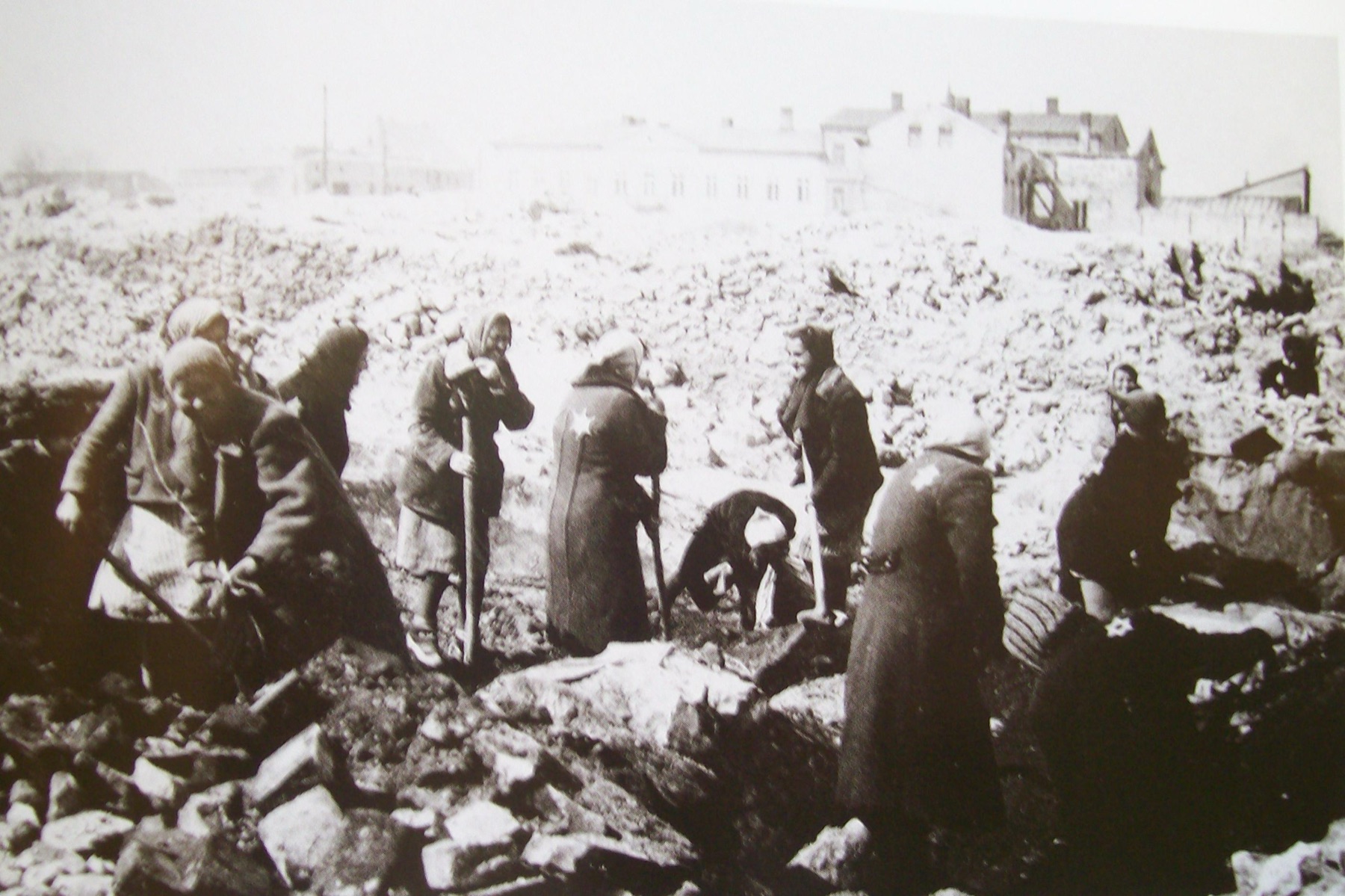
The Einsatzgruppen followed the army in and killed from the start. Forced labor and the marking of Jews began within two months. The belief that the murder of Polish Jews began in 1941 is simply wrong.
Context: The first ghetto followed within months, which is where Episode 02 picks up. What made all of it possible was the arithmetic of the first day.
Research record: F003 · F009 · F010
Image: Jews put to forced clearing work in Warsaw. A German propaganda-company photograph, autumn 1939. Schulze · CC BY-SA 3.0 de Bundesarchiv ·
CC BY-SA 3.0 de
This episode covers August 31 to early October 1939. It is not a history of the whole war, and it is not the story of the ghettos or the killing centers, which come later in this series. It asks one question: what changed on the first day, and how do we know? Figures for the Jewish population of Poland are 1933 figures published by the United States Holocaust Memorial Museum and are given here as the pre-war order of magnitude, not as a census taken on the morning of the invasion.
Why this episode is built the way it is
There is an easy and dishonest version of this story: they played cards in Washington while
Poland burned. We are not making that point, because it is bad history. Nobody at that table
on September 2, 1939, knew what was coming, and Roosevelt was awake and working at three in the
morning.
The true point is harder and it is about the record itself. We know that the President mixed
the cocktails, who won at cards, what time his doctor tried to stop the game and how late it
went on. We cannot even say how many people died at Wieluń that first morning: investigators
could confirm 127, and published estimates run to 2,000. One archive was kept immaculately.
The other was destroyed along with the people in it, and part of the work of Holocaust
education is to notice that asymmetry rather than mistake it for a difference in what
mattered.
That is also why the bombing of Wieluń matters so much here. It fell on a town with no
military target, and it destroyed the synagogue. The war and the destruction of Jewish Poland
begin on the same day.
What survivors remember
Five people whose testimony is in the Project Witness library were in Poland in September
1939. Each passage was checked against the recording by two independent transcriptions and
the caption track. Play this moment opens the testimony at the second the passage begins.
Radomsko, the first morning
In Radomsk, the war broke out on the 1st of September, 1939. The 1st was on a Friday. ... About five o'clock in the morning, we heard explosions. ... And we heard the radio already. The German attack crossed the border already.
When the war broke out, we were hiding in the basement, which had a wooden floor that swayed every time there was a bombardment, and it didn't offer too much of protection.
And everything has been going down. They burned, you know, the shul. I've seen the shul, how she's burning all the night. A big, nice shul. And the whole town was very, very upset, you know, because something like this, you know, we never know about it. All sky was red, red from the, from the burning.
And then the Germans really surrounded Warsaw and Warsaw was under siege, and we were there. And for about three way- weeks, about close to three weeks, till Erev Sukkos, Warsaw was bombarded, under bombardment not only from the air, but also from artillery. And, but when the a- Erev Sukkos, the Poles really finally realized that they cannot do it anymore. They can- there was no, they were out of water, they were out of food, and so they capitulated.
We packed the stuff, took a big truck, and put whatever my mother could put into the suitcases, put in the truck, and we took off to Bialystok. What I remember from Bialystok is that there was very little bit of space for people who were running away from big cities. And people who lived in Bialystok rented rooms to people who were running, and we got the bathroom, meaning we had a bathroom. That was our room. Means we had a bathtub and a sink and a toilet. That was our room.
Before September 1, 1939, Nazi rule covered a Jewish population of a few hundred thousand and
its declared aim was still to force them out. Poland held about three million Jews, the
largest Jewish community in Europe and roughly one person in ten. Occupying it did not change
Nazi intentions. It changed the size of what those intentions were now aimed at, and it did so
within weeks in western and central Poland, and in June 1941 in the east.
The first hours
The bombing of Wieluń is where this page starts because of what it shows about the whole
campaign. A town of sixteen thousand people, no significant military target, about seventy
percent of it destroyed in a raid that ran from early morning until the afternoon. One of the
first bombs hit the hospital; whether it carried a visible Red Cross is disputed. The
synagogue was destroyed. The war and the destruction of Jewish Poland begin on the same day.
We show the disagreement about the timing rather than settle it. Polish accounts give 4:40 in
the morning, which would place Wieluń five minutes ahead of the first shells at the
Westerplatte. Luftwaffe flight documents give 5:40, and the Polish Institute of National
Remembrance's investigation, closed in 2011, also gave 5:40. The death toll is contested in
the same way: a published range runs from 700 to 2,000, while the Institute could confirm only
127 dead and said the true figure could have been several hundred.
The other clock
Six hours behind Warsaw, the news reached the President by telephone at ten minutes to three
in the morning: from Ambassador Biddle in Poland, through Ambassador Bullitt in France. What
Roosevelt did first was order every Navy ship and Army command notified by radio. What he did
next was write it down. The note is short, exact and unhurried, and it survives.
Two nights later he had five men to the second-floor study, mixed the cocktails himself, and
played cards until quarter to twelve. Around ten a cable arrived from Ambassador Kennedy in
London, and he told the table that war would be declared by noon. On September 3 Britain and
France declared war, and that evening the President told the country that the United States
would stay neutral, while adding that he could not ask any American to be neutral in thought.
The United States entered the war twenty-seven months later.
What began behind the front line
The most persistent misunderstanding about this period is that the murder of Polish Jews
belongs to 1941 and after. It does not. The Einsatzgruppen followed the army into Poland in
September 1939 and killed from the start, shooting thousands of Jews and tens of thousands of
members of the Polish elites. Warsaw surrendered on September 28. Germany and the Soviet Union
partitioned the country the next day. In October Germany annexed most of western Poland and
organized the rest as the General Government (Generalgouvernement). Forced
labor and the marking of Jews began within two months, and the first ghettos followed within
months.
True, false or disputed?
Seven things you will often read about September 1939. Some are true, some are false, and on some the sources disagree.
1The Holocaust began on September 1, 1939.
Show the answer
It is false.
Persecution of Jews in Germany began in 1933. What began on September 1, 1939, was the scale: the occupation of the largest Jewish community in Europe, about three million people.
2The killing of Polish Jews began in 1941.
Show the answer
It is false.
The Einsatzgruppen followed the army into Poland in September 1939 and shot thousands of Jews and tens of thousands of members of the Polish elites.
3Wieluń was bombed five minutes before the first shots at the Westerplatte.
Show the answer
It is disputed.
It depends on the hour. The town's inhabitants and Polish border guards gave 4:40, five minutes before the Westerplatte. Luftwaffe documents and Poland's Institute of National Remembrance give 5:40.
4Roosevelt learned of the invasion in the middle of the night and wrote it down.
Show the answer
It is true.
The telephone woke him at 2:50 a.m. At 3:05, in bed, he wrote down what he had been told and the order he gave. The note is held by the National Archives.
6About 2,000 people were killed in the bombing of Wieluń.
Show the answer
It is disputed.
Poland's Institute of National Remembrance could confirm at least 127 dead and did not rule out several hundred. Higher figures have been published, and the exact number is unknown.
7Almost every photograph of Poland in September 1939 was taken by Germans.
Show the answer
It is false.
The invading army and its press units took many of them. But Polish press agency photographs of the siege of Warsaw survive, and so do those of the American Julien Bryan.
Every archival image we cleared for this episode, with its caption, its origin and its rights.
Where a holding record names a German photographer or press unit, the caption says so; where
the photographer is unknown, it says that. Images we cannot date precisely say that too.
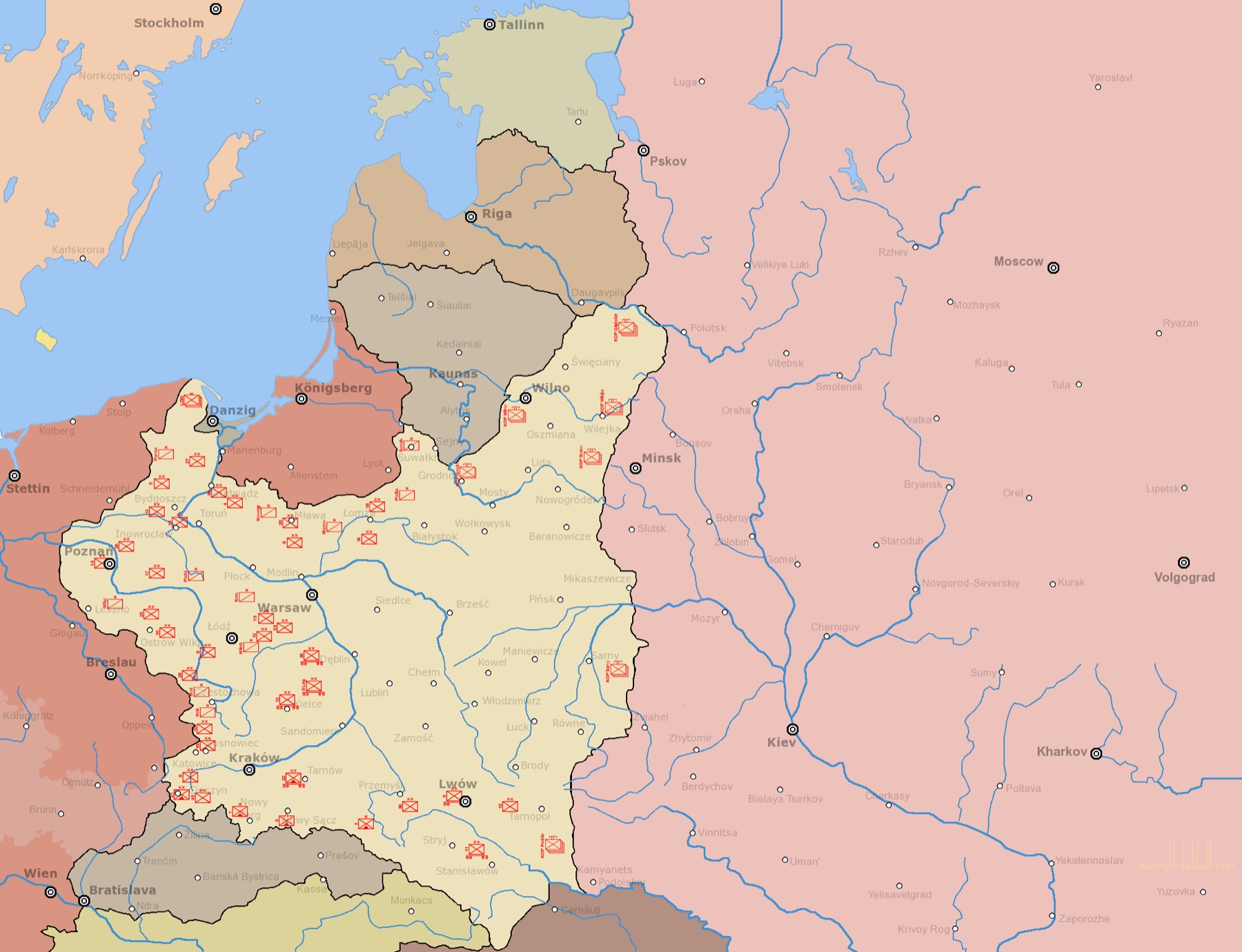
Poland as it stood on August 31, 1939. This is the country that existed the day before this episode begins, and the state that no longer existed a month later.
Poland then held the largest Jewish community in Europe.
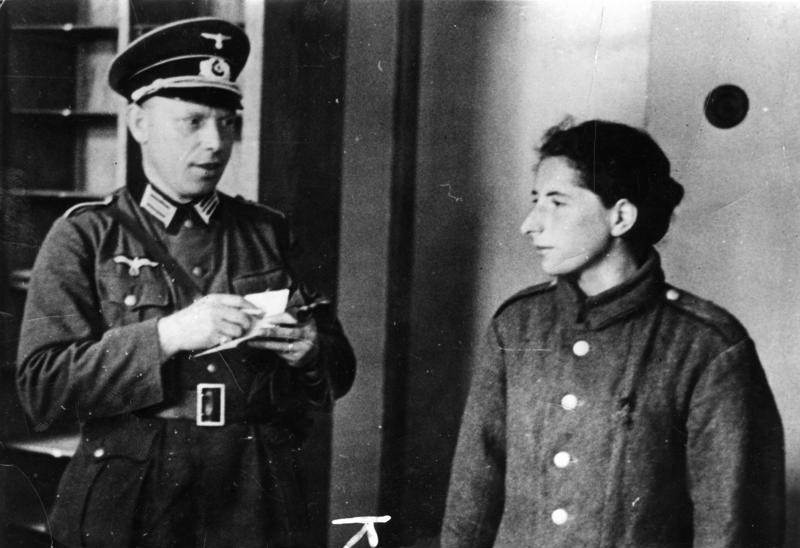
A Jewish woman from Warsaw, named in the German caption as Bajla Gelblung, after her capture near Brest-Litovsk in September 1939. A German propaganda-company photograph. Its original caption calls her the leader of a gang of murderers, a smear of the kind these captions carried.
She is one of the people this episode is finally about, and the only record of her here is the occupier's caption.
The United States Holocaust Memorial Museum gives about three million for 1933, roughly 9.5 percent of the population. It was the largest Jewish community in Europe. For comparison, Germany had about 525,000 Jews in the same year, and Austria 191,000.
What exact time were the first bombs dropped on Wieluń?
This is genuinely disputed and we will not pretend otherwise. Accounts from the town’s inhabitants and Polish border guards give 4:40 in the morning. Luftwaffe flight documents and other testimony give 5:40, and the Polish Institute of National Remembrance, in an investigation opened in 2004 and closed in 2011, also put it at 5:40. The historian Tadeusz Olejnik collected accounts putting the first bombs as early as 4:30. You will often read that Wieluń was hit five minutes before the Westerplatte; that claim depends on the earliest reading and is not settled.
How many people were killed at Wieluń?
Also unresolved. A published range runs from 700 to 2,000 civilians, with the exact number unknown because of the difficulty of identification. The Polish Institute of National Remembrance’s investigation, closed in 2011, confirmed at least 127 dead and said the true figure could have been several hundred. We give the range rather than choose a number.
Is it true the synagogue at Wieluń was destroyed on the first day of the war?
Yes. The raid of September 1 destroyed about seventy percent of the town, the synagogue and the church among it. The photographs of the ruined synagogue on this page are dated only to 1939 and carry no photographer’s name, so we do not caption them as having been taken on the first morning even though the building was hit that day.
What is Roosevelt’s bedside note?
A short note in pencil that Roosevelt wrote in bed at 3:05 in the morning on September 1, 1939, fifteen minutes after being woken with the news. It records that word came by telephone at 2:50 from Ambassador Biddle in Poland through Ambassador Bullitt in France, that Germany had invaded Poland and four cities were being bombed, and that he ordered all Navy ships and Army commands notified by radio at once. (He first wrote "defense" before "Commands" and struck it out.) It is held by the U.S. National Archives.
Why is a White House poker game on a Holocaust education page?
Because it is the reason the record exists. The evening of September 2, 1939, was recorded in the White House Usher’s Log and reconstructed by John Q. Barrett, Robert Jackson’s biographer, which is why we can follow it hour by hour. For Wieluń that same weekend we cannot even fix the hour the bombs fell or the number of the dead. The contrast between an archive that survived intact and one destroyed along with the people in it is the point, not the card game.
What happened to Poland after the invasion?
Warsaw surrendered on September 28, 1939. Germany and the Soviet Union partitioned the country on September 29 along the Bug River. In October Germany annexed most of western Poland outright and organized the remainder as the Generalgouvernement, with districts at Krakow, Warsaw, Radom and Lublin.
Where did Jewish refugees go?
Hundreds of thousands of Jewish and non-Jewish refugees fled east ahead of the advancing army. After the partition about 300,000 Jewish refugees from the German zone were left in Soviet-held territory. More than half of those who got out of Poland altogether went to Romania and Hungary, and 15,000 went to Lithuania.
Why are so many of the photographs German?
Because the invading army and its press units took many of the photographs of these weeks. Some Polish press agency photographs of the siege of Warsaw survive too, and so do those of the American Julien Bryan. Where a holding record names a German photographer or press unit, the caption says so. Where the photographer is unknown, we say that instead.
Can teachers use this page?
Yes. Project Witness is a nonprofit and our Holocaust education is free to use. Every claim carries its source, and the disputed points are marked as disputed so students can see what a contested historical record actually looks like.
For educators
Free, and made for a classroom
Project Witness is a nonprofit Holocaust education organization in New York. Tell us what you teach and we will send you what fits your classroom.
Thank you. We will send classroom materials to your inbox.
Sources
Every claim on this page rests on one of these. Nothing is hotlinked: the images we show are
self-hosted with their licenses recorded beside them.
Bombing of Wieluń. Polish GuernicaEuropean Network Remembrance and SolidarityBoth the timing and the death toll are contested. The disagreement is shown on the card rather than resolved.
Jackson List: War in Europe & White House Poker (September 2, 1939)John Q. Barrett, The Jackson ListThis episode exists because of John Q. Barrett’s dispatch. He is Professor of Law at St. John’s University and Elizabeth S. Lenna Fellow at the Robert H. Jackson Center. The Washington evening is his research, used with attribution. His essays are his own copyright and are not reproduced here.
Jackson List: FDR’s Bedside Note, September 1, 1939John Q. Barrett, The Jackson ListBarrett reproduced the bedside note in his dispatch and published a transcription naming both ambassadors in full. The note is held by the National Archives, which has exhibited it. The reading of the handwriting on this page is our own.
FDR Day by Day: September 2, 1939Franklin D. Roosevelt Presidential Library, Pare Lorentz CenterThe White House Usher’s Diary for the evening: the five guests, logged from 7:00 p.m. to 12:30 a.m.
FDR Day by Day: September 3, 1939Franklin D. Roosevelt Presidential Library, Pare Lorentz CenterLogs the radio broadcast from 9:00 to 9:12 p.m.
Zbombardowanie śpiącego Wielunia (in Polish)Dzieje.pl, Polish History MuseumReports the Institute’s finding: at least 18 hospital patients and staff and at least 109 residents, Poles and Jews, were killed, and the investigators did not rule out several hundred.
Cited but not reproduced
These records are real and relevant, and their rights are restricted or unresolved. We link
and credit them. We do not copy them.
Julien Bryan, photographs of the siege of Warsaw, September 1939United States Holocaust Memorial MuseumBryan was one of the few foreign photographers left in Warsaw during the September siege. His photographs are held at USHMM, and we treat USHMM material as rights-restricted by default rather than rely on a public-domain tag that does not fit an American author.
White House Usher’s Log, September 2, 1939Franklin D. Roosevelt Presidential LibraryThe log is what makes the evening reconstructable. The FDR Library publishes the log page in its FDR Day by Day project (fdrlibrary.marist.edu/daybyday/daylog/september-2nd-1939). John Q. Barrett also reproduces it.
Acknowledgement
This episode exists because of The Jackson List, written by John Q. Barrett, Professor of Law at St. John's University and Elizabeth S.
Lenna Fellow at the Robert H. Jackson Center. His dispatches on Roosevelt's bedside note and
on the evening of September 2, 1939, are the source for the Washington side of this page. The
essays are his own copyright and are not reproduced here. Read them at thejacksonlist.com.