

A PROJECT WITNESS SERIES · MICROSHORT STORIES
EPISODE 2
The Boxer
A twenty-year-old Jewish boxing champion from Thessaloniki is deported to Auschwitz and forced to fight fellow prisoners for SS entertainment — where every victory meant another man’s likely death.
Showing lesson plan for Grades 9–10.
About This Film
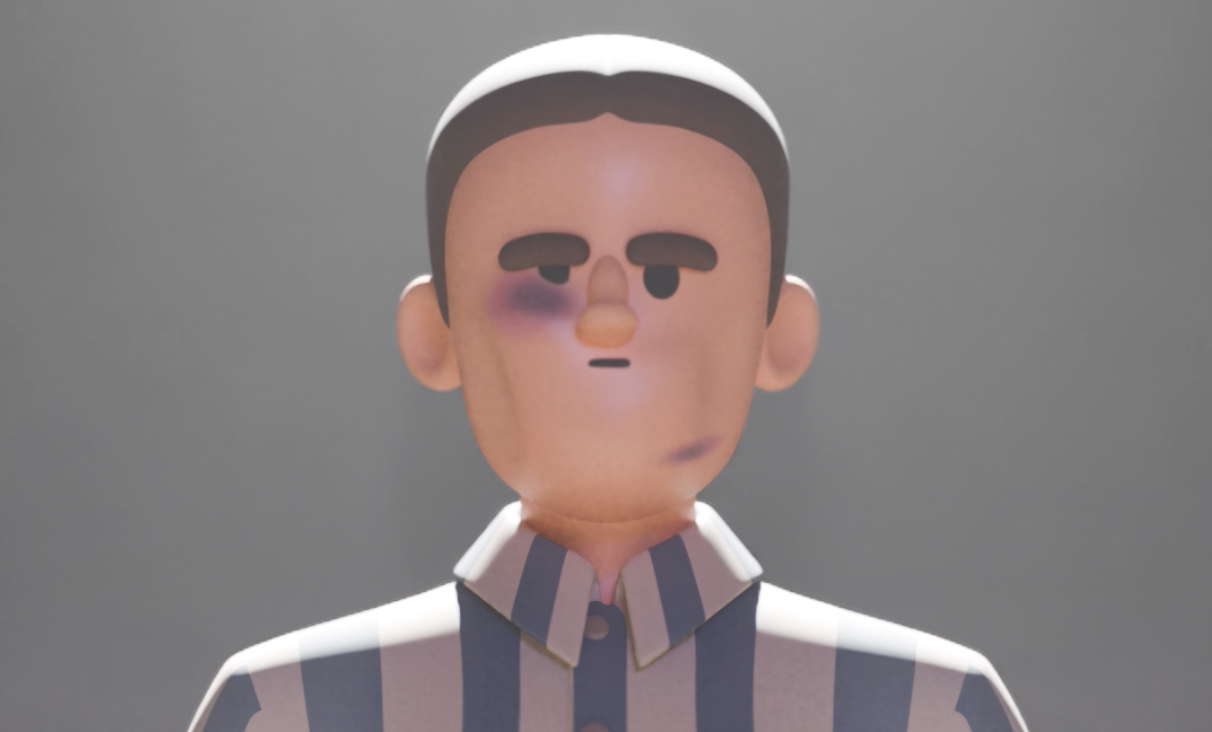
Salamo Arouch in Auschwitz, as depicted in The Boxer
Salamo Arouch was twenty years old, Jewish, and one of the finest amateur boxers in Greece. He was the son of a stevedore at the Thessaloniki port who had taught him to box as a child. By the time he was eighteen he had joined Maccabi Thessaloniki — a Jewish sports club founded in 1908 — and was undefeated in twenty-seven bouts. They called him "the Ballet Dancer" for his footwork. Thessaloniki was, then, a city called the Jerusalem of the Balkans: for more than four centuries it had housed the largest Sephardic Jewish community in the world, arrived in 1492 as refugees from the Spanish Inquisition.
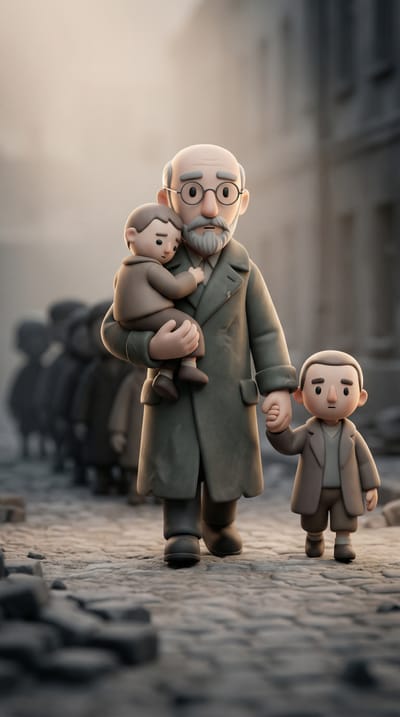
In 1943, nineteen transports carried more than forty-five thousand Thessalonikan Jews to Auschwitz. Ninety-four percent of the community was murdered. Salamo and his family were on one of those transports. His mother and three sisters were killed on arrival. His father was gassed when he grew too weak to work. His brother Avram was shot on the spot for refusing to extract gold teeth from the corpses of the dead. When the SS asked if anyone could fight, Salamo raised his hand.
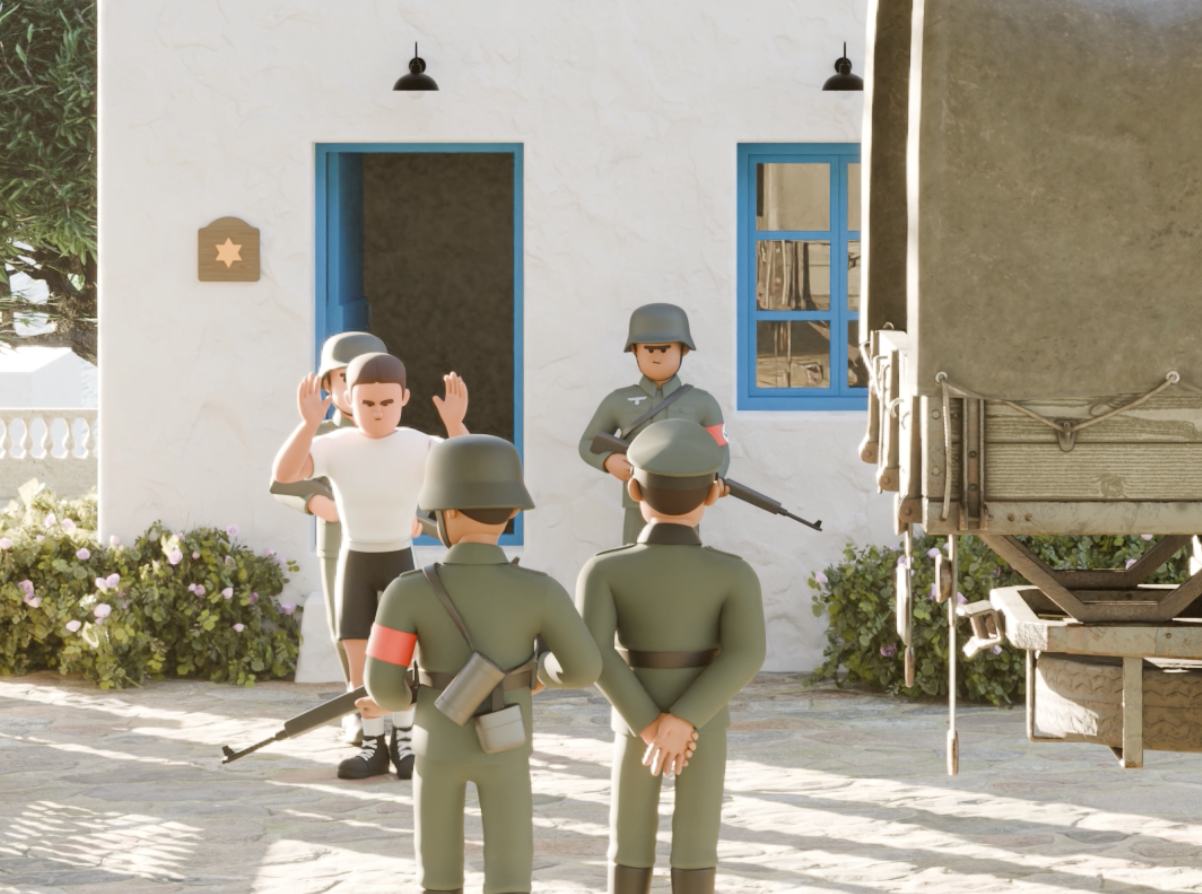
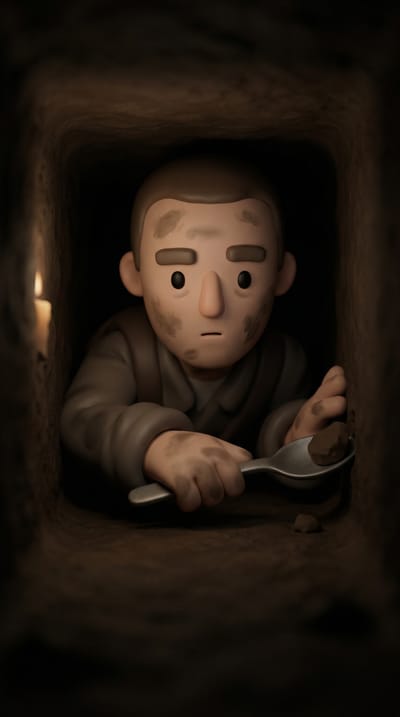
Salamo caught by Nazis in Thessaloniki, 1943, as depicted in The Boxer
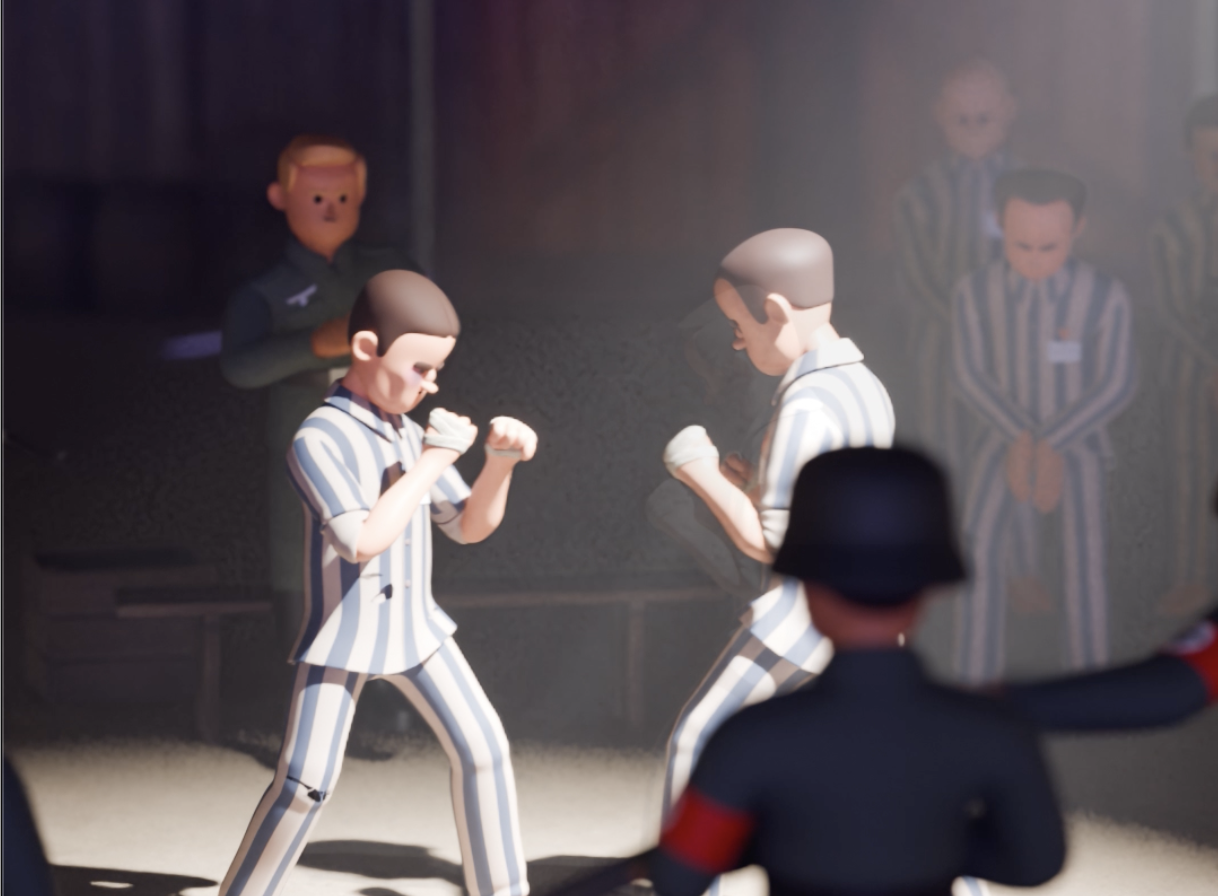
Salamo in the warehouse ring with his opponent, as depicted in The Boxer
The SS forced prisoners to box in a warehouse inside the camp. Officers drank, smoked, and placed bets; a prisoners' orchestra sometimes played as the fighters entered. By Salamo's own count, he fought more than two hundred times over roughly two years. He never lost. Losing often meant the losing fighter would be killed soon after — by selection to the gas chambers, by a guard's bullet, or by assignment to a lethal labor detail. Salamo understood, every time he won, what it meant for the man across from him.
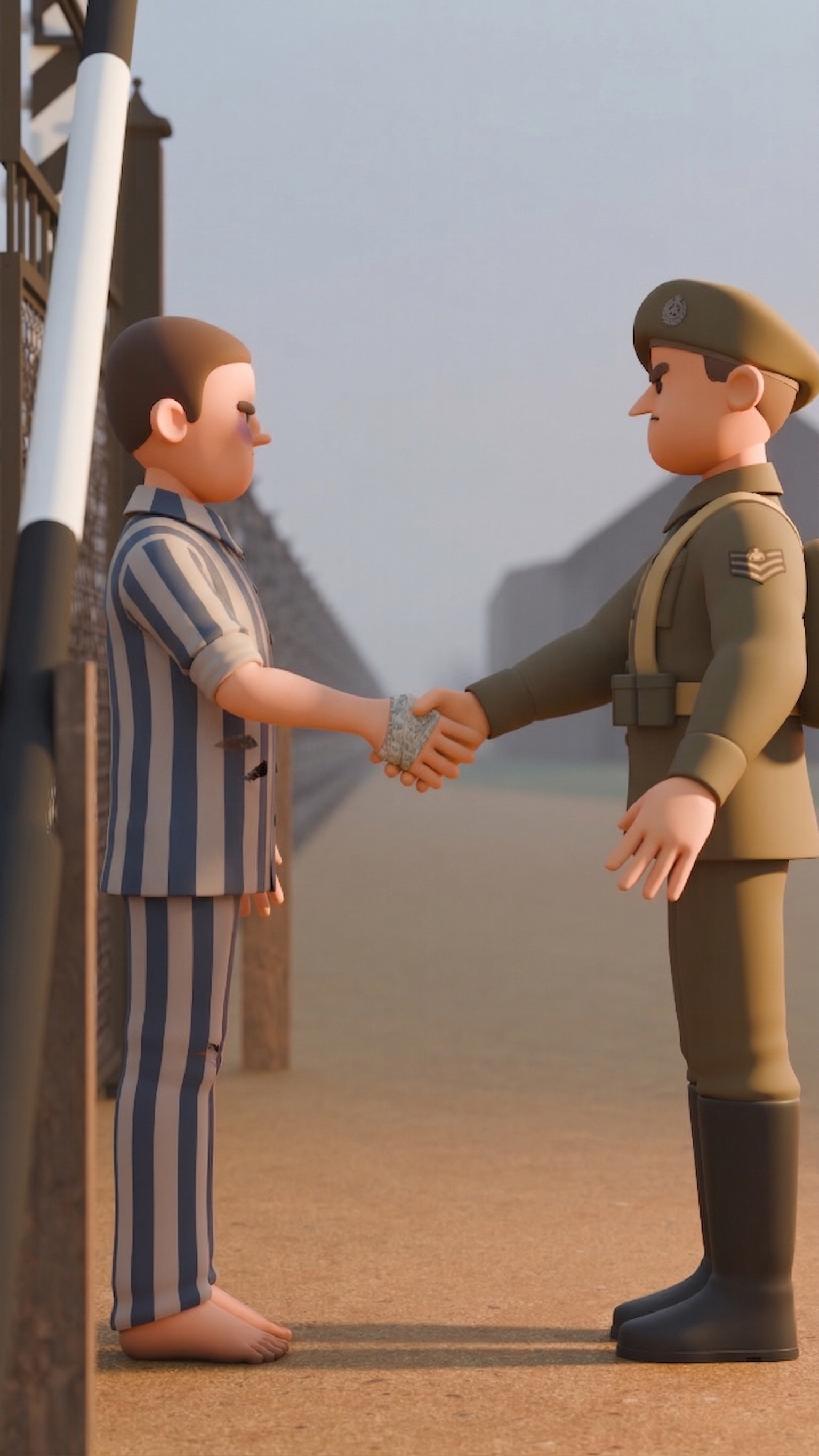
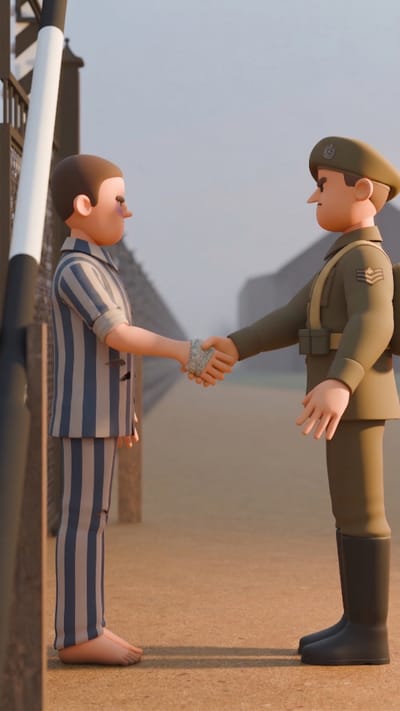
Salamo shakes hands with a British soldier at Bergen-Belsen, April 15, 1945, as depicted in The Boxer
In January 1945, as the Soviet Red Army approached, the Nazis forced Salamo and tens of thousands of others onto a death march out of Auschwitz. He was transported to Bergen-Belsen, where he survived until British forces liberated the camp on April 15, 1945. He met his wife, Marta Yechiel, in the camp hospital shortly after liberation. They married in November 1945, had four children, and were married sixty-four years until his death. A severe stroke in 1994 left him dependent on Marta's care for the last fifteen years of his life. Salamo Arouch died on April 26, 2009, at the age of eighty-six. He carried the weight of every fight for the rest of his life. That is not a metaphor.
About This Lesson Plan
This lesson plan is designed around a single 90-second microshort film — a format that combines the emotional power of documentary storytelling with the time constraints of a real classroom. It follows a four-step structure: Watch (pre-viewing context and the film itself), Analyze (discussion and close reading), Create (structured creative response), and Reflect (personal connection and exit thinking). Each step is differentiated across three grade bands (7–8, 9–10, 11–12) so a single film can serve an entire department. The lesson introduces students to Lawrence Langer's framework of "choiceless choices," the essential concept for teaching survivor ethics without flattening them into triumph. Extension activities and full standards alignment are available in the dedicated tabs above.