If I sleep for an hour, thirty people will die. It was a simple matter of arithmetic.
Read
Before You Read
What this article holds
Topic and time
The story behind Project Witness Episode 1: Adolfo Kaminsky, an eighteen-year-old Jewish chemist in Nazi-occupied Paris who produced thousands of forged identity papers for the French Resistance. About twelve minutes to read, including the embedded ninety‑second microshort.
What this article describes
Forgery work under occupation, the chemistry that made it possible, and the math Kaminsky did in his head about sleep and death. It describes deportation orders and the children who would have been killed without the papers.
What this article does not depict
No graphic violence. No depiction of harm to any person. The act of deportation is referenced, never shown. The most intense moment is conceptual: Kaminsky's arithmetic about sleep, hours, and lives. The embedded microshort is hand‑animated in 3D by a human animation team. It is not archival footage and not AI‑generated.
Take a breath. Find your feet on the floor. You can stop at any point.
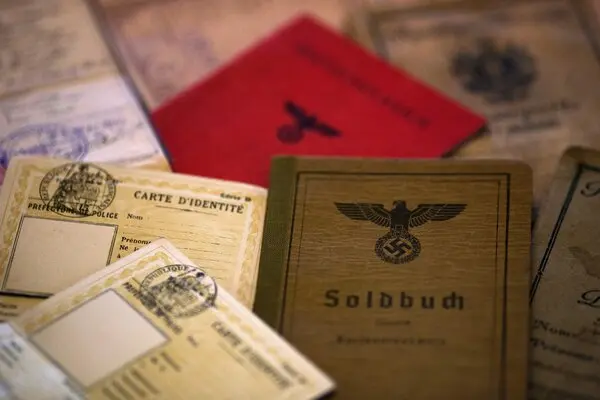
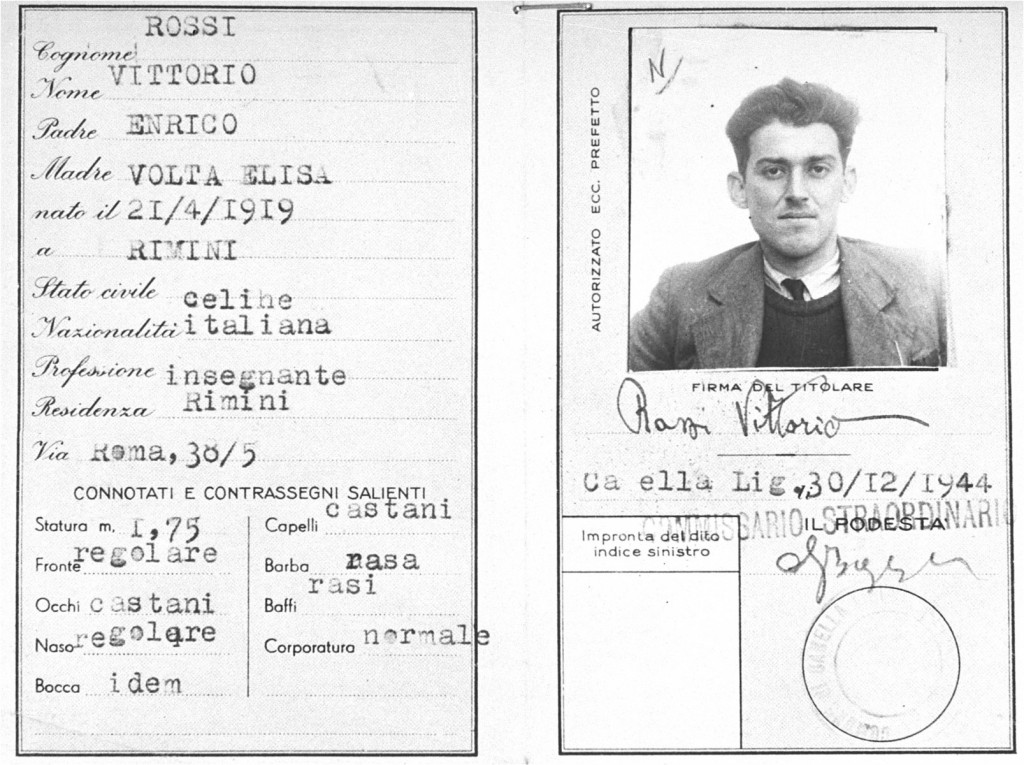
In a Paris attic in the summer of 1944, an eighteen‑year‑old Jewish chemist named Adolfo Kaminsky sat alone at a workbench, mixing lactic acid in a small dish. The acid, the same kind found in ordinary milk, could lift the official ink off a French identity card. If you could lift the ink, you could change the name. If you could change the name, you could save a life. The French Resistance had brought him a list: three hundred Jewish children hiding in convents and orphanages across the city, with deportation orders signed against them. Three documents per child. Nine hundred forgeries. Three days.
He did the math. Thirty documents per hour. If he slept for one hour, thirty people would die. He did not sleep. By the end of the war he had forged papers that saved an estimated fourteen thousand lives. He refused payment for any of them. He lost partial sight in one eye from the strain of close work under lamplight. He lived almost unknown until his daughter wrote a book about him in 2009. He died in 2023, at the age of ninety-seven. This article is the context behind the ninety seconds.
Watch
The microshort
Ninety seconds. Watch first, read after.
English narration · 90 seconds · Project Witness Microshort Stories
Why This Story Matters
A teenager, a chemistry trick, and the arithmetic of conscience
Most of what young people learn about Holocaust rescuers comes in the abstract: the diplomats, the schindlers, the names on the lists. Kaminsky’s story is different in three specific ways. He was a teenager. His tool was ordinary chemistry, learned at a job before the war. And the moral pressure he describes is not heroic abstraction but a number: thirty documents per hour, thirty people dead per hour of sleepYV.
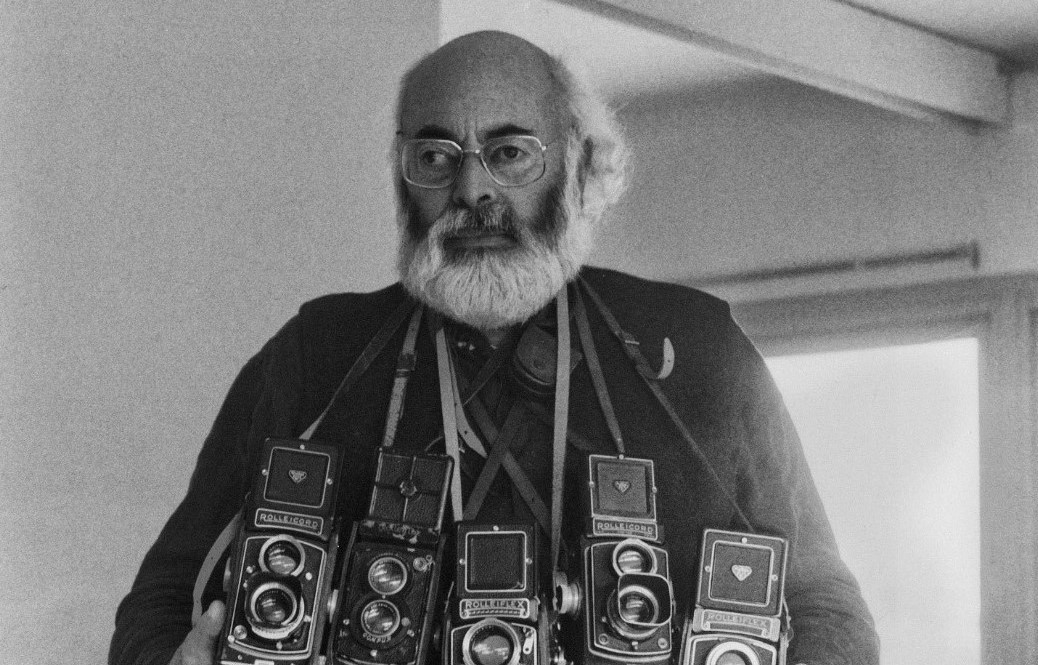
Adolfo Kaminsky, photographed in his Paris home. Photo: Kaminsky family archive
That specificity is the entry the lesson trades on. The film does not ask whether Kaminsky should have done it. It assumes he should have. The harder question is what the doing looked like: the calculation, the cost, the refusal of payment, the decades of silence afterward. Those are the questions a microshort can hold and a textbook usually cannot.
The other reason the story matters is what it does not represent. Kaminsky was extraordinary because rescuers were extraordinarily rare. The vast majority of non‑Jewish Europeans during the Holocaust were bystanders or beneficiaries. To tell a rescue story honestly is to keep that statistical reality in view. The article you are reading does both: it dignifies the act, and it names what the act was an exception to.
Historical Context
What was happening when these documents were forged
Occupied France, 1940–1944
From June 1940 to August 1944, Nazi Germany occupied France. The German military administration worked closely with the Vichy regime, a French collaborationist government, to enforce anti‑Jewish laws, conduct censuses of Jewish residents, and organize mass deportationsUSHMM. Identity papers were not optional. Every person in France was required to carry them and present them on demand. For Jews, those papers were death warrants: the documents identified religion, making the bearer instantly visible to police.
Of the roughly 330,000 Jews in France at the start of the occupation, more than 75,000 were deported to camps in Eastern Europe, the majority of them to Auschwitz‑Birkenau. Only about 2,500 returnedUSHMM. Networks of forgers like the one Kaminsky belonged to were the difference between the deportation numbers and the survival numbers.
The dye-shop chemistry
Before the war, Kaminsky had worked as an apprentice in a dye shop in Vire, Normandy, where he learned the chemistry of color: how dyes attach to fabric, how solvents lift stains, how acids interact with pigments. That ordinary technical knowledge became the basis of his forgery method. He discovered that lactic acid, the same compound found in soured milk, could dissolve the indelible blue ink used in French civil documents while leaving the paper intactNYT. With the ink removed, a new name and identity could be written in its place. The forgery was nearly undetectable because the paper, the layout, and the typography were all original.
The Resistance operation Kaminsky joined in Paris had a simple division of labor: people on the outside provided the lists of those marked for deportation, blank documents stolen from town halls, and the courier networks to deliver finished papers. Kaminsky was the chemist and engraver. He worked alone at the bench, often through the night.
The volume of work, as depicted in The Forger. Illustration: Project Witness microshort
The list of three hundred
In the summer of 1944, with the Allies advancing across France and the Nazi deportation machinery accelerating, a courier arrived at Kaminsky’s door with a single list: three hundred Jewish children in hiding across Paris, in convents, orphanages, and private homes. Their fake locations were already known to the SS. Their deportation orders were signed. They needed papers, three each: an identity card, a ration card, and a certificate of non‑Jewish status, and they needed them within three days.
The list arrives. Illustration: Project Witness microshort
The pace of the work, as depicted in The Forger. Illustration: Project Witness microshort
The People
One named chemist, a chain around him, a daughter who told the story
Most of the work was Kaminsky’s. But the work would not have left the attic without the courier who brought the list, the network that delivered the documents, and, decades later, the daughter who put his life on the public record.
Adolfo Kaminsky
Forger · Resistance member
Argentine‑French · b. Oct 1, 1925 · d. Jan 9, 2023
Argentine‑born Jewish chemist. Trained in a Normandy dye shop. Forged identity documents for the French Resistance from age 18, then for Algerian independence fighters, anti-apartheid activists, and refugees, for the next thirty years. Refused all payment.NYT
The Three Hundred
Children on the list, summer 1944
Names withheld · ages 4–14
Three hundred Jewish children hiding in Paris convents, orphanages, and private homes. Their deportation orders had been signed. Each needed three forged documents. None of them ever knew the forger’s name. Most survived because the papers worked.USHMM
The Resistance Network
Couriers · forgery network · safe houses
EIF, MJS, OSE · 1942–1944
The Jewish Boy Scouts (EIF), the Mouvement de la Jeunesse Sioniste, and Organisation de Secours aux Enfants operated the rescue chain Kaminsky served. They produced the lists, delivered blank documents, and moved the finished papers to the children. None of them knew where the chemist lived.YV
Sarah Kaminsky
Daughter · biographer · screenwriter
French · b. 1979
Wrote the 2009 biography Adolfo Kaminsky: A Forger’s Life after her father’s decades of silence about the work. The book and her 2010 TED talk returned the story to the public record. Without her, the lesson you are reading would not exist.TED
The Process
From a stamped Juif to a saved life
Four steps. Chemistry, calligraphy, courier, child. The work succeeds only if every step disappears into the bureaucracy it is forging against.
Scroll to step through the four stages · click the image to view full screen
Step 1 · The document
A wartime French ID stamped Juif
Step 2 · The chemistry
Lactic acid lifts the official ink
Step 3 · The new name
Engraved to match the original hand
Step 4 · The delivery
Out of the attic, into the hands of a child
Click to expand
Step 1 · The document
The official ink, the stamped religion
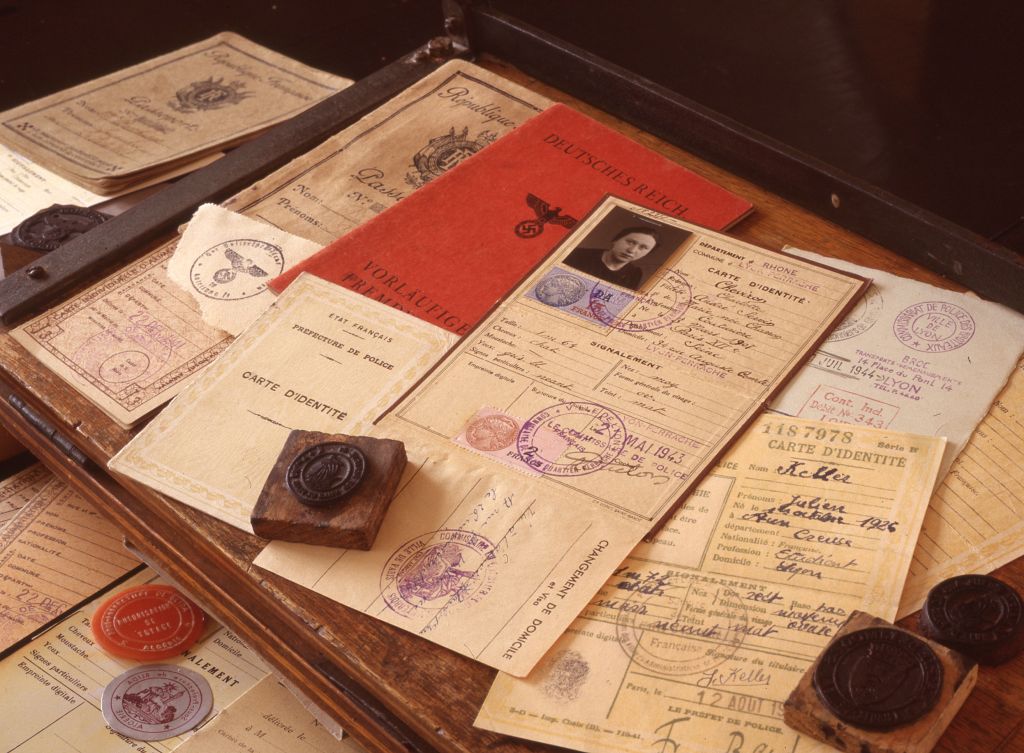
A real wartime French identity card, stamped Juif. This designation made the carrier instantly identifiable to French police and the SS. Removing or replacing that designation, while leaving the rest of the document intact, is the entire technology of Kaminsky’s forgery. Everything else flows from the chemistry that can erase one word without erasing the paper.
Source · Wartime French civil document, period
Step 2 · The chemistry
Lactic acid, learned in a dye shop
Lactic acid, the compound that gives soured milk its taste, dissolves the official ink used in French civil documents without harming the paper fibers. Kaminsky learned the underlying chemistry as a dye-shop apprentice before the war. The same knowledge that adjusts the color of a wool coat lets a forger erase a stamp. The discovery is the entire technology, and a teenager made it.
Source · Kaminsky family archive · Sarah Kaminsky, 2009
Step 3 · The new name
Engraved to match the original hand
With the original ink lifted, Kaminsky engraved a new name in the same typeface, with the same pressure, by the same kind of pen the original clerk used. The new identity had to look unremarkable. The document succeeds only if no police officer pauses on it. The art is in invisibility. The forger’s technique is wrong if anyone notices it.
Source · The Forger, Project Witness microshort
Step 4 · The delivery
Out of the attic, into a child’s hand
The finished papers went back to the courier and from there to the network: convents, orphanages, foster families, train conductors, border crossings. By the end of the war the chain had moved roughly fourteen thousand documents through the country. Kaminsky never met the children whose lives turned on his ink. He could not. The work depended on his anonymity.
Source · The Forger, Project Witness microshort
Voices
What the witnesses said
The forgeries survive because the forger eventually spoke, and because his daughter wrote the story down. Their voices belong here.
How sixty years of silence ended in a daughter’s book
Adolfo Kaminsky kept forging after the war. For Algerian independence fighters between 1954 and 1962. For anti-apartheid activists across the 1960s and 70s. For refugees from civil wars in Latin America. He never accepted payment for any of it. He gave it up only when his eyesight finally failed under the lamplight.
He told almost no one. His own children, growing up in Paris, knew their father as a photographer who took portraits of weddings and bar mitzvahs. The forgery years existed in family silence. He spoke about them only when his daughter Sarah, born in 1979, began asking questions as an adult.
The 2009 biography by Sarah Kaminsky. Calmann-Lévy, Paris
Kaminsky at home in Paris, after publication. Photo: contemporary press archive
The arithmetic, in his own words
When Sarah Kaminsky finally pressed her father on how he survived the three days of forging nine hundred documents for the three hundred children, his answer was not a heroic speech. It was a calculation. He repeated it slowly, the way a teacher repeats a math problem so a student remembers the structure:
The 2009 book and Sarah Kaminsky’s 2010 TED talk together broke the silence. Adolfo Kaminsky received Yad Vashem recognition, the French Légion d’honneur, and visits from filmmakers, scholars, and journalists for the last decade of his lifeNYT. He died in his Paris apartment on January 9, 2023, at age ninety-seven. The estimate of fourteen thousand lives is conservative.
Then & Now
Paris, the city of the forgeries
Kaminsky’s attic and the streets the children moved through still exist. The Memorial de la Shoah in Le Marais is the principal site of remembrance.
Then · 1942–1944
Paris under occupation
The city of identity checks, deportations, and the rescue networks that worked against them. Illustration: Project Witness microshort
Now · Le Marais
The neighborhood today
Kaminsky lived in Le Marais until his death in 2023. The neighborhood holds the Memorial de la Shoah. Photo: contemporary press
Native Language Versions
Watch in French or Hebrew
Each language version is narrated natively, not dubbed. French version available; Hebrew coming as production wraps.
🇫🇷
Le Faussaire
Narration française native
Coming soon
🇮🇱
הזייפן
קריינות עברית
Coming soon
For the classroom
What does responsibility for someone else’s life look like when no one is watching?
For Educators
Teaching The Forger
Three grade‑band lesson plans accompany this episode. Grades 7–8 use the printable student handout; grades 9–10 and 11–12 also have self‑paced digital student modules. Each version follows the same Watch, Analyze, Create, Reflect spine and the same trauma‑informed “safe in / safe out” pattern this article uses.
“Kaminsky refused payment, then and for the rest of his life. What was he protecting by refusing money?”
“The arithmetic, thirty documents an hour and thirty people dead per hour of sleep, is not a metaphor. What does it do to a moral problem when you reduce it to a number?”
“Rescuers were the rare exception. What do we owe a story like Kaminsky’s without using it to soften what the rest of the history was?”
Teaching notes
The lesson plans build in regulation prompts before and after the microshort. Do not skip them. The film’s heaviest moment is conceptual rather than visual, the arithmetic landing, but that conceptual weight can hit hard. If a student needs to step out, let them. Plan your timing so the room ends regulated, not raw.
Safe Out
Before you close this page
Pause
Some endings ask you to keep going. This one asks you to stop. Take a few breaths.
Why we tell it anyway
Kaminsky kept silent for sixty years. Telling this story late does not undo the silence. It honors the fact that someone, in occupied Paris, did the math and chose not to sleep. That is what conscience under occupation looked like in one attic, on one list, for three nights.
What to do with this feeling
Talk to someone. Write something down. Come back tomorrow. Share this with one person who needs to know. The work of witness is not done in a single sitting.
Where to go next on Kaminsky, French rescue, and the forgery networks
The institutions and primary sources below hold the deepest published record on this episode. Each link goes directly to the relevant page.
Videos and primary-source resources to watch when you are ready. Pick from the queue on the right; the featured player swaps in place. Click the player to load the video.
The New York Times · Times Documentaries
The Forger · Times Documentaries
A documentary portrait of Adolfo Kaminsky's clandestine forgery work, built around the practical labor and moral pressure that the microshort introduces.
Sarah Kaminsky, Adolfo Kaminsky: A Forger’s Life (Calmann-Lévy, 2009; English translation 2016, DoppelHouse Press) · Adolfo Kaminsky’s own testimony as recorded by his daughter · the New York Times obituary, January 10, 2023.
Scholarly works
Jacques Sémelin, The Survival of the Jews in France 1940-1944 (Hurst, 2018) · Susan Zuccotti, The Holocaust, the French, and the Jews (Basic Books, 1993) · Vivette Samuel, Rescuing the Children (Wayne State, 2002).