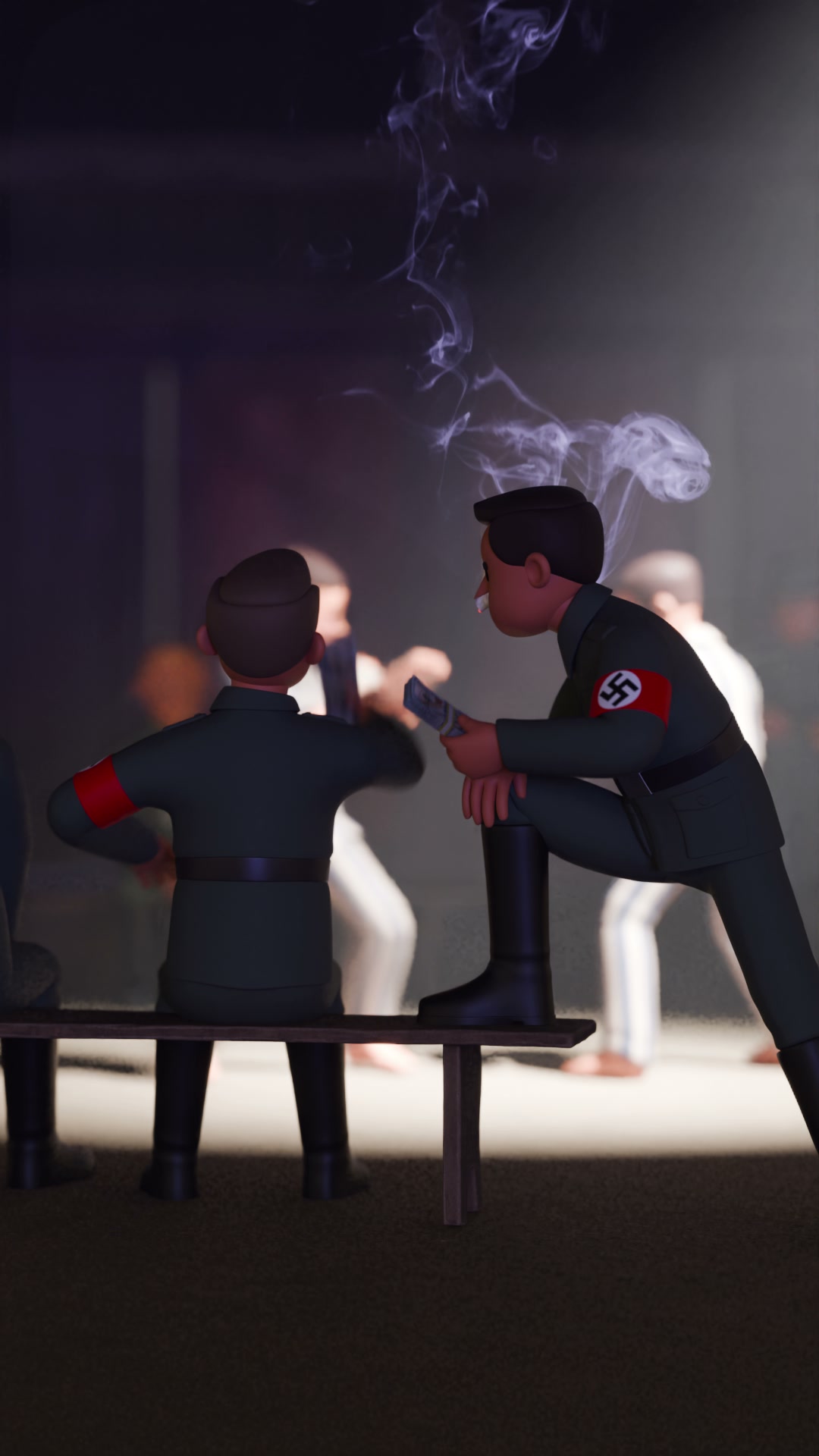
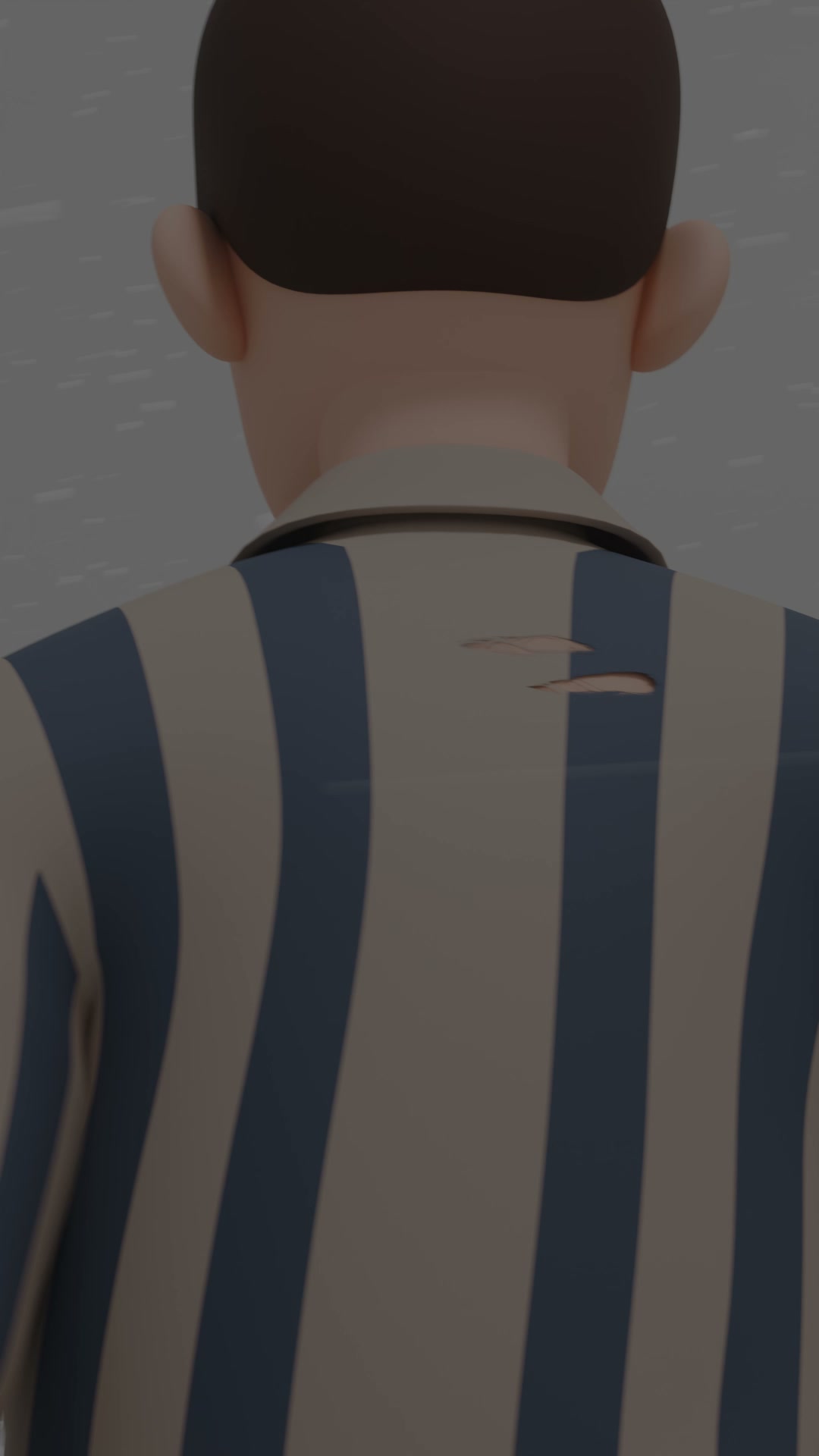
Win, you live. Lose, you die. He understood every time what his victory meant for the man across from him.
Read
Before You Read
What this article holds
Topic and time
The story behind Project Witness Episode 2: Salamo Arouch, a twenty-year-old Jewish boxer from Thessaloniki, deported to Auschwitz with his family in 1943, forced by the SS to fight fellow prisoners for entertainment. About fifteen minutes to read, including the embedded ninety‑second microshort.
What this article describes
The destruction of the 2,000‑year‑old Sephardic community of Thessaloniki, forced boxing inside the Auschwitz warehouse, the murder of Salamo’s family, and the moral framework of choiceless choices through which his survival has to be read.
What this article does not depict
No graphic violence. The act of killing is referenced, not shown. The most intense moments are conceptual: what Salamo understood, each time he won, about the man across from him. The embedded microshort is hand‑animated in 3D by a human animation team. It is not archival footage and not AI‑generated.
Take a breath. Find your feet on the floor. You can stop at any point.
Salamo Arouch was twenty years old, Jewish, and one of the finest amateur boxers in Greece. The son of a stevedore at the Thessaloniki port who had taught him to box as a child. By eighteen he was undefeated in twenty‑seven amateur bouts with Maccabi Thessaloniki, the Jewish sports club. They called him “the Ballet Dancer” for his footwork. Thessaloniki, his city, was then called the Jerusalem of the Balkans: for more than four centuries it had housed the largest Sephardic Jewish community in the world, arrived in 1492 as refugees from the Spanish Inquisition.
In 1943, nineteen transports carried more than forty‑five thousand Thessalonikan Jews to Auschwitz. Ninety‑four percent of the community was murdered. His mother and three sisters were killed on arrival. His father, gassed when he grew too weak to work. His brother Avram, shot for refusing to extract gold teeth from the corpses of the dead. When the SS asked if anyone could fight, Salamo raised his hand. Over roughly two years he fought more than two hundred times. He never lost. He understood, every time he won, what it meant for the man across from him. This article is the rest of what would not fit in ninety seconds.
Watch
The microshort
Ninety seconds. Watch first, read after.
English narration · 90 seconds · Project Witness Microshort Stories
Why This Story Matters
A camp ring is not a sports arena. The film insists you see the difference.
Roger Ebert, reviewing the 1989 Hollywood feature Triumph of the Spirit based on Salamo’s life, wrote that the film made “the death camp the setting for a boxing movie, instead of the other way around.”RE The microshort you are about to watch is a deliberate answer to that critique. It refuses the sports‑movie pacing. It withholds the easy triumph. It returns at the end to the older Salamo, not the young champion.
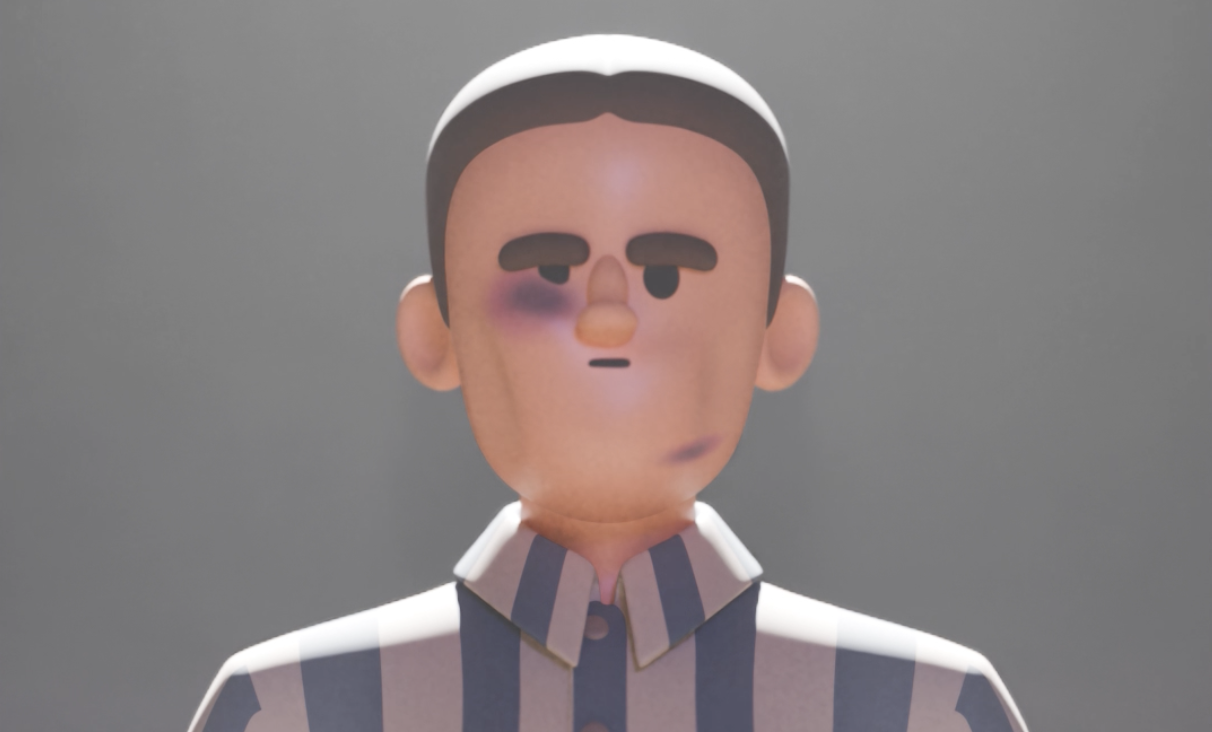
Salamo Arouch, as depicted in The Boxer. Illustration: Project Witness microshort
That refusal is the entire point. Boxing is an Olympic sport. The same footwork that made Salamo undefeated at Maccabi Thessaloniki kept him alive in Auschwitz, because the SS wanted entertainment. The skill did not change. The system around the skill changed everything. Reading Salamo’s survival without that distinction turns him into a sports hero. Reading it with the distinction reveals what the camps actually were: an architecture in which staying alive could itself be a kind of moral injury.
The story also matters because of what surrounds it. The Thessaloniki deportation is one of the least‑known major events of the Holocaust in American Holocaust education. The city had been a Jewish capital for four centuries. Ninety‑four percent of its Jewish community was murdered. The film and this article keep Salamo specific and named, while keeping the scale of what was lost visible.
Historical Context
What was happening around the warehouse ring
Thessaloniki, the Jerusalem of the Balkans
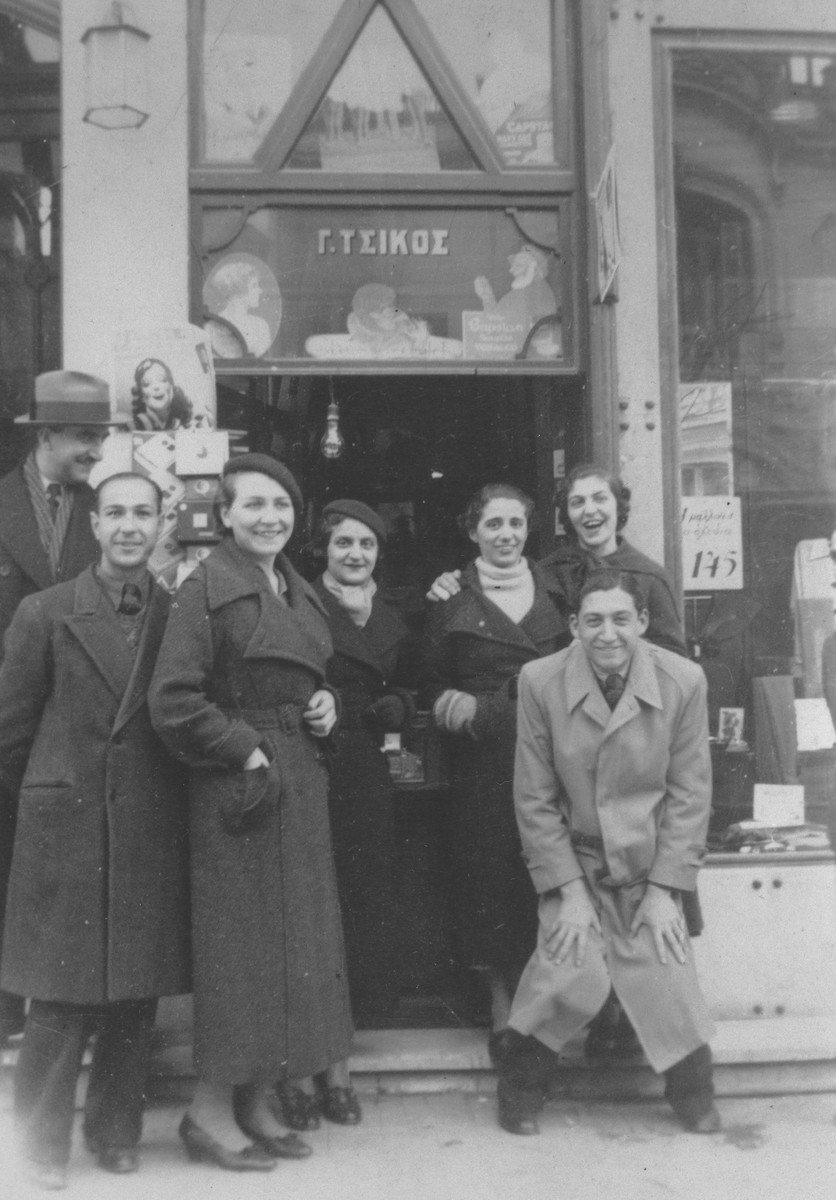
Following the 1492 expulsion from Spain, Sephardic Jews settled in Ottoman Thessaloniki in such numbers that by the sixteenth century the city was majority Jewish. By 1900 it was the only major European city where Jews were the largest single communityUSHMM. They called it Madre de Israel, the Mother of Israel. The port closed on Saturdays because so many of the stevedores were Jewish. Maccabi Thessaloniki, the Jewish sports club Salamo represented, had been founded in 1908. The community spoke Judeo‑Spanish (Ladino) at home for four hundred years.
By the start of the Second World War there were roughly fifty‑six thousand Jews in Thessaloniki. The community held thirty‑four synagogues, a major Jewish hospital, secular and religious schools, sports clubs, and the largest Ladino‑language press in the world.
The deportations, 1943
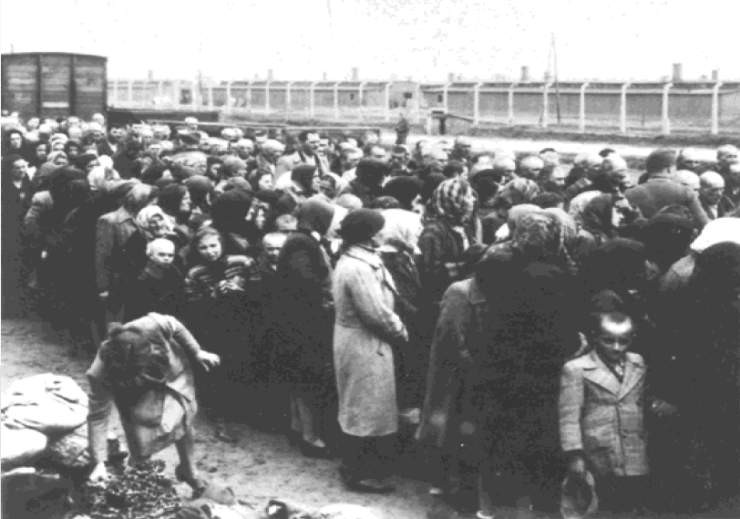
German forces occupied Thessaloniki in April 1941. By February 1943 the SS had instituted the yellow star, ghettoization, and forced labor for the city’s Jews. Between March 15 and August 18, 1943, nineteen transports carried more than forty‑five thousand Thessalonikan Jews to Auschwitz‑BirkenauUSHMM. The journey took ten days in sealed cattle cars. Ninety‑four percent of the community was murdered. Salamo and his family were on one of those transports.
The Judenrampe at Auschwitz. Archival photograph
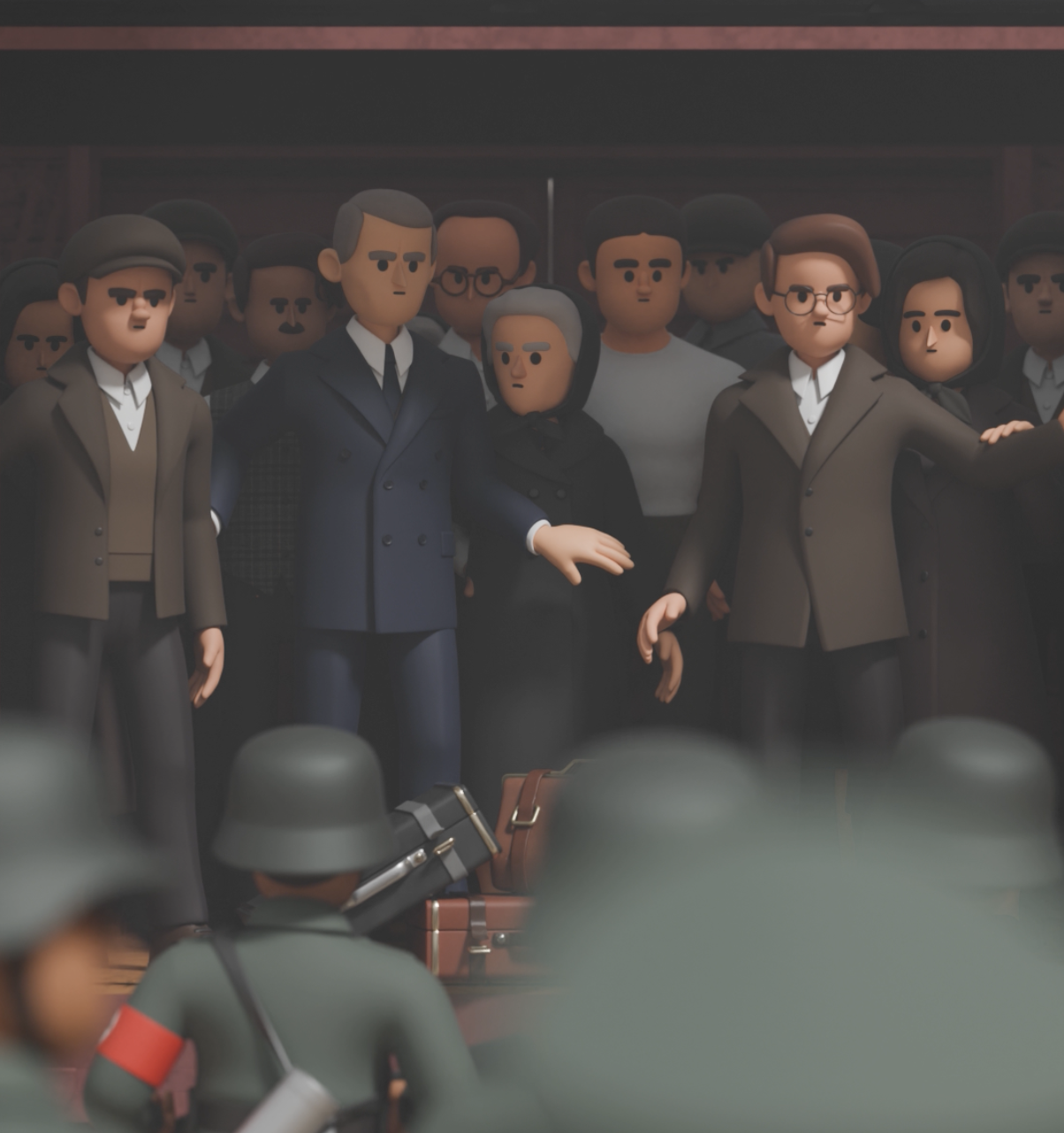
A transport arrives at Auschwitz, as depicted in The Boxer. Illustration: Project Witness microshort
The warehouse ring
Inside Auschwitz, the SS forced selected prisoners to box for entertainment. The fights were held in a warehouse repurposed as an arena. Officers drank, smoked, and placed bets on the outcomes. By some accounts a prisoners’ orchestra sometimes played as the fighters entered. The architecture of the spectacle was deliberate. Boxing, an Olympic sport, was emptied of its rules and refilled with the camp’s logic: losing usually meant the losing fighter would be killed soon afterward, by selection to the gas chambers, by a guard’s bullet, or by assignment to a lethal labor detailYV.
By his own count, Salamo fought more than two hundred times across roughly two years. He never lost.
The arena, as depicted in The Boxer. Illustration: Project Witness microshort
The People
Five people whose names history kept (and one whose name it did not)
Salamo Arouch survived. His brother Avram did not. His mother and three sisters and his father did not. His wife Marta did, and stayed with him for sixty-four years. The men he fought, more than two hundred of them, mostly have no names in the record.
Salamo Arouch
Boxer · subject of the film
Greek‑Sephardic · b. Jan 1, 1923 · d. Apr 26, 2009
Amateur boxer at Maccabi Thessaloniki, undefeated in 27 bouts before the war. Deported with his family in 1943. Fought more than 200 times in the Auschwitz warehouse ring across roughly two years. Never lost. Liberated at Bergen-Belsen, April 1945.NYT
Avram Arouch
Brother · refused, was shot
Greek‑Sephardic · killed at Auschwitz, 1943
Salamo’s brother. Shot at the camp for refusing to extract gold teeth from the bodies of the dead. The refusal cost him his life. The refusal is part of what made the family’s record what it is.USHMM
The Opponents
200+ prisoner-fighters · Auschwitz
Names mostly lost · 1943-1944
The men Salamo fought, more than two hundred across roughly two years. Most of their names are not in the record. Most of them did not survive. The film and this article refuse to let them disappear behind Salamo’s record.
Marta Yechiel
Wife · met after liberation
Greek‑Sephardic · d. 2013
Met Salamo in the Bergen-Belsen hospital shortly after the camp’s liberation on April 15, 1945. Married November 1945. Four children. Sixty-four years of marriage. Cared for him through the last fifteen years of his life after a 1994 stroke.NYT
LL
Lawrence Langer
Scholar · “choiceless choices”
American · b. 1929
Holocaust literature scholar. His 1982 book Versions of Survival introduced the framework of choiceless choices: situations where no available option preserves moral agency. The framework is the primary intellectual tool for reading Salamo’s testimony.
Four Stages
From Thessaloniki to the ring to liberation
Four scenes from Salamo’s arc. The champion in the Maccabi gym. The deportation. The ring. The liberation handshake at Bergen-Belsen. The film holds each one without softening it.
Scroll to step through the four stages · click the image to view full screen
Stage 1 · Thessaloniki, before
The Maccabi gym, undefeated in 27 bouts
Stage 2 · March 1943
Seized in Thessaloniki, deported
Stage 3 · Auschwitz, 1943-1944
The warehouse ring, more than 200 fights
Stage 4 · Bergen-Belsen, April 15, 1945
Liberation handshake with a British soldier
Click to expand
Stage 1 · Thessaloniki, before
Maccabi Thessaloniki: the Ballet Dancer at twenty
Salamo trained at Maccabi Thessaloniki, the Jewish sports club founded in 1908. By his late teens he was undefeated in twenty-seven amateur bouts. They called him the Ballet Dancer for his footwork. The skill that would keep him alive in the camp was, in Thessaloniki, simply a sport.
Source · Maccabi Thessaloniki archive · period accounts
Stage 2 · March 1943
Nineteen transports, forty-five thousand people
Between March 15 and August 18, 1943, nineteen transports carried more than 45,000 Thessalonikan Jews to Auschwitz. Salamo and his family were on one of them. The cattle car journey took ten days. His mother and three sisters were killed on arrival. His father, a week later. His brother Avram, on a date the family never learned.
Source · USHMM Salonika encyclopedia entry
Stage 3 · Auschwitz, 1943-1944
The warehouse ring, the SS audience
The SS forced prisoners to fight in a warehouse repurposed as an arena. Officers drank, smoked, and placed bets. By Salamo’s own count he fought more than two hundred times across roughly two years. He never lost. Losing usually meant the losing fighter was killed soon afterward. The film returns the audience to the frame because the audience is part of the historical record.
Source · Salamo Arouch oral testimony · USC Shoah Foundation
Stage 4 · Bergen-Belsen, April 15, 1945
The handshake, then the hospital
In January 1945, as the Soviet Red Army approached Auschwitz, the SS forced Salamo and tens of thousands of others onto a death march westward. He was transported to Bergen-Belsen and survived there until British forces liberated the camp on April 15, 1945. Weeks later, in the camp hospital, he met Marta Yechiel. They married in November 1945.
Source · Bergen-Belsen Memorial · period photographs
Voices
What the witnesses said
Salamo’s testimony, and the Thessaloniki community’s, survive in part because survivors spoke and institutions kept the recordings. These are some of the voices through which the story reached us.
Choiceless choices: the framework the story requires
The Holocaust literature scholar Lawrence Langer introduced the phrase choiceless choices in his 1982 book Versions of Survival. He used it to describe what the camps imposed on their victims: situations in which none of the available options preserved moral agency. The phrase is not a metaphor. It is an attempt to name what older moral vocabularies could not.
Apply the framework to Salamo. Win the fight, and the man across from him is likely killed soon afterward. Lose the fight, and he himself is likely killed. There is no third option that lets him keep his conscience intact. The choice is constrained to a binary that was constructed for the SS’s entertainment, not for his moral life. The framework refuses both condemnation and celebration. It places the moral question where it belongs: on the camps, not on the men forced to act inside them.
And yet, and this is the part of the framework that matters most, Salamo himself, in his postwar testimony, carried what he had done. He did not say it was easy. He did not say it did not count. The framework does not erase responsibility. It places it correctly. The moral weight survivors carry is not the same kind of weight perpetrators or bystanders carry. It is its own category, and the language has had to be built for it.
What victory cost the winner. Illustration: Project Witness microshort
The moral residue. Illustration: Project Witness microshort
After the war
Salamo and Marta settled in Israel. They had four children. He worked, in different periods, as a sports administrator, a hotelier, and a boxing trainer. A severe stroke in 1994 left him largely dependent on Marta’s care for the last fifteen years of his life. He gave interviews into his seventies, including for the USC Shoah Foundation and several documentary films. He died on April 26, 2009, in Tel Aviv, at the age of eighty‑sixNYT. Marta survived him by four years.
Then & Now
Thessaloniki
The city Salamo grew up in does not exist anymore. The buildings remain. The community does not.
Then · 1930s
The Jerusalem of the Balkans
56,000 Jews. 34 synagogues. The largest Sephardic community in the world. Illustration: Project Witness microshort
Now · What remains
A city, without its Jewish heart
Today, fewer than 1,000 Jews live in Thessaloniki. The community was 94% murdered. Illustration: Project Witness microshort
Native Language Versions
Watch in French or Hebrew
Each language version is narrated natively, not dubbed. Coming soon as production wraps.
🇫🇷
Le Boxeur
Narration française native
Coming soon
🇮🇱
המתאגרף
קריינות עברית
Coming soon
For the classroom
Can the word “survival” carry what actually happened?
For Educators
Teaching The Boxer
Three grade-band lesson plans accompany this episode. Grades 7–8 use the printable student handout; grades 9–10 and 11–12 also have self-paced digital student modules. Each version follows the same Watch, Analyze, Create, Reflect spine and the same trauma-informed “safe in / safe out” pattern this article uses.
“Salamo never lost. What does the word survival mean when survival could only happen at another person’s expense?”
“Lawrence Langer’s phrase choiceless choices names what older moral vocabularies could not. What did the framework let you see that victim and survivor alone do not?”
“The 1989 Hollywood feature treated the camp as a setting for boxing. This microshort treats the boxing as a setting for the camp. What changes when the framing is inverted?”
Teaching notes
The lesson plans build in regulation prompts before and after the microshort. Do not skip them. The film’s heaviest moments are conceptual rather than visual, Salamo’s understanding of what his win meant, but the conceptual weight can hit hard. If a student needs to step out, let them. Plan your timing so the room ends regulated, not raw.
Safe Out
Before you close this page
Pause
Some endings ask you to keep going. This one asks you to stop. Take a few breaths.
Why we tell it anyway
Salamo Arouch lived sixty-six more years after he last fought a man for his life. He testified. He raised four children. He let his story be filmed and badly novelized and finally honestly animated. We tell the story to keep it specific to him, and to keep the names of his opponents from disappearing.
What to do with this feeling
Talk to someone. Write something down. Come back tomorrow. Share this with one person who needs to know. The work of witness is not done in a single sitting.
Where to go next on Thessaloniki, the Auschwitz ring, and choiceless choices
The institutions and works below hold the deepest published record on this episode. Each link goes directly to the relevant page.
Videos and primary-source resources to watch when you are ready. Pick from the queue on the right; the featured player swaps in place. Click the player to load the video.
Auschwitz Memorial · On Auschwitz
Sport and sportspeople in Auschwitz
Authoritative context on how sport, spectacle, coercion, and survival operated inside Auschwitz. Use it beside the warehouse-ring sequence in the microshort.
Salamo Arouch oral testimony (USC Shoah Foundation Visual History Archive) · the New York Times obituary, May 3, 2009 · USHMM Salonika encyclopedia entry · Auschwitz-Birkenau State Museum records.
Scholarly works
Lawrence Langer, Versions of Survival: The Holocaust and the Human Spirit (SUNY Press, 1982) · Mark Mazower, Salonica, City of Ghosts: Christians, Muslims and Jews 1430-1950 (Knopf, 2005) · Michael Molho, In Memoriam: Hommage aux Victimes Juives des Nazis en Grèce (Salonika, 1948).