Before we begin
Before any image, two things to hold. Rabbi Michoel Ber Weissmandl was a scholar from Nitra, Slovakia. He was part of a secret rescue network called the Bratislava Working Group, which worked to stop the deportation of Slovak Jews to Nazi camps. His relative Gisi Fleischmann led the group. Weissmandl was its chief strategist. This lesson is about what he did with the chances he had, and about the one thing he could not do.
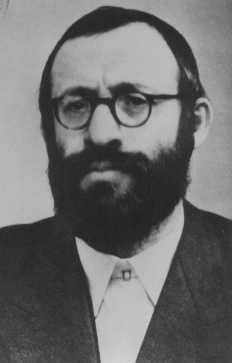
Rabbi Michoel Ber Weissmandl (1903–1957), chief strategist of the Bratislava Working Group. Source: USHMM / YIVO.
Vocabulary
- Bratislava Working Group
- A secret Jewish–Christian rescue network in wartime Slovakia. Gisi Fleischmann led it; Weissmandl was its chief strategist. It worked to stop the deportation of Slovak Jews.
- Deportation
- When people are forced from their homes and loaded onto trains to be sent to Nazi camps.
- Transit Camp
- A holding camp where prisoners were kept before being sent on to a death camp. Weissmandl was held at the Seréd’ transit camp after his arrest.
- Rescuer (“upstander”)
- Someone who uses their own safety to protect a person in danger, instead of standing by. Julius Natali, a Slovak Christian, hid Weissmandl until liberation. A note on the word: you may hear “upstander,” but many historians prefer rescuer. Real choices under terror were harder than a simple “bystander or upstander” label suggests.
- Yeshiva
- A school for the study of Torah and Talmud. After the war, Weissmandl rebuilt his family’s yeshiva on a farm in Mount Kisco, New York.
Where & when · a quick map in words
Nitra → Bratislava → Seréd’ → Auschwitz
then the escape → hidden in Slovakia → after the war → Mount Kisco, New York
Timeline: Weissmandl’s home was Nitra, Slovakia. The rescue work centered on Bratislava. After his arrest he was held at the Seréd’ transit camp, then put on a train toward Auschwitz in occupied Poland. He escaped, was hidden until liberation, and after the war rebuilt the yeshiva in Mount Kisco, New York, where it still teaches.
Anticipation
Before you watch
Can a person be a rescuer and still be unable to save everyone? What if the people they cannot save are the ones closest to them? Weissmandl helped stop deportation trains and handed saws to strangers so they could cut their way free. When the Nazis put him and his own family on a train, he did everything in his power to try to save them, too. In the end he could not. He never abandoned them, and he carried that grief for the rest of his life. Write two or three sentences before you watch: what do you think it costs a person to keep going after a loss like that?
Heads-up before pressing play
The film is 90 seconds. It concerns the Holocaust and the murder of Weissmandl’s wife and five children, and the moral dilemma of negotiating with the SS. It does not depict violence on screen. The family is shown only through silhouette and absence, and Birkenau appears only as architecture: empty rails, a closing door, a distant gate, smoke.
View the Microshort · 90 seconds
Watch in full without writing. Ideally twice: once for feeling, once for detail. The notes come after.
Watch: projectwitness.org/videos/microshort-ep6-weissmandl

Scan with any phone camera, or paste the link into a browser.
Analyze
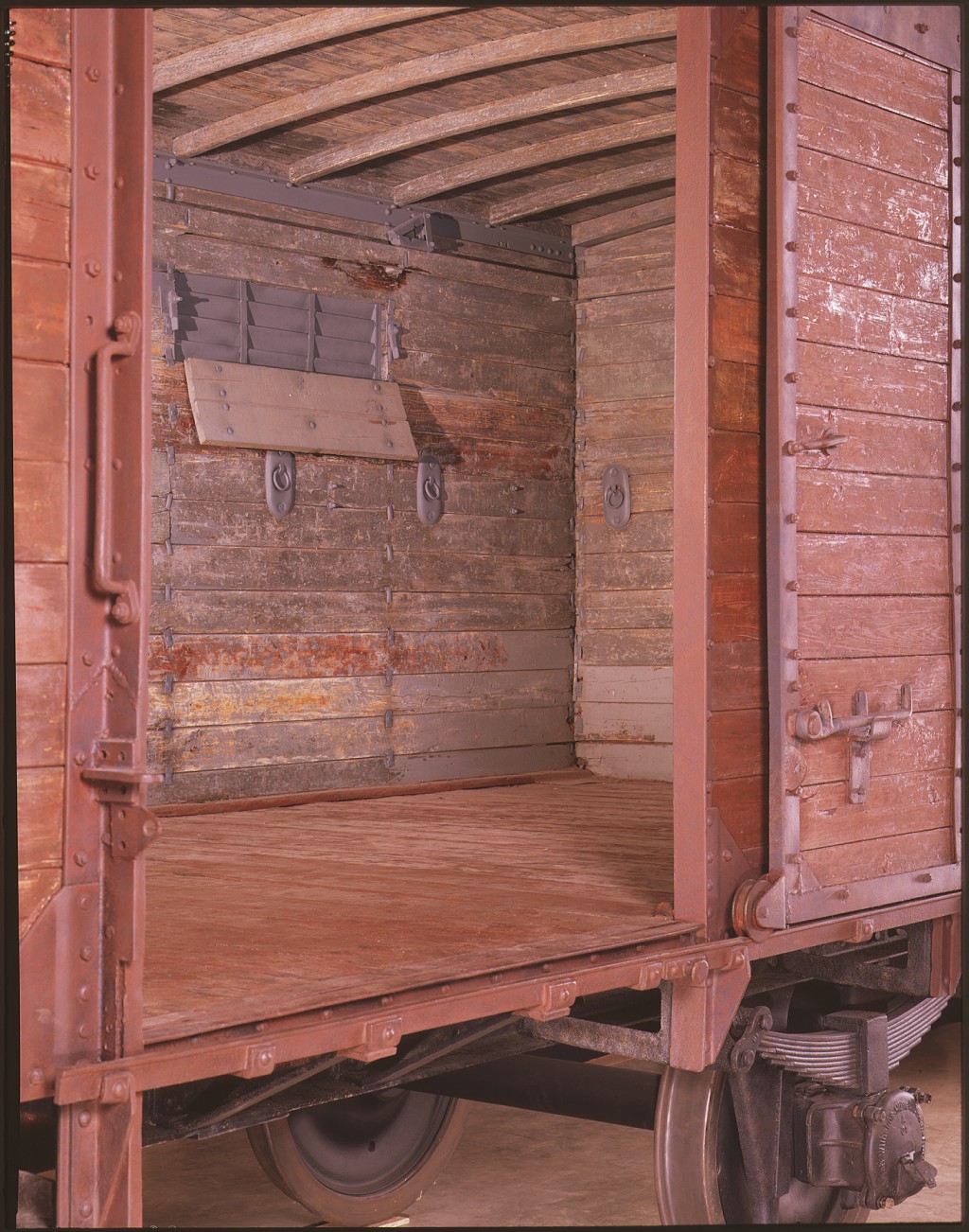
The interior of a cattle car, light through the slats. In the dark of a sealed car like this, Weissmandl sawed through the lock with a wire he had hidden in a loaf of bread. Archival reference.
Comprehension & Visual Storytelling
- Who was Rabbi Weissmandl, and what was the Bratislava Working Group?
- Who led the Working Group, and what was Weissmandl’s role in it?
- At the Seréd’ transit camp, what did Weissmandl give to strangers, and what did he teach them to do?
- In the sealed cattle car, how did he get the lock open? What did he beg his family to do, and what happened?
- The film never shows the faces of his wife and children, and never says his wife’s name. Why do you think the filmmakers honor them through absence instead of showing them?
Create

A loaf of Slovak country bread. Weissmandl hid an emery wire-saw inside a stale loaf, then used it to cut through the cattle-car lock. Archival reference.
Letter Writing
Before you write · three things to remember
- You are a prisoner at the Seréd’ transit camp, waiting to be loaded onto a train, and you do not know what is at the other end.
- A rabbi you have never met risks his own life to press a small saw into your hand and whisper how to use it.
- That saw is a chance. It is not a promise. It might work; it might not.
Now write your letter. Use one specific thing from the list above. Don’t worry about getting every fact perfect; we will work on the history together afterward.
Imagine you are that prisoner at Seréd’ in 1944. Write a short letter to a family member describing the moment a stranger handed you a saw and told you how to cut your way off the train.
Your letter should include:
- What life in the camp has been like, and what you fear is coming.
- What you felt when a stranger risked everything to give you a chance.
- What you hope for. What you are still afraid of.
Write 1–2 paragraphs. Try to capture both the fear and the small, stubborn hope of that moment.
Letter Planner · jot a few words in each line first
Fill these in before you write. Then turn them into sentences.
Who am I writing to?
What has camp been like? What do I fear is coming?
What happened when a stranger handed me a saw?
What do I hope for? What am I still afraid of?
How will I close the letter?
How your work will be looked at
| Criteria | Evidence of meeting the standard | Area to grow |
|---|---|---|
| Historical accuracy | Details fit what we learned: the Seréd’ transit camp, the saw handed to a stranger, 1944 Slovakia. Nothing invented that contradicts the record. | |
| Perspective & empathy | Writes convincingly from inside the moment, carrying real fear and real, stubborn hope. Never turns the person into a symbol. | |
| Letter conventions & voice | Reads as a real letter (greeting, close), 1–2 paragraphs, in a consistent first-person voice; clear enough to follow. |
This is a single-point rubric: the middle column is the target. Use the last column to note one concrete thing to strengthen. That note can come from your teacher, a partner, or yourself.
Reflect
Quick check before you reflect
Cover the meanings and see if you can match each term from memory. Then check yourself:
- Bratislava Working Group · the secret rescue network in Slovakia
- Transit camp · the holding camp (Seréd’) before the death camps
- Yeshiva · the Torah academy Weissmandl rebuilt in New York
- Julius Natali · the Slovak Christian who hid Weissmandl
Order the geography. Put these in the order they appear in Weissmandl’s story: Auschwitz · Nitra · Seréd’ · Bratislava · Mount Kisco (New York). (Check: Nitra → Bratislava → Seréd’ → Auschwitz; then escape and rebuilding → Mount Kisco.)
One-Sentence Takeaway
Write the single most important thing you are taking away from this lesson in one complete sentence. Then answer this: Can someone be a rescuer even if they could not save everyone? What if the people they could not save were the ones they loved most?
Exit Prompt
- The most important thing I’m taking from this story is: ___
- Can someone be a rescuer even if they could not save everyone? My answer is: ___
- One thing this story makes me want to understand better is: ___ It is all right not to have this fully figured out. “I’m not sure yet” is an acceptable answer.
“He could not save them. The yeshiva still teaches.”Project Witness, The Weissmandl Rescues (end card). The Nitra Yeshiva in Mount Kisco, New York, founded 1949, operates today.