He couldn't raise the camera to his eye. So he shot blind, from the hip, inside Auschwitz.
Read
Before You Read
What this article holds
Topic and time
The story behind Project Witness Episode 3: the Sonderkommando, the Jewish prisoners forced to work the gas chambers at Auschwitz‑Birkenau, and the four photographs taken from inside the killing process in the summer of 1944. About fifteen minutes to read, including the embedded ninety‑second microshort.
What this article describes
The work of the Sonderkommando, the photography of the killing process at Auschwitz‑Birkenau, and the death of the photographer, Alberto Errera. It includes the four archival photographs taken inside the camp by victims.
What this article does not depict
No recognizable bodies. No graphic depictions. The act of murder is depicted suggestively, never explicitly. The four archival photographs themselves are shown, as they have been shown by Yad Vashem, the Auschwitz Memorial, and USHMM, because they are evidence the victims chose to leave behind.
Take a breath. Find your feet on the floor. You can stop at any point.
In the summer of 1944, at the height of the Hungarian deportations, a Greek‑Jewish prisoner named Alberto Errera, a former military officer, prisoner 182552, was forced to work the gas chambers and crematoria at Auschwitz‑Birkenau. He was Sonderkommando. The Nazis planned to kill him, like every man in the unit before him, to make sure no one survived to say what they had seen.
This is the story of what he did with a camera he was not supposed to have. It is also the story of the people who stood lookout, who smuggled the film, who carried it to the resistance, who insisted at every step that this had to be photographed and the photographs had to leave the camp. They left us four frames. This article is the context behind those frames.
Watch
The microshort
Ninety seconds. Watch first, read after.
English narration · 90 seconds · Project Witness Microshort Stories
Why This Story Matters
The only photographs of the killing process made by the victims themselves
Most photographs we have of the Holocaust were taken by the perpetrators: by SS officers documenting their work, by Wehrmacht soldiers staging trophy shots, by liberators recording what they found after the killing was over. The Sonderkommando photographs are different. They are the only known photographs taken from inside the killing process, by the people who were being killed.YV
Four exposures, one act of resistance. Composition: Project Witness microshort
That difference is not a footnote. It is the entire story. The photographs exist because four men, Errera, Szmulewski, Fajnzylberg, and one more whose name we do not know, decided that the world had to see this with their own eyes, not the SS’s. They risked execution to take them. They built a chain of human courage to smuggle them out: a toothpaste tube, a Polish civilian, a resistance network, a coded letter dated September 4, 1944.
The microshort you watched is ninety seconds. This article is the rest of what would not fit. Why Errera, why a camera, why those four frames specifically, why the act of photographing mattered then and matters now. How the photographs reached the world. What we know about every person in the chain. And how to teach this to young people without making the trauma the point.
Historical Context
What was happening when these photographs were taken
Summer 1944, the Hungarian deportations
Between May 15 and July 9, 1944, the SS deported more than 430,000 Hungarian Jews to Auschwitz‑BirkenauUSHMM. Trains arrived at the ramp around the clock. The killing was so concentrated that the crematorium furnaces could not keep pace. The SS dug open‑air burning pits behind Crematorium V to dispose of the bodies the ovens could not processYV.
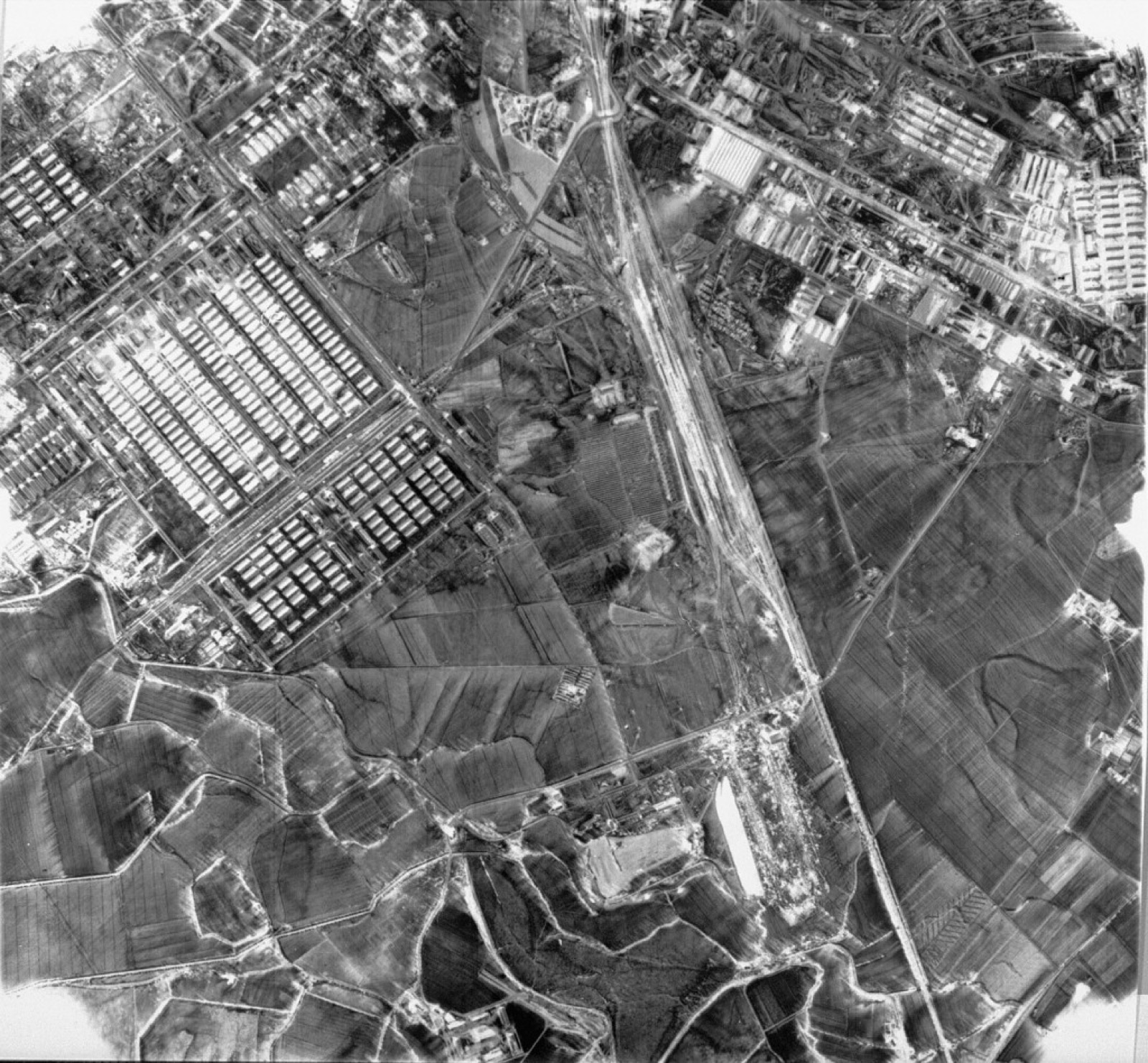
Allied reconnaissance flights over Auschwitz in 1944 produced aerial photographs of the camp from above. The Hungarian deportation period was the peak of the killing. The smoke plumes from the burning pits are visible from miles up.
The Sonderkommando
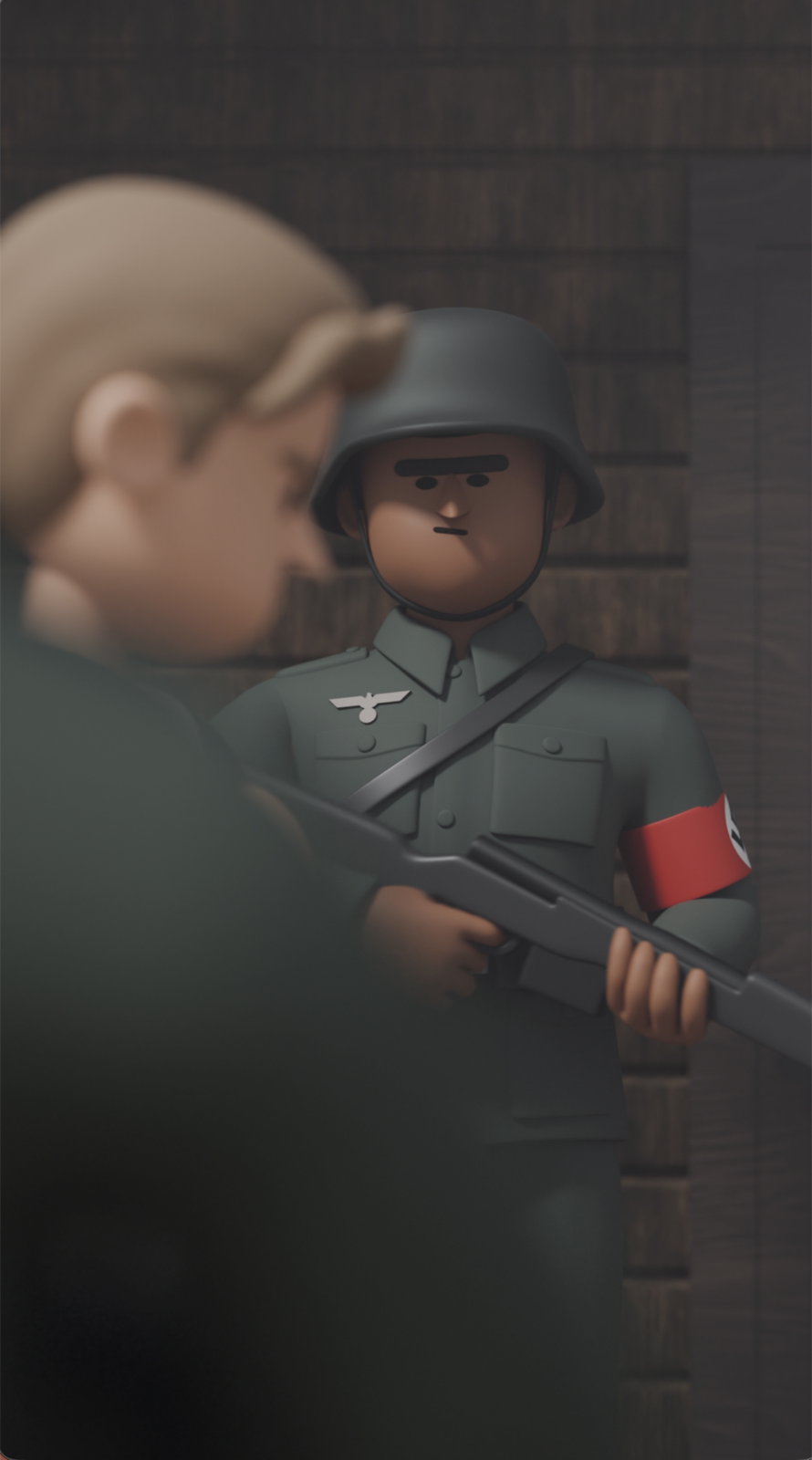
The Sonderkommando, the “special unit,” were Jewish prisoners forced by the SS to work the gas chambers and crematoriaUSHMM. They guided victims into the gas chambers. They removed bodies. They transported remains to the pits. They disposed of ash. The SS rotated and murdered Sonderkommando units periodically, typically every few months, so that no group of prisoners would accumulate enough knowledge to bear witnessAM. Survival in this role was not a moral position. It was an extension of the killing. Lawrence Langer’s term “choiceless choices” applies here exactly.
Crematorium V
Crematorium V sat at the western edge of Birkenau, near the birch grove the Germans called Birkenwald. It had a flat reinforced‑concrete roof, a single brick chimney, and a heavy wooden doorway facing westAM. The doorway is the one Errera stood in. The roof is the one David Szmulewski climbed to keep lookout.
Behind the building, hidden behind a wooden fence, were the open‑air burning pits dug in summer 1944 to handle the volume the ovens could not.
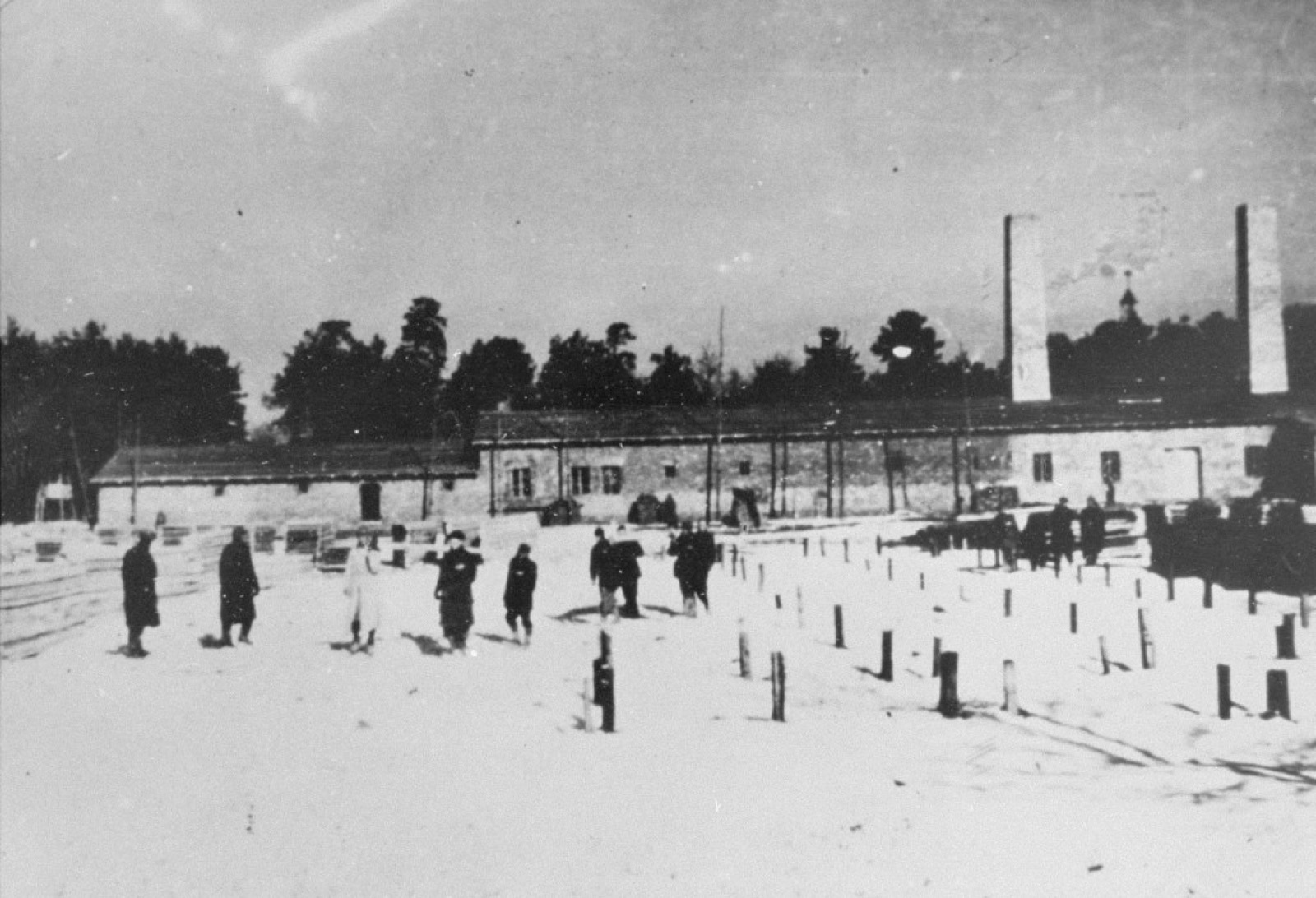
Crematorium IV under construction, 1942. V was its twin. Photo: Auschwitz‑Birkenau State Museum
The camera, the photographs
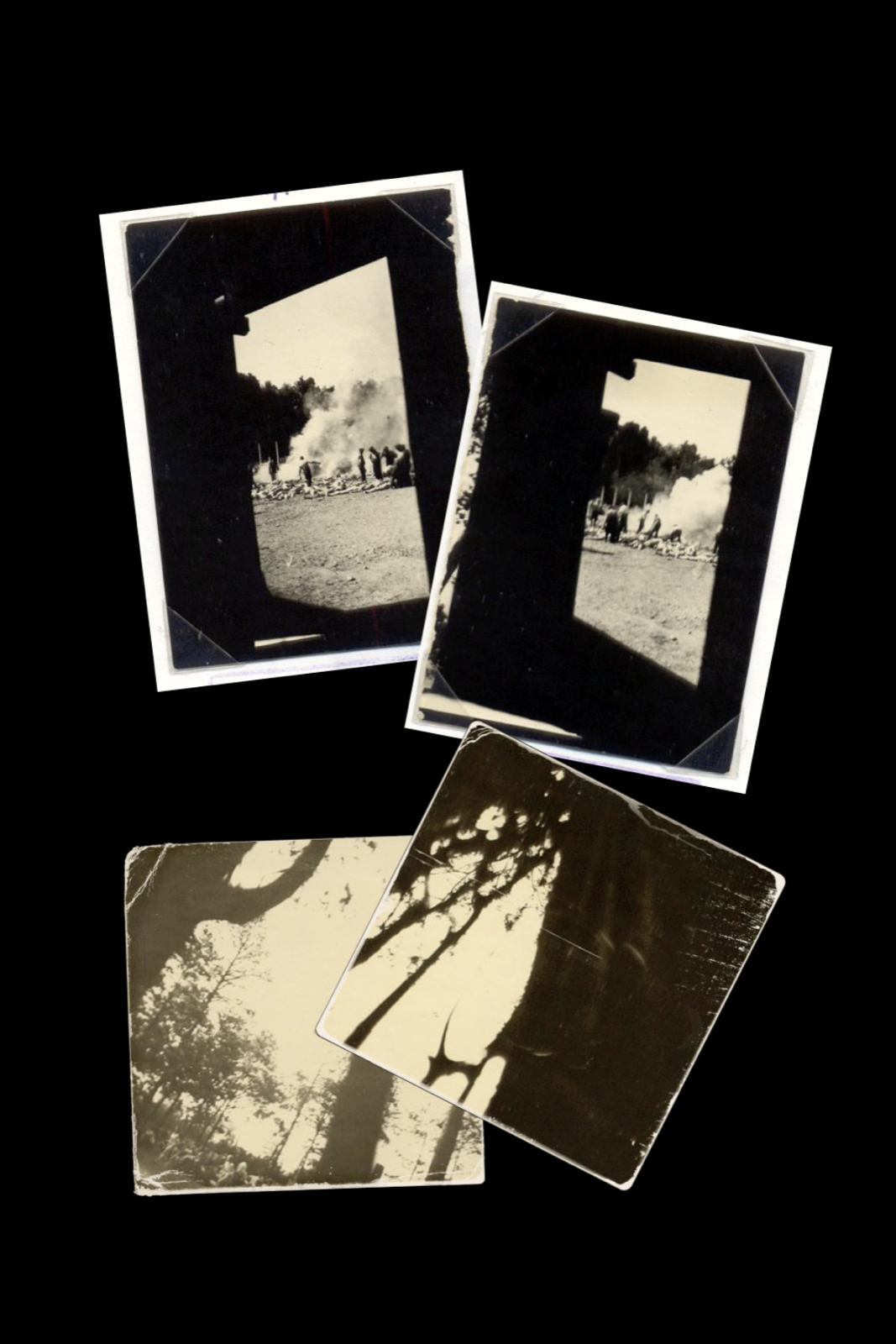
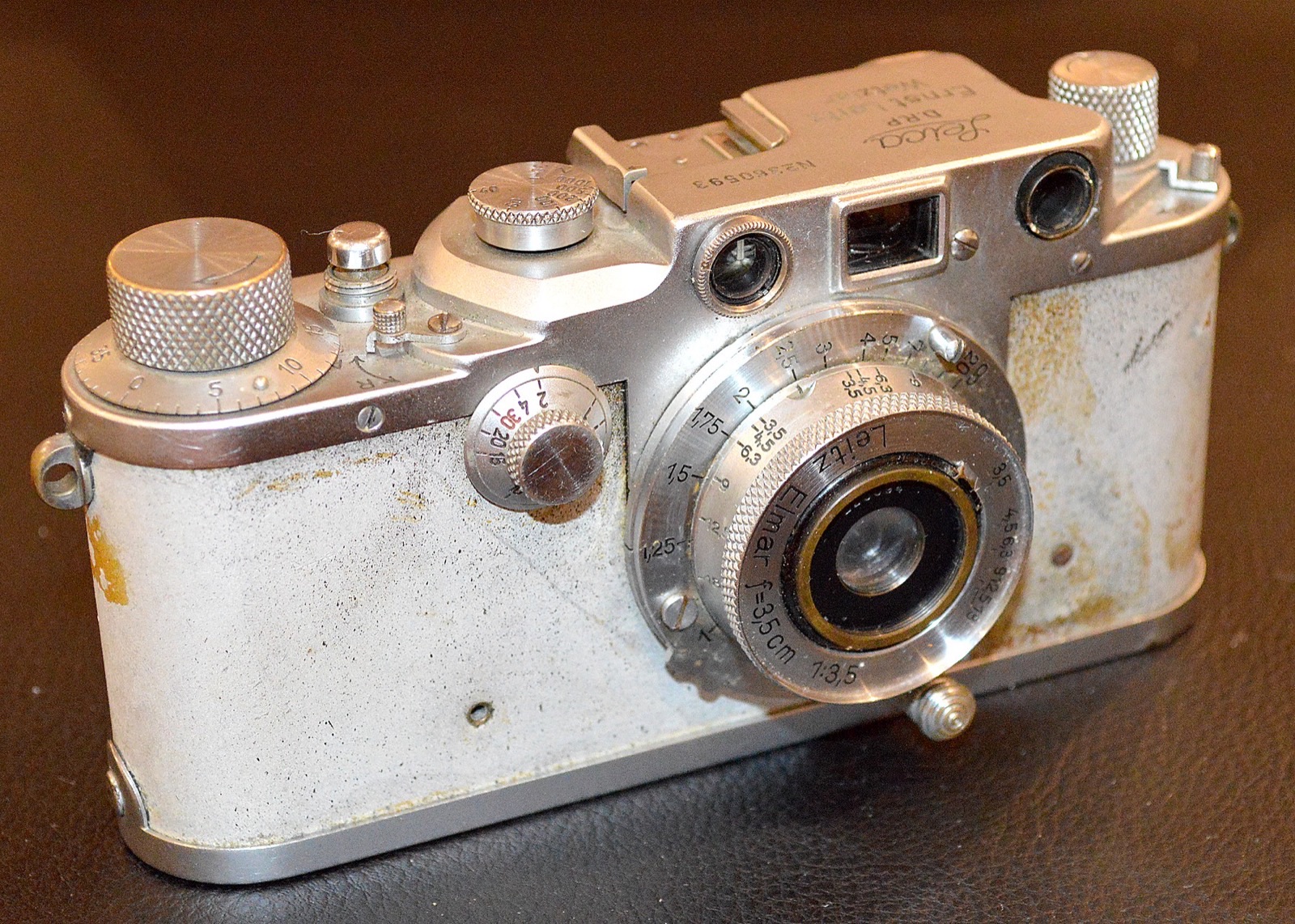
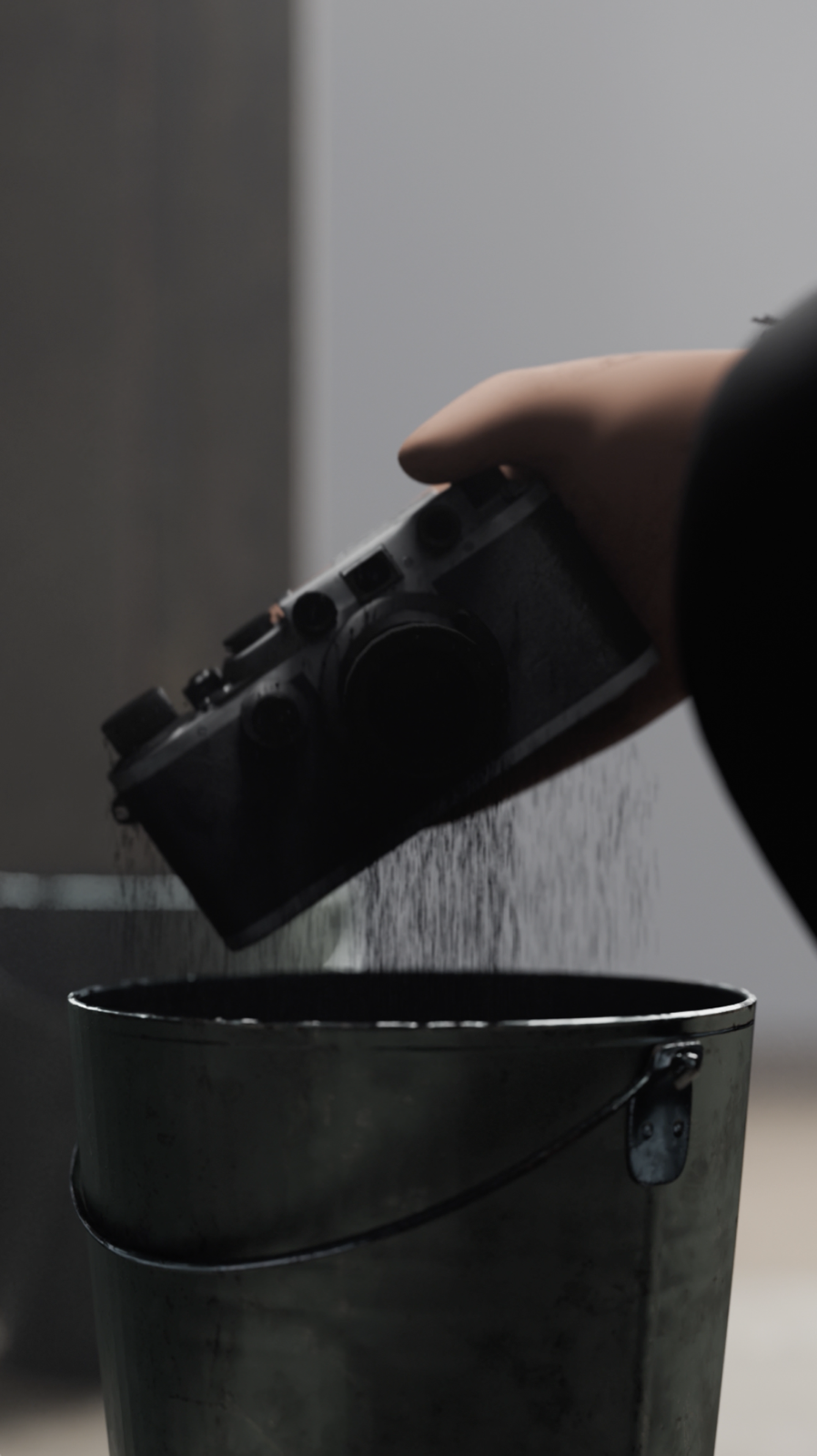
The camera, by Fajnzylberg’s account, “looked like a German Leica.” It had been smuggled into the camp by civilians associated with the Polish undergroundYV. Errera and the lookouts hid it inside a metal work bucket, buried in human cremation ash. Guards had no reason to inspect ash. On a day in August 1944, in two locations, the doorway of Crematorium V and the birch grove behind it, Errera fired the shutter four times. He did not raise the camera to his eye. He shot from the hip. Two of the frames show the burning pits through the doorway. One shows women being driven into the gas chamber. The fourth aims too high and captures only sky and trees.
A Leica IIIc rangefinder, the camera type Fajnzylberg referenced. Reference photo, not the actual camera
The hiding place: a bucket of cremation ash. Illustration: Project Witness microshort
The People
The five people whose courage made the photographs possible
None of them set out to be heroes. All of them were trying to survive an impossible situation while leaving something behind the world might not be able to ignore.
Alberto Errera
Photographer · Sonderkommando
Greek · b. January 15, 1913 · d. ~August 1944
A former Greek military officer (branch disputed in sources, naval per IAC, army captain elsewhere). Prisoner 182552. Arrived in a 1944 transport. Killed days after the photographs, during an escape attempt at the Vistula River.YV
David Szmulewski
Lookout · Camp resistance (Kampfgruppe Auschwitz)
Polish‑Jewish · b. 1903 · d. 1990
Prisoner 27849. Not Sonderkommando: a longer‑term prisoner and key figure in the organized camp resistance. Climbed the roof of Crematorium V to keep lookout. Survived. Testified in 1987.AM
Alter Fajnzylberg
Sonderkommando · lookout
Polish‑Jewish · b. 1911 · d. 1987
Among the lookouts on the day of the photographs. His 1978 testimony is the primary survivor account of how the operation worked: the bucket of ash, the toothpaste tube, the timing.USHMM
Helena Datoń
Smuggler · Polish civilian worker
Polish · dates TBD
Worked in the SS canteen. Took the film, concealed in a toothpaste tube by survivor accounts, out of the camp and delivered it to the Polish resistance.AM
Cyrankiewicz & Kłodziński
Polish political prisoners · Camp resistance
Auschwitz prisoners · 1944
Józef Cyrankiewicz (later post‑war Polish prime minister) and Stanisław Kłodziński wrote the September 4, 1944 note, signed jointly under the pseudonym Stakło. It traveled with the four exposures inside the toothpaste tube and named “Tell” (Teresa Łasocka‑Estreicher) in Kraków as the destination, while urgently requesting more film so the photography could continue.Wiki
The Photographs
The four frames Errera made
Four exposures taken from hip‑level inside Crematorium V. The doorway crushes the edges of the first two frames. The third aims outside, into the birch grove, where women were being driven toward the gas chamber. The fourth is accidental: sky and trees.
Scroll to step through the four frames · click the image to view full screen
Photograph #280 · Crematorium V · August 1944
Through the doorway, the burning pit
Photograph #281 · Crematorium V · August 1944
The second pit frame
Photograph #282 · Birch grove · August 1944
Women, driven toward the gas chamber
Photograph #283 · Birch grove · August 1944
Accidental exposure: sky and trees
Click to expand
Photograph #280
Through the doorway, the burning pit
The first frame shoots through the heavy wooden door of Crematorium V from inside. The doorframe crushes the left and right edges of the image because the camera is at hip level, not at the eye. Through the gap, indistinct shapes of Sonderkommando members tend the open-air burning pit behind the building. Smoke obscures most of what they are doing. That obscurity is part of what the photograph records.
Source · Auschwitz‑Birkenau State Museum, neg. #280
Photograph #281
The second pit frame
Seconds later, the second exposure. The same doorway, the same scene, the smoke shifted slightly. Errera does not look through a viewfinder between shots: he holds the camera at his waist and triggers it twice. The shadow on the right of the frame is deeper. The composition is barely different. That is exactly why both frames survive: he could not see what he had, so he shot twice to be sure of one.
Source · Auschwitz‑Birkenau State Museum, neg. #281
Photograph #282
Women, driven toward the gas chamber
Errera leaves the building. He carries the bucket with the camera concealed inside, walking out toward the birch grove behind Crematorium V. He stops. He aims the bucket forward. In the frame: women stripped of their clothes, herded by SS guards toward the entrance of the gas chamber. He fires once and keeps walking. He does not stop to compose. He does not look at what he has done.
Source · Auschwitz‑Birkenau State Museum, neg. #282
Photograph #283
An accidental exposure: sky and trees
The fourth frame aims too high. Branches. Sky. Nothing. The camera missed because Errera is not looking through it. This is the photograph that most directly proves what the previous three actually are: not staged compositions, not perpetrator documentation, but a man triggering a shutter without seeing where it points. The accident is the evidence.
Source · Auschwitz‑Birkenau State Museum, neg. #283
Survivor Voices
What the witnesses said
The four photographs survive because the people who took them, ran lookout for them, and smuggled them out testified. Their voices belong here.
The film inside the camera was the size of a fingernail. The journey it took out of Auschwitz is a chain of small, deliberate human decisions, each one taken under the threat of immediate execution.
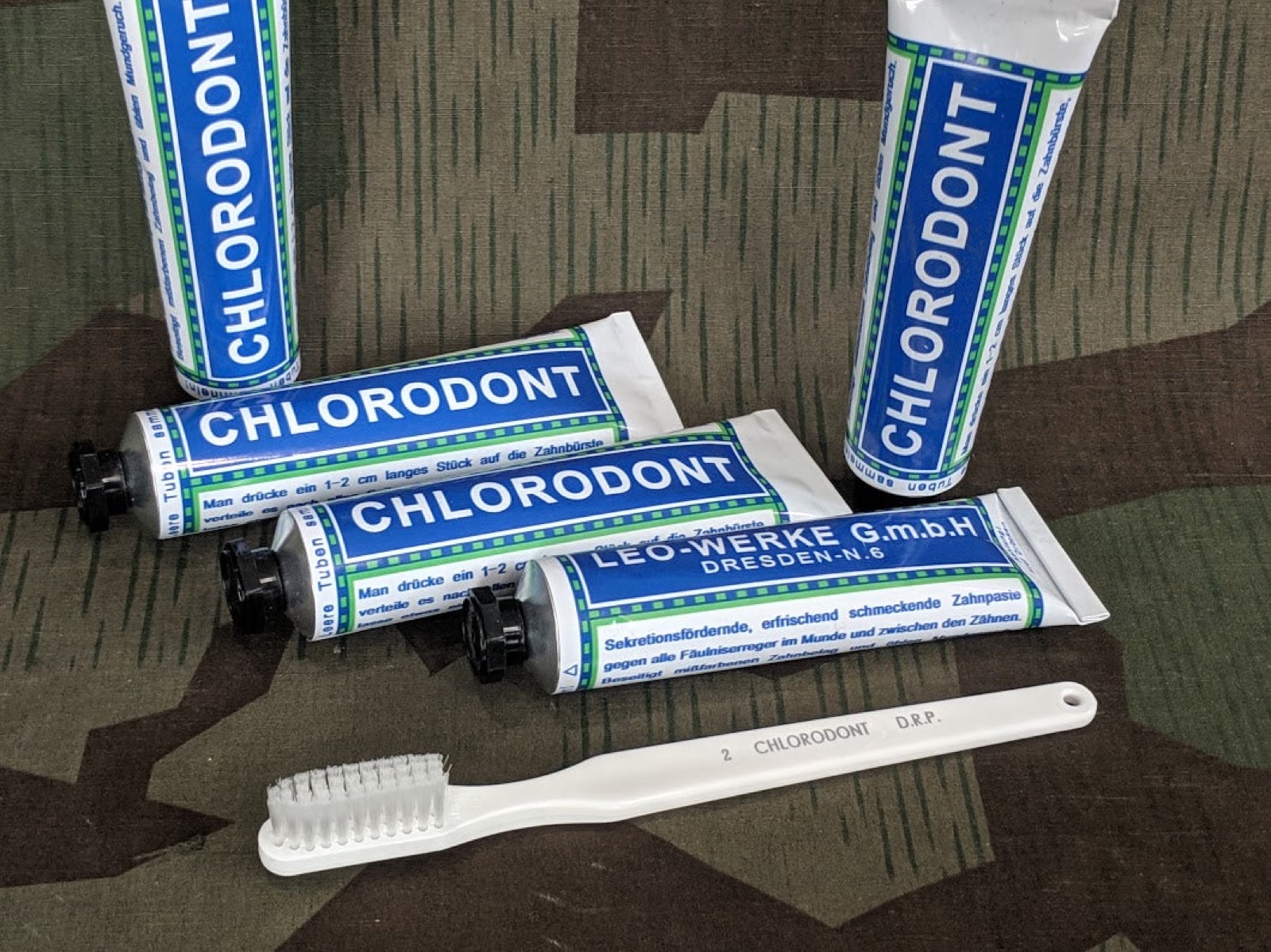
After Errera made the four exposures, he buried the camera back in the ash bucket and walked away. According to Fajnzylberg’s testimony, the film was removed from the camera and hidden inside a toothpaste tubeYV. Helena Datoń, a Polish civilian who worked in the SS canteen, carried the tube out of the camp in her clothing, past the SS posts, and delivered it to the Polish underground.
A period Chlorodont tube, the consumer object that hid the exposed film. Reference photo
Datoń carrying the tube past the SS posts. Illustration: Project Witness microshort
The September 4, 1944 note
Folded inside the toothpaste tube with the exposed film was a small handwritten note. Two Polish political prisoners in the camp resistance wrote it: Józef Cyrankiewicz (a future post‑war Polish prime minister) and Stanisław Kłodziński. They signed jointly under the pseudonym Stakło, a contraction of Stanisław and Kłodziński. The note was dated September 4, 1944.Wiki
It did two things at once. It asked for more film, urgently, so that the photography could continue. And it served as the cover document for what was being smuggled out at that moment: the four exposures Errera had made in the doorway of Crematorium V and in the birch grove. The destination was named in a single coded word: Tell. That was the resistance pseudonym of Teresa Łasocka‑Estreicher, the Kraków contact who would receive the film and pass it onward into the Polish government‑in‑exile.YV
The film and the note reached Łasocka‑Estreicher in Kraków. From her they entered the channels of the Polish underground and, eventually, the world.AM
Errera himself never knew the photographs made it out. He was killed days after he took them, on or about August 9, 1944, during an escape attempt at the Vistula River. He attacked two Schutzpolizei guards with a shovel, threw their rifles into the water, and plunged in. He was caught two or three days later, tortured, and killed. His body was displayed at the BIId camp entrance as a deterrent.Wiki
Then & Now
Crematorium V
The building Errera stood inside still stands, partially. The Auschwitz Memorial preserves what remains of Crematorium V to mark the geography of the killing.
Then · August 1944
The crematoria, photographed from above
Allied aerial reconnaissance over Auschwitz‑Birkenau during the peak of the killing. Auschwitz‑Birkenau State Museum
Now · Preserved
The ruins of Crematorium V
The Memorial preserves the foundations and partial walls. Visitors walk the same ground the Sonderkommando walked. Auschwitz‑Birkenau State Museum
Native Language Versions
Watch in French or Hebrew
Each language version is narrated natively, not dubbed. Coming soon as production wraps.
🇫🇷
Quatre Photographies
Narration française native · narrateur·rice à confirmer
Coming soon
🇮🇱
ארבע תצלומים
קריינות עברית · קריין/ית להמשך
Coming soon
For the classroom
What is the difference between knowing and seeing?
For Educators
Teaching Four Photographs
Three grade‑band lesson plans accompany this episode. Each includes a launch routine, vocabulary, anticipation question, comprehension and analysis prompts, a creative or analytical product, and a structured reflection, all sequenced to the trauma‑informed “safe in / safe out” pattern this article uses.
“Who took the photographs we usually see of the Holocaust? Who took these? Why does that difference matter?”
“Errera could not look through the viewfinder. He shot from the hip. What does it mean that the photographs exist because he could not see what he was photographing?”
“What do you owe to people who took photographs like these so that you would not be able to say you didn’t know?”
Teaching notes
The lesson plans build in regulation prompts before and after the microshort. Do not skip them. If students ask whether the photographs are “real,” they are. The Auschwitz Memorial holds the originals. If a student needs to step out, let them. The microshort is ninety seconds; the lesson is the rest of the hour. Plan your timing so the room ends regulated, not raw.
Safe Out
Before you close this page
Pause
Some endings ask you to keep going. This one asks you to stop. Take a few breaths.
Why we tell it anyway
The Sonderkommando photographs exist because people decided that the world should not be able to say it did not know. Telling this story is not catharsis. It is the responsibility their courage placed on the people who came after them, including us, including you.
What to do with this feeling
Talk to someone. Write something down. Come back tomorrow. Share this with one person who needs to know. The work of witness is not done in a single sitting.
Where to go next on the Sonderkommando and the four photographs
The institutions below hold the primary record and the deepest published scholarship on this episode of the Holocaust. Each link goes directly to the relevant page.
Alter Fajnzylberg’s 1978 written testimony · David Szmulewski’s 1987 testimony · Auschwitz‑Birkenau State Museum archival photograph numbers #280, #281, #282, #283 · the Stakło note of September 4, 1944, from Cyrankiewicz & Kłodziński to “Tell” (Teresa Łasocka‑Estreicher).
Scholarly works
Georges Didi‑Huberman, Images in Spite of All (2003) · Christophe Cognet, From Where They Stood (2021) · Janina Struk, Photographing the Holocaust: Interpretations of the Evidence.