
The Sultan
Who Said No
A lesson on symbolic resistance, the documented record, and the relationship between historical accuracy and the stories communities need to tell themselves.
The words you will use are themselves arguments.
Allyship. Resistance. Complicity. Symbolic power. Each word carries a position about what Mohammed V did. Historians do not agree.
Robert Satloff has argued the Arab world’s wartime record is more complex and includes more rescue than is widely acknowledged. Other scholars caution against inflating heroic legends. Your task is to engage that disagreement, not resolve it before you have the evidence.
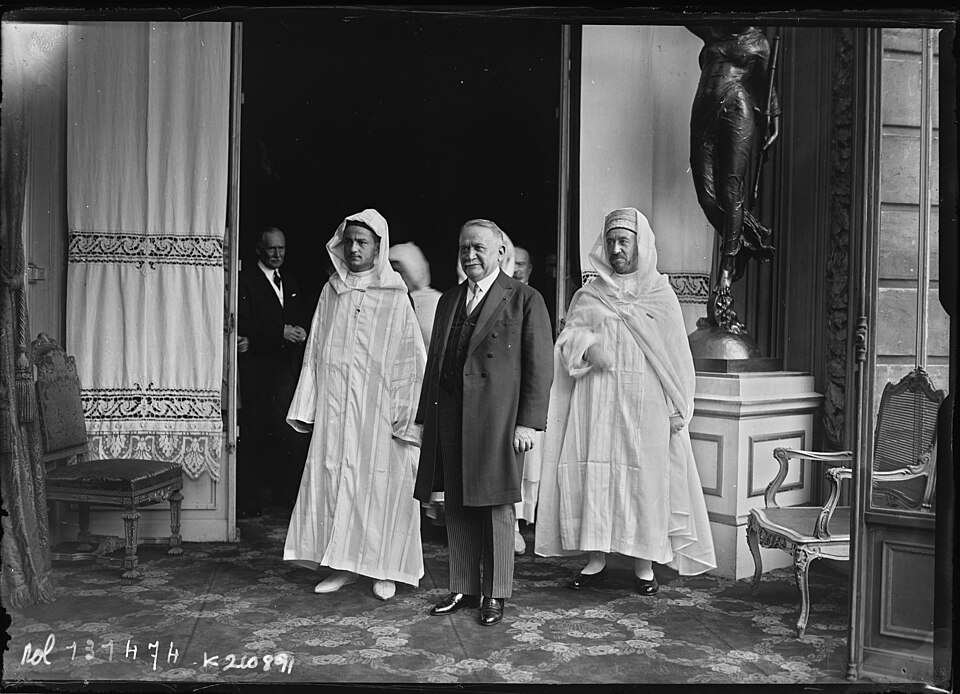
Sidi Mohammed ben Youssef — the whole life
- 1909. Born.
- 1927. Becomes Sultan at age eighteen.
- 1940. Seals the Dahir extending Vichy antisemitic legislation to Morocco.
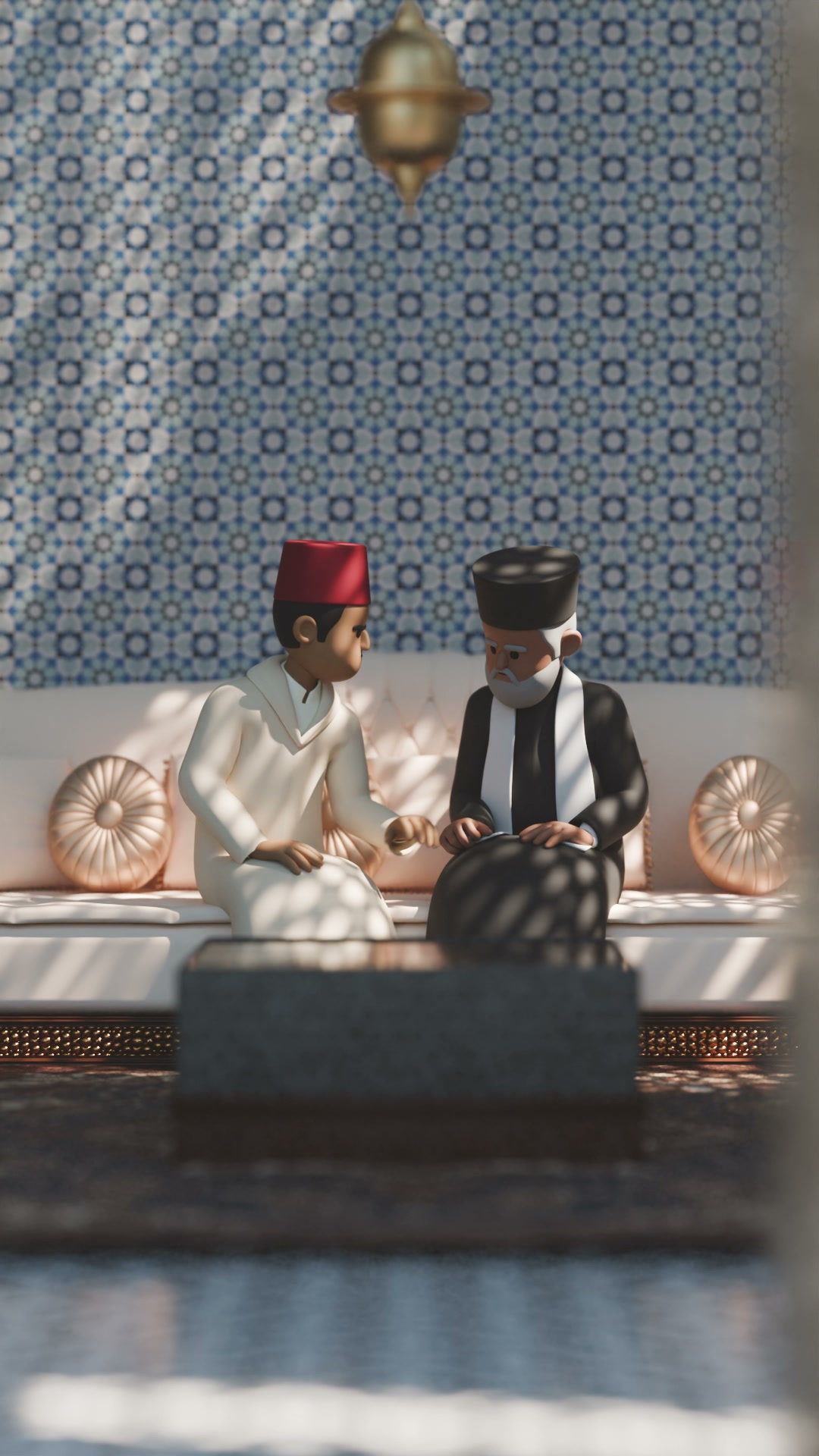
- 1941. Seats rabbis at the royal table at the Feast of the Throne.
- 1942. Vichy authority ends with Operation Torch (Allied landings).
- 1953. Deposed and exiled to Madagascar by France for resisting independence.
- 1955. Returns in triumph.
- 1956. Moroccan independence. Becomes king.
- 1961. Dies at age fifty-one.
His grandson is the current king of Morocco. The Jewish heritage of Morocco is today maintained as national patrimony under royal policy. The arc is part of how to read his wartime acts.

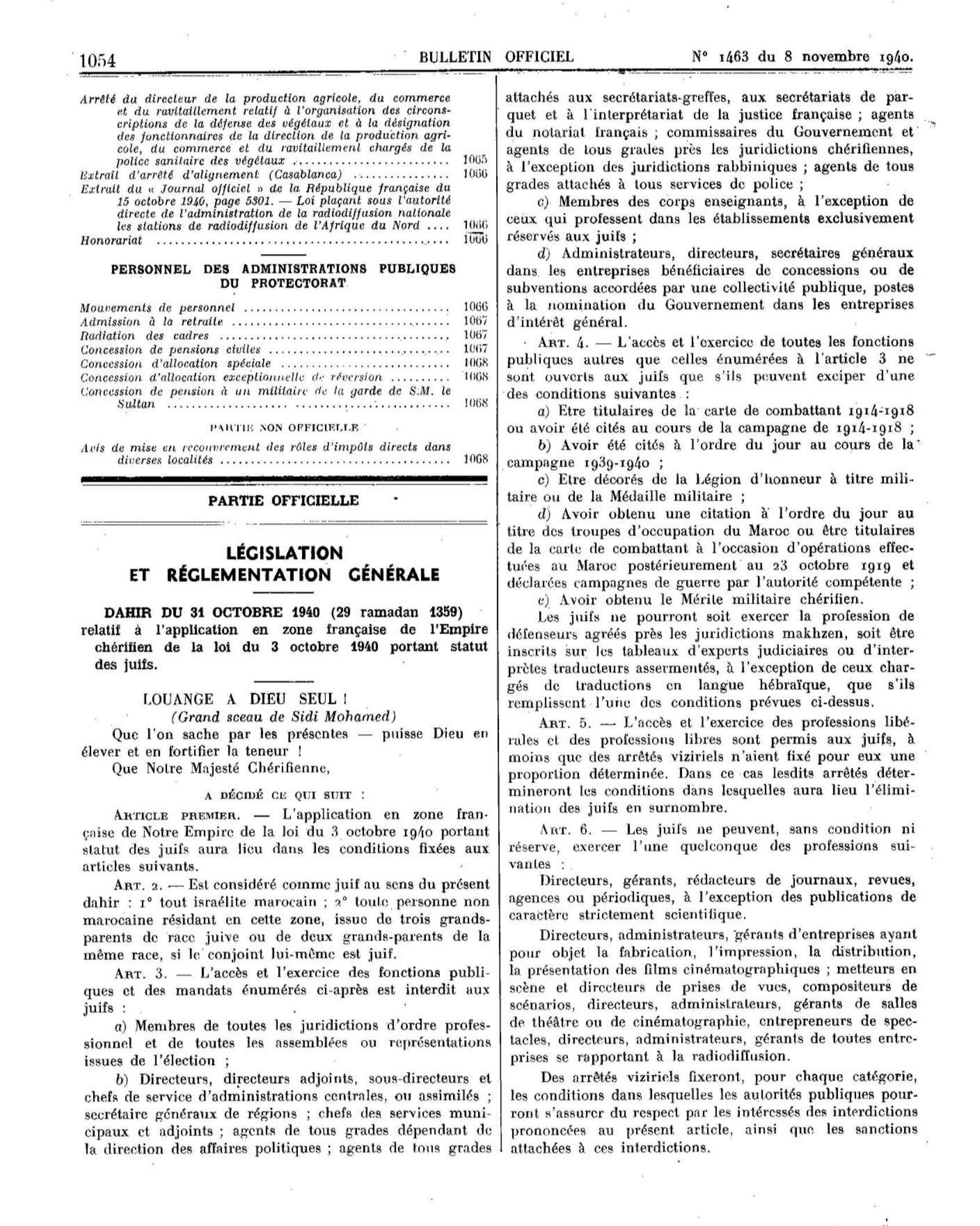
The Dahir of 31 October 1940.
Dahir du 31 octobre 1940 (29 ramadan 1359) relatif à l’application en zone française de l’Empire chérifien de la loi du 3 octobre 1940 portant statut des juifs. Published in Bulletin officiel de l’Empire chérifien, N° 1463, 8 novembre 1940, pages 1054–1056. The full PDF is hosted at archive.gazettes.africa.
“Louange à Dieu seul! (Grand sceau de Sidi Mohamed) Que l’on sache par les présentes — puisse Dieu en élever et en fortifier la teneur! Que Notre Majesté Chérifienne A DÉCIDÉ CE QUI SUIT:”
— Praise to God alone! … Our Cherifian Majesty has decided as follows…
The provisions that follow that opening strip a people. Sit with the rhetorical and historical tension. The opening invokes God. The content violates everything that invocation is supposed to mean. The same hand wrote both halves of the page.
This video has the microshort's original audio. The Listen button above plays separate lesson narration.
Track four choices.
- The royal seal that hovers in the Hook before it ever presses.
- The signed decree that disappears beneath a stack of papers in Beat 3D.
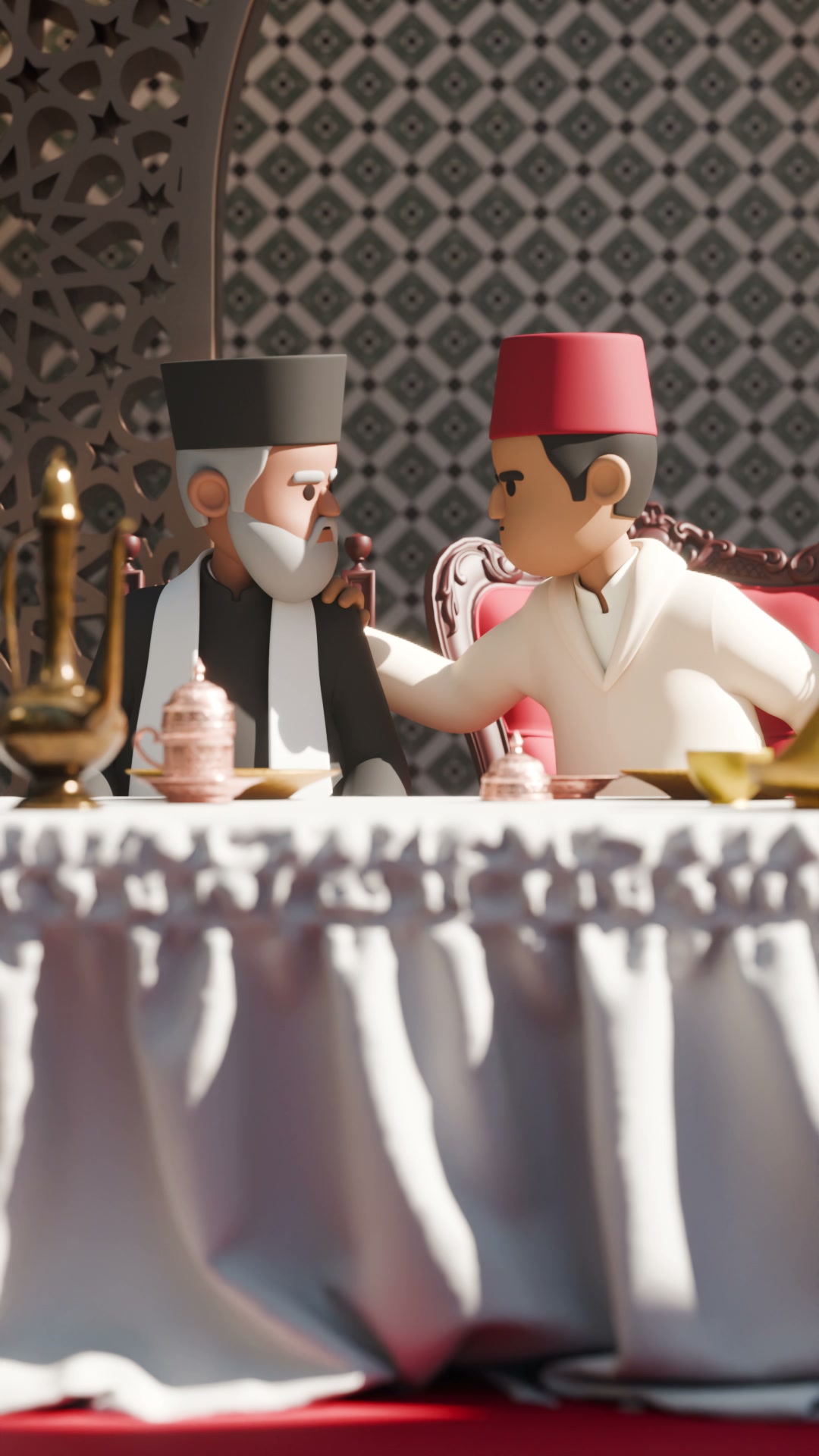
- The Sultan’s hand on the rabbi’s shoulder in Beat 4C, performed in front of Vichy officials.
- The empty railway platform in Beat 5B that stays empty.
Each shot is a claim. Ask what the film is arguing before you accept or reject its argument.
One word.
Before argument, name what you are carrying. Not a thesis. Not a position. One word.

Read the structure of Beat 5.
“They faced real hardship under Vichy: discriminatory laws, forced relocations and forced labor. But no Moroccan Jew was deported to a Nazi extermination camp… Incredibly, Moroccan Jewry survived largely intact.”
The hardship comes first. The protection follows. Neither is collapsed into the other. The word But does the entire rhetorical work of the beat. The film’s position is that historical honesty requires holding both halves of the record at the same time.

Collective memory, not secured transcript.
The line that defines Mohammed V’s legacy — “There are no Jews in Morocco, only Moroccan subjects” — is not secured to a contemporaneous transcript. Robert Satloff and USHMM flag it as oral tradition.
The film honors this by framing the quote with “As remembered by those he protected.” That leading line is doing serious historiographic work. It does not deny the quote. It locates it correctly — as a community’s remembrance, not as a documented utterance.
Should Mohammed V be recognized as Righteous Among the Nations?
The Yad Vashem framework was designed for non-Jews who at personal risk hid or saved specific Jewish individuals. Mohammed V acted by symbolic and administrative leverage, not by personal hiding. The framework may or may not fit. Either argument can be defended.
Analytical essay. 350–450 words.
Prompt: Analyze the difference between symbolic allyship and material protection. When is symbolic resistance meaningful? When is it insufficient? What does this historical example teach us about the nature of allyship — in his time and in our own?
Use the Dahir, the Feast of the Throne, and the documented outcome (zero deportations from Morocco) as evidence. Name what would make your essay fail ethically: sentimentality, exploitation, historical inaccuracy, false certainty. Serious work names its own danger before it proceeds.
Leave with the disagreement intact.
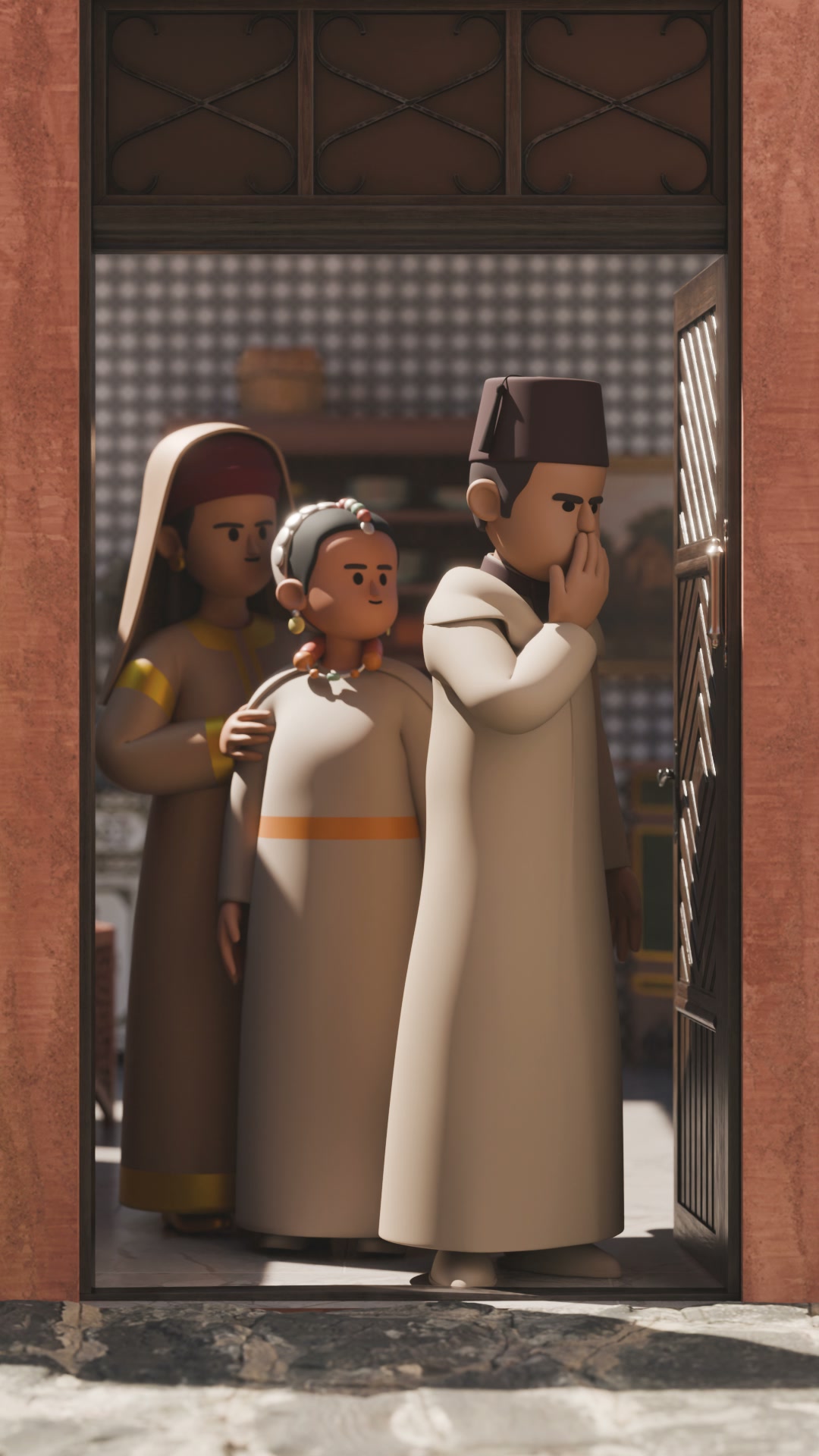
You do not need to force a clean resolution between collective memory and documentary record, between heroic narrative and honest accounting. You do need to articulate a position, understand the best objection to it, and keep the actual people at the center of the story visible.
Responsible attention to a history that resists simple categories means being able to name three things:
- what you know — the documented facts and primary sources
- what is uncertain — claims that rest on memory, attribution, or later synthesis
- what your interpretation assumes — the values you bring to weighing what you know against what is uncertain
“There are no Jews in Morocco, only Moroccan subjects.”
— As remembered by those he protected · Mohammed V, c. 1940–1941