Before we begin: a primary source
Kaminsky's memoir
"I did the math. In one hour I could make thirty blank documents, which meant that if I slept for one hour, thirty people would die. So I worked through the nights. Pen to paper, stamp to paper, next sheet. Until my hands could barely move."Adolfo Kaminsky, A Forger's Life (as recalled by his daughter Sarah Kaminsky, 2009)
Key terms you will encounter
- Vichy France
- The French collaborationist government (1940–44) led by Marshal Philippe Pétain. Cooperated with Nazi Germany; passed its own anti-Jewish laws (Statut des Juifs, October 1940). The Vichy administrative state included the religion-marked Carte d'Identité, the census infrastructure, and the deportation organization. This is what Kaminsky's forgery operation was set against.
- Arithmetic of conscience
- Kaminsky's own framing: the literal moral calculation he performed in his head as he worked. Every hour of sleep equaled thirty deaths. The film opens with this arithmetic, making it the rhetorical exordium of the piece.
- Iron gall ink · lactic acid
- Iron gall ink was the French state's chosen ink for official documents, chosen precisely for its permanence and forgery-resistance. Lactic acid (an organic compound found in sour milk) dissolves it. Kaminsky learned this chemistry in a dye shop; it became the technical foundation of his forgery work.
- OSE (Œuvre de secours aux enfants)
- The Jewish children's aid society in France, founded 1912. Coordinated the network that smuggled, hid, and rescued thousands of Jewish children in occupied France. Kaminsky worked with the OSE.
- Righteous Among the Nations
- Yad Vashem's archive of documented non-Jewish rescuers who risked their lives to save Jews during the Holocaust. Kaminsky himself is a complicated case. He was Jewish-born, yet he is recognized within the broader resistance pantheon.
- mahJ (Musée d'Art et d'Histoire du Judaïsme)
- The Museum of Jewish Art and History in Paris, in the Marais. Holds the most substantial Kaminsky exhibition collection.
- Yad Vashem · USHMM · Bundesarchiv · USC Shoah Foundation
- The institutional repositories of Holocaust historical record. (See the Glossary of Institutions on the About the Series page for fuller entries.)
Framing Before We Watch
Prediction Prompt
Kaminsky describes what we might call an "arithmetic of conscience." This is a moral calculation expressed in numbers. What does it mean to reduce the weight of a human life to a unit in a mathematical equation? Is this a form of dehumanization, or the opposite? Come prepared to defend your interpretation after viewing.
The 90-second microshort
A heads-up before pressing play
The film is a 90-second stylized animated reconstruction of Kaminsky's 1944 forgery work. No graphic violence; no depiction of harm to any person. Kaminsky is shown working alone by lamplight; documents, ink, the chemistry. The deportation orders and the children whose lives the forgeries saved are named in voice-over without being shown.
If you need to step outside at any point, you can do that without explaining anything. You can come back when you're ready. There is no penalty.
Watch the film now
Open The Forger on the class screen, or follow the link your teacher provides.
Hold onto the framing question.
Analyze
First Affective Check-In
Take a moment. One word for what you felt. Not analysis. Just noticing.
Discuss
Work through these questions first in writing on your own (5 minutes silent), then with a partner (5 minutes), then as a full class.
Rhetorical Analysis
- The film imposes a strict 90-second constraint on a life that spanned ninety-seven years and touched fourteen thousand others. What is gained and what is lost by that compression? Is the compression itself an ethical act?
- The story is told in the third person rather than in Kaminsky's own voice. How does this distance between narrator and subject shape your understanding of his actions? Would a first-person account from Kaminsky himself change what the story means?
- How does this microshort compare to other representations of Holocaust rescuers you have encountered in literature, film, or testimony? What assumptions about heroism does it reinforce or challenge?
Historiographic Questions
- Yad Vashem's documentation of rescue during the Holocaust reveals compromises, failures, and lives that could not be saved. The film presents none of this complexity. What is the historian's obligation when the archive complicates the monument?
- Kaminsky forged documents for many liberation movements after the war, including some that used violent tactics. The film does not mention this. How should educators handle historical figures whose moral record is complicated by later actions?
- This film lets us hear about the children, but not from them. What does that absence of survivors' voices tell us about whose perspective is centered? What would a different centering look like?
Hook Analysis of the Opening as Rhetorical Exordium
- Identify the film's opening narration. In classical rhetoric, this is the exordium: the move that establishes the speaker's authority and frames the rhetorical situation before any evidence is offered. Analyze this opening. What ethos does it establish? What does it claim implicitly about the relationship between speaker, subject, and audience?
- The film's central rhetorical device is the arithmetic of conscience: "if I sleep for one hour, thirty people will die." This is what Kenneth Burke would call identification by quantification. That term names the move that asks the viewer to internalize the speaker's moral logic by collapsing the gap between an hour of sleep and a life. Analyze the rhetorical move. What does the math accomplish that conventional moral language could not? What does it risk? Defend a reading.
- The opening line is the film's argument made before its argument is named. It claims an implicit position on a question Holocaust pedagogy keeps re-asking: can rescue be represented without becoming triumphalism, and can the rescuer be honored without becoming a saint? Does the film's opening signal an answer?
Cross-Discipline Look at the Chemistry of Forgery
Kaminsky's forgery work was not primarily an act of art. It was an act of chemistry. His prior training in a dye shop taught him that lactic acid (the same compound found in sour milk) could dissolve iron gall ink, the very ink the French state had chosen for its forgery-resistance. The neutral chemistry of dyes became the load-bearing science of rescue.
- Iron gall ink was chosen by the French state for official documents precisely because it is permanent and resistant to removal. Lactic acid, an organic compound with no obvious connection to documents, happens to dissolve it. What does it mean that the scientific property that made the document forgery-resistant was also the property a chemist could exploit to forge it? Is this an accident, a structural inevitability, or something else? Tie your answer to a broader question about the relationship between knowledge and ethics. Can a chemical fact be morally neutral, or do its applications retroactively give it a moral weight?
Investigate Further What the Film Does Not Decide
A question the film deliberately leaves open. Take it home; come back with what you found and a position you can defend.
- The film does not mention that, after WWII, Kaminsky continued forging documents for liberation movements. These included the Algerian FLN during the Algerian War of Independence, anti-apartheid networks in South Africa, anti-colonial movements across the Americas, and movements in the United States, Spain, and Greece in the 1960s and 70s, some of which used violent tactics. Find one specific post-war forgery operation Kaminsky was documented as participating in. Using the Just War tradition (jus ad bellum / jus in bello) or another defensible ethical framework of your choice, write a 400–500 word argument: was Kaminsky's continued forgery work in that specific case justified by the same principle that justified his work in 1944? Or does the post-war record complicate the WWII rescue narrative? Defend a position with specific evidence about the movement and Kaminsky's documented role.
Create
Comparative Medium Analysis (400–500 words)
Read the following memoir excerpt carefully. Then write a comparative analysis (400–500 words) that examines what the written memoir and the 90-second microshort each reveal that the other cannot. Your analysis should not simply summarize; it should make an argument about the relationship between form and meaning.
"The laboratory was so cold that the ink wouldn't dry. I held each document over the lamp, one by one, watching the signatures set. Outside, I could hear boots on the street. I couldn't think about that. I could only think about the next blank page."Adolfo Kaminsky, as recalled in A Forger's Life by Sarah Kaminsky, 2009
Consider: sensory detail, pacing, emotional tone, what is foregrounded versus suppressed, and the reader's/viewer's role in constructing meaning. What does the memoir's intimacy reveal that the film's compressed narration cannot access? What does the film's visual dimension do that language alone cannot achieve?
Reflect
First Affective Consolidation
Take 30 seconds. One word out loud for what you're carrying right now. Not analyzed. Just named.
Open-ended reflection on Kaminsky's closing statement
In an interview near the end of his life, Adolfo Kaminsky said:
"All humans are equal, whatever their origins, their beliefs, their skin color. There are no superiors. No inferiors."Adolfo Kaminsky, 2015 interview
Write a sustained reflection (one page) on the following question: Kaminsky lived through the Holocaust, witnessed the systematic denial of this principle at an industrial scale, and spent decades protecting it through illegal means, including forging documents for armed liberation movements, some of which used violence. Does "all humans are equal" apply to everyone in this story, including the perpetrators he worked against and the fighters he worked alongside? Is this statement an act of hope, an act of grief, an act of defiance, or something else? And what does it ask of us now, more than eighty years later?
There is no single right answer. The goal is to think rigorously and honestly about whether this principle holds under the weight of its own history.
Full-Class Closing Discussion
Your teacher will ask: "Name a position from elsewhere in the room. It must be a position that is not your own and not your partner's, one you can articulate clearly and still disagree with." The exercise is not to resolve the disagreement. The exercise is to articulate a position you can defend in someone else's voice and still disagree with. The natural pole structure: some land closer to Kaminsky's "all humans are equal" as an act of defiant hope despite what he witnessed; others land closer to the position that the statement is unsustainable in the face of the post-war record. A third axis: what does Kaminsky's decades of silence say about the position of the rescuer in history? You are leaving the room with the disagreement intact. Holding that contradiction is what an adult intellectual response to this material looks like.
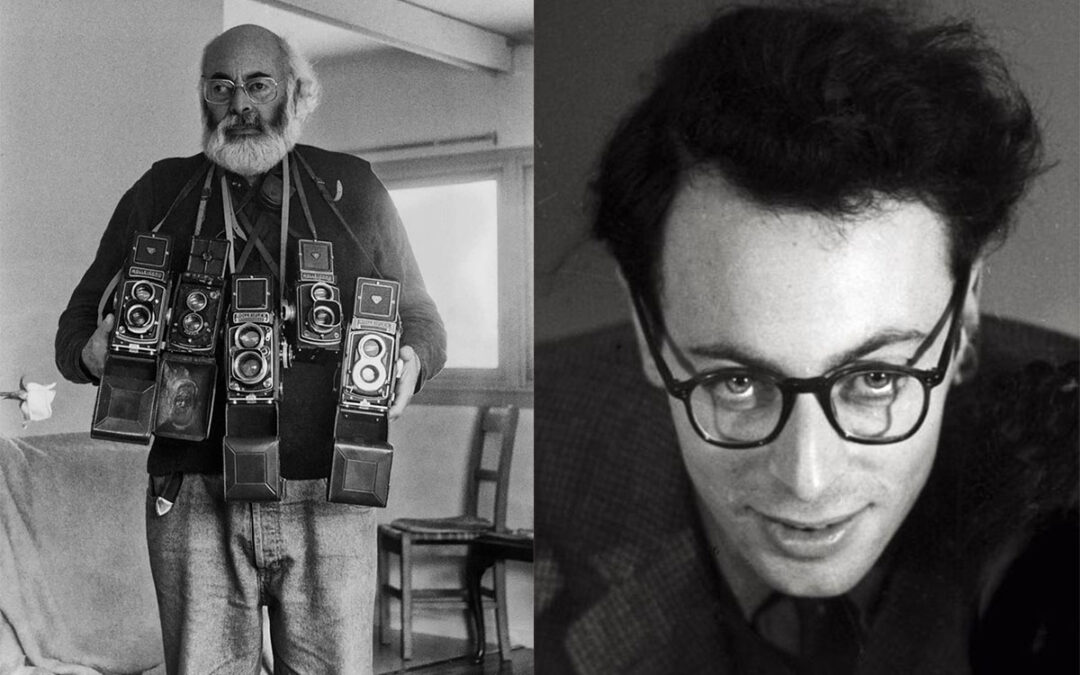
Kaminsky in Le Marais, Paris. This is the Jewish quarter where he lived the rest of his life, until his death in January 2023.
"All humans are equal, whatever their origins, their beliefs, their skin color. There are no superiors. No inferiors."Adolfo Kaminsky (1925–2023)
Make your own microstory
A short original work, in any medium, such as film, writing, audio, comic, photo essay, or song lyric, modeled on the craft of this series. The aim is for you to occupy, briefly, the position the makers of The Forger occupied: choosing what to show, what to withhold, what to compress, what to credit, and how to use numbers honestly when numbers serve.
Subject anchor
The natural subject is any historical or contemporary person whose ordinary professional skill was turned to a moral purpose at personal cost. Suggested fields:
- Other Holocaust-era rescuers (Sugihara, Sousa Mendes, Varian Fry, Hannah Senesh, the OSE collective).
- People in other times whose ordinary skill carried extraordinary weight include Underground Railroad operatives, journalists in armed conflicts, and doctors running underground clinics for undocumented patients.
- A person from your own family or community whose ordinary work carried someone else through a hard time.
Get your teacher's approval before you begin so the historical claims you'll make are defensible.
The Constraints That Apply to Every Medium
- One named person at the center.
- Hook-first. Your first sentence (or first shot, or first line, or first panel) must commit. The Forger's arithmetic-of-conscience opening tells the entire story before the story begins.
- Hard compression. Pick your medium; live inside its cap.
- One primary-source anchor. Reference, describe, depict, or quote one specific verifiable historical artifact and credit the source.
- No invented dialogue from the dead.
- If numbers serve, use them honestly. Kaminsky's arithmetic worked because the numbers were real. If your subject can be told through honest numbers, use them; if not, do not invent them.
Pick a medium
- A short film or video may run up to 90 seconds.
- A flash fiction or micro-essay may run up to 250 words.
- A poem may take any form and run up to 20 lines.
- A spoken-word or audio piece may run up to 90 seconds.
- A podcast cut may run up to 2 minutes.
- A comic or illustrated sequence may run up to 6 panels on one page.
- A photo essay may include up to 5 images from public archives, ethically captioned.
- A song lyric should be one verse and chorus.
Submit a 400–500 word artist's statement alongside your work
- Explain your representational choices. That means what you decided to show or say, and what you decided to withhold. The 9–10 Analyze tab notes the absence of survivors' voices in The Forger; engage that observation explicitly. What does your work include or exclude, and on what grounds?
- Defend your medium choice against at least one plausible alternative medium for the same subject.
- How (if at all) you used numbers, names, or specific historical detail. Kaminsky's arithmetic of conscience worked because the math was honest. If your work uses numbers, defend their accuracy; if not, defend the alternative.
- What it would mean for your work to fail. Name the specific way your piece could go wrong, such as sentimentality, hagiography, historical inaccuracy, or the saintly-rescuer problem the 11–12 Historiographic Questions raise. Then name the move you made to guard against it.