The
Boxer
You will not read this all at once. One picture, one fact, one question at a time.
This lesson can read itself out loud. Tap Listen whenever you want to hear a step again.
What you are about to see.
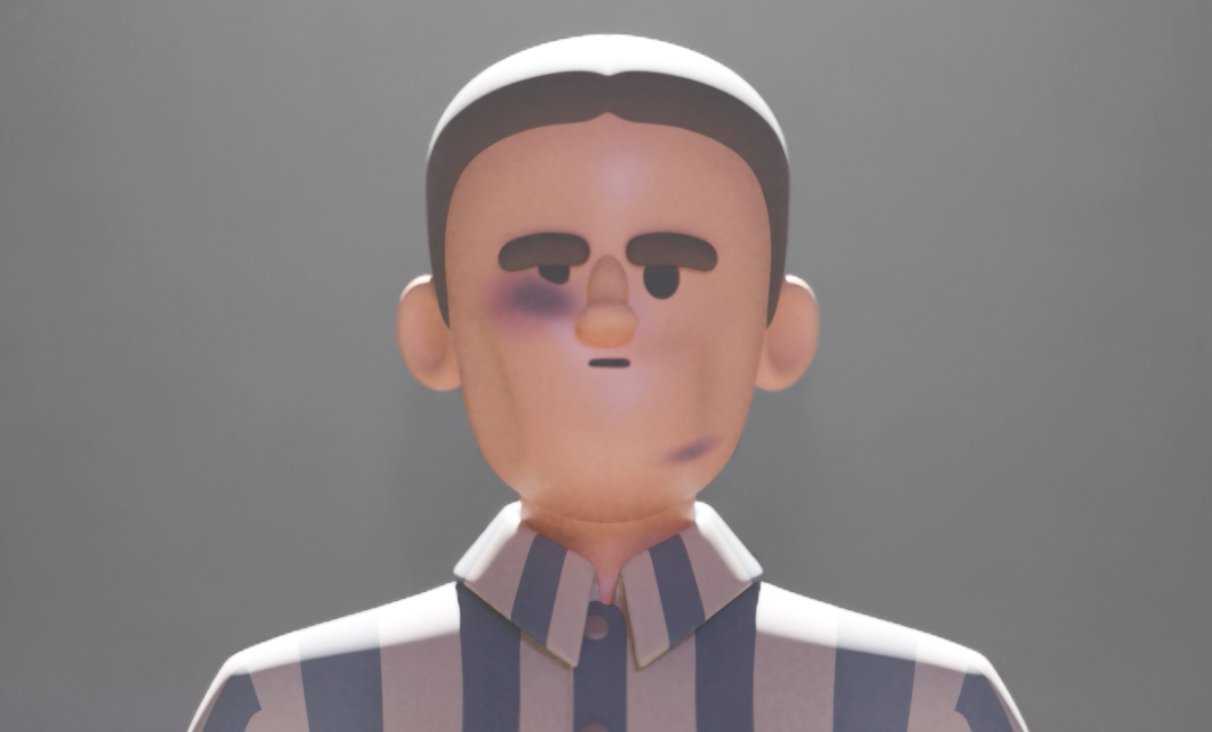
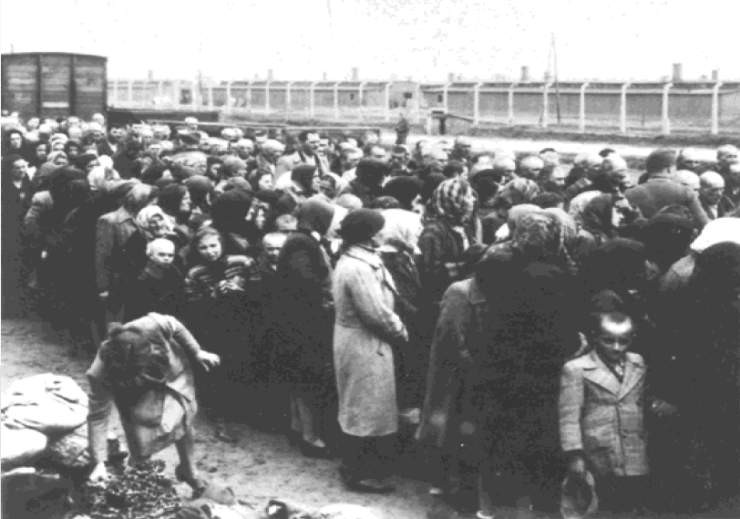
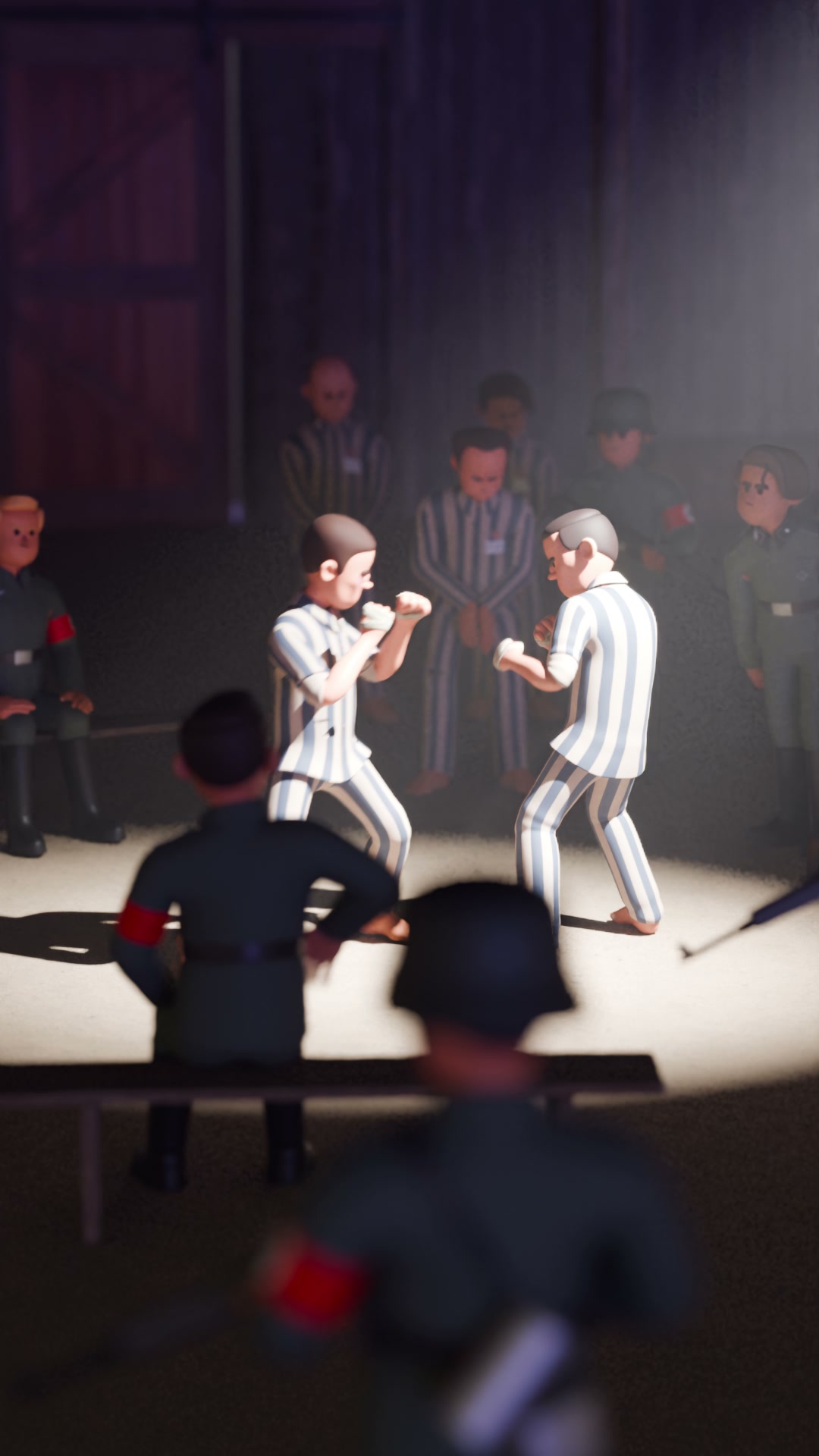
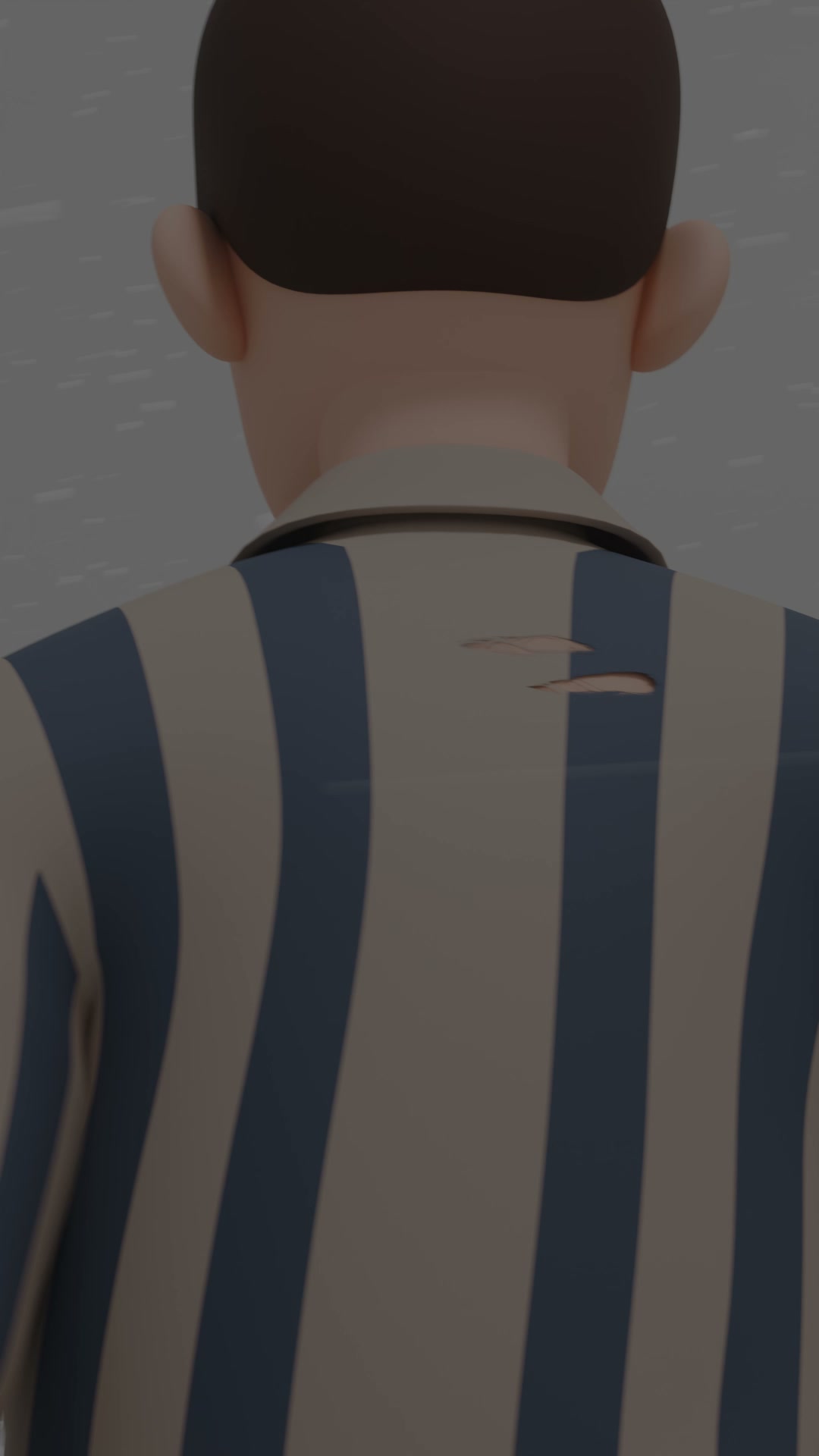
The film runs ninety seconds. It tells a true story. Inside Auschwitz, the Nazis forced prisoners to box each other while SS officers watched and placed bets.
You will not see blood or injury. The hardest moments happen just outside the frame. If any part of this is hard for you, that is a reasonable response. You can step away, and you can tell your teacher. Some pictures in this lesson are animation, built shot by shot by a team of artists. The rest are real photographs, and each one says so.

A city by the sea, and a boy who could box.
Salamo grew up in Thessaloniki, a port city in Greece. Jews had lived there for more than four hundred years. It was the largest Sephardic Jewish community in the world.
He was good. Before the war he fought twenty-seven times and never lost once. People called him the ballet dancer, because of the way he moved around the ring.
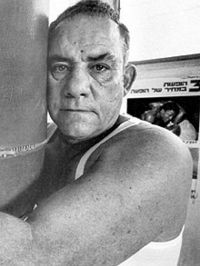
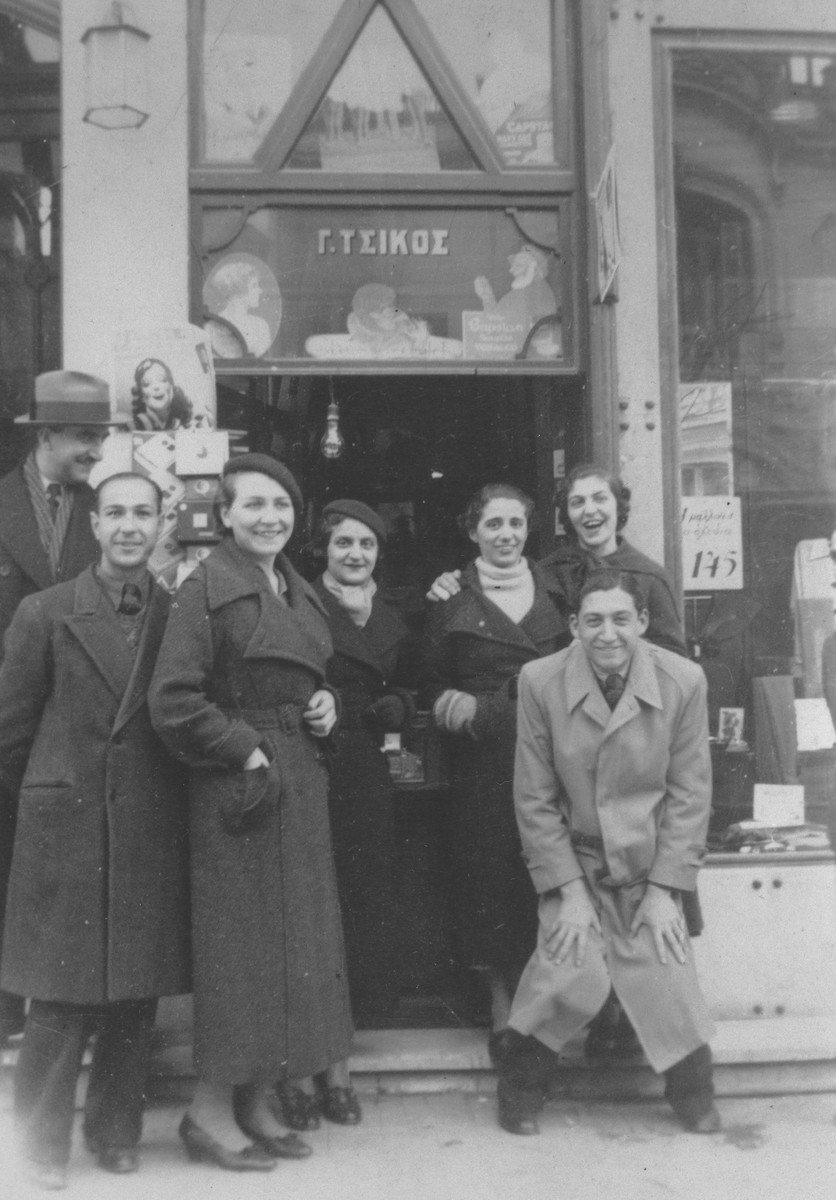
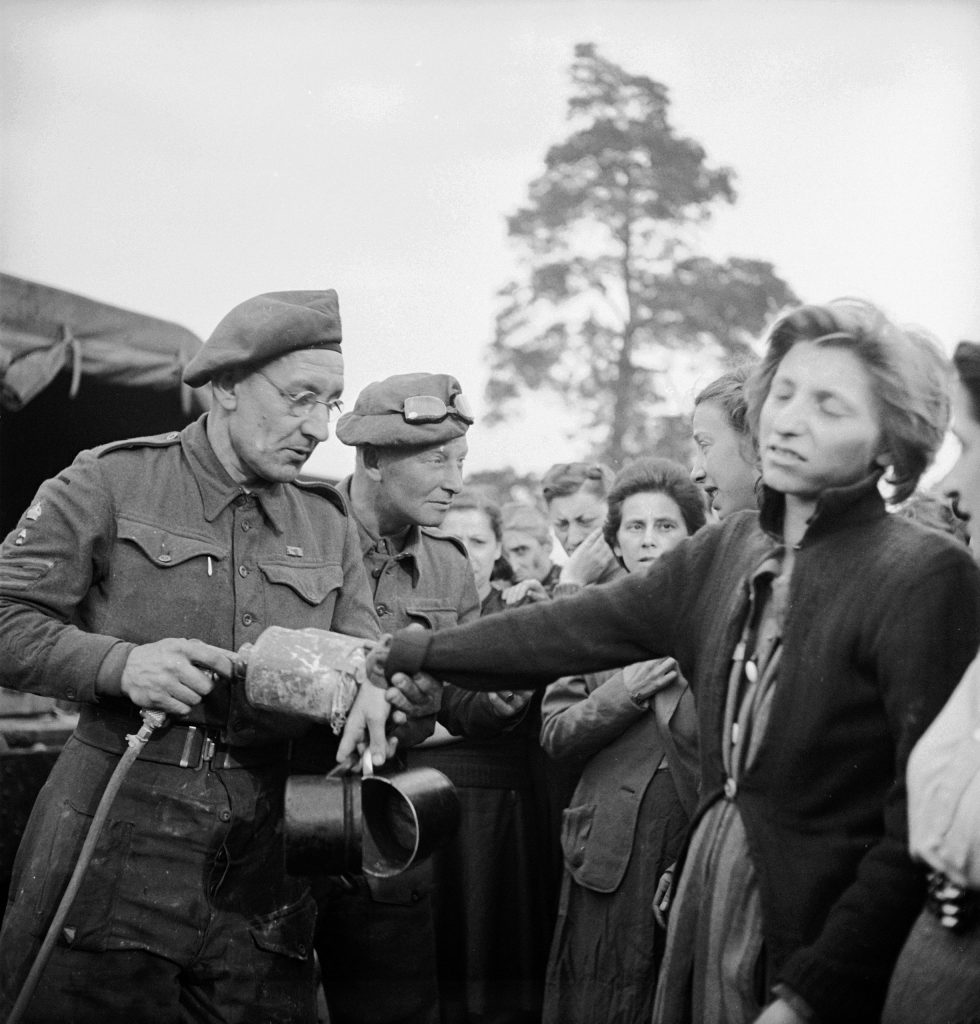
Not a topic. People.
Salamo lost almost everyone he loved in a matter of days.
His mother and his sisters were killed the day the family arrived at Auschwitz. His father was killed when he grew too weak to work. His brother Avram was shot after he refused a Nazi order to take gold teeth from the bodies of the dead.
He raised his hand.
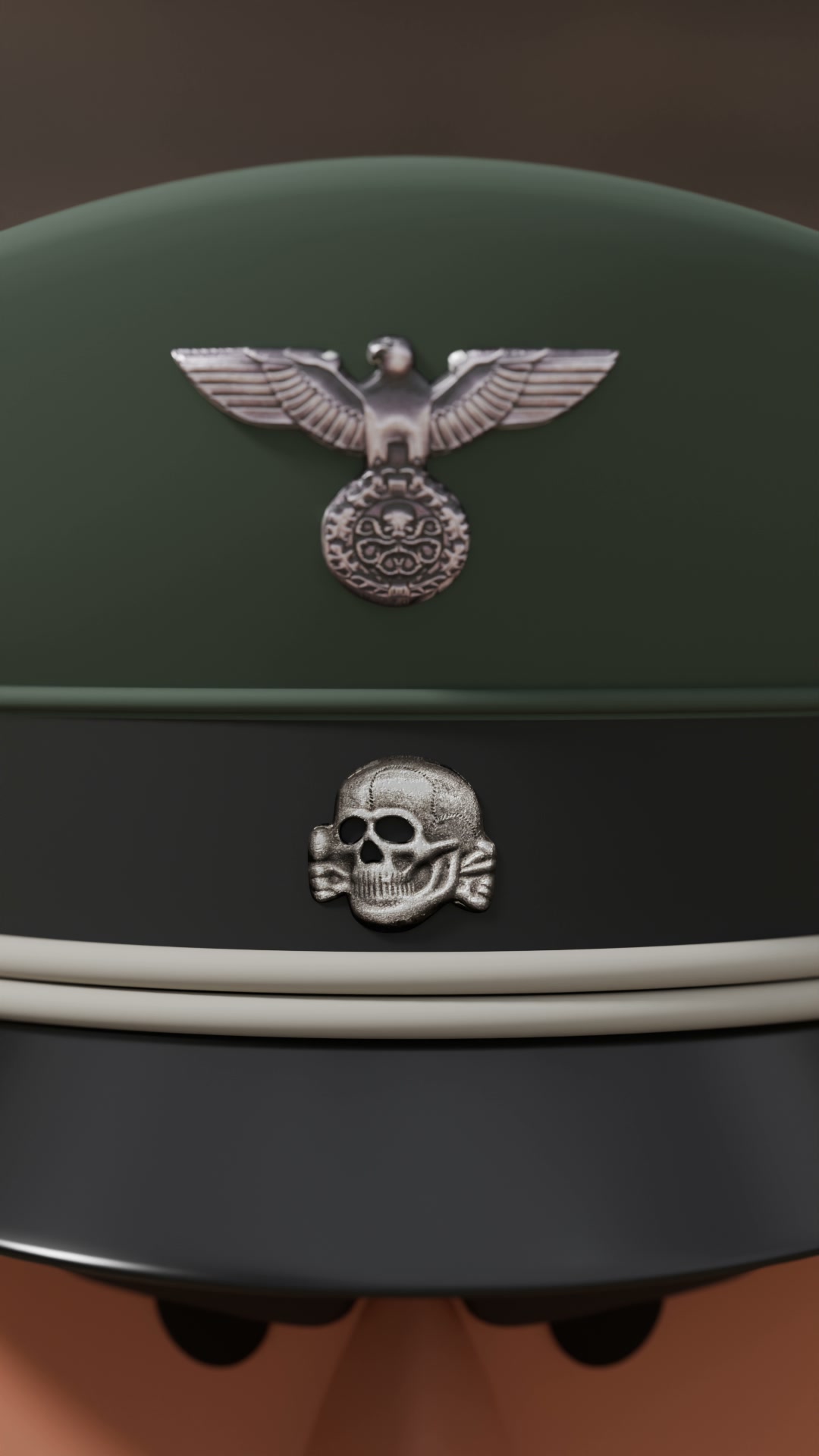
The SS forced prisoners to box inside a warehouse in the camp. Officers bet money on the fights and drank while they watched. For the fighters, losing often meant being killed soon after.
An SS officer asked if anyone could fight, and Salamo put his hand up. What do you think he was thinking? What would winning cost him?
This video plays the film's own sound. The Listen button at the top plays the lesson voice instead.
Watch for one thing.
Do not try to catch every fact. Watch what the film shows about Salamo right after he wins.
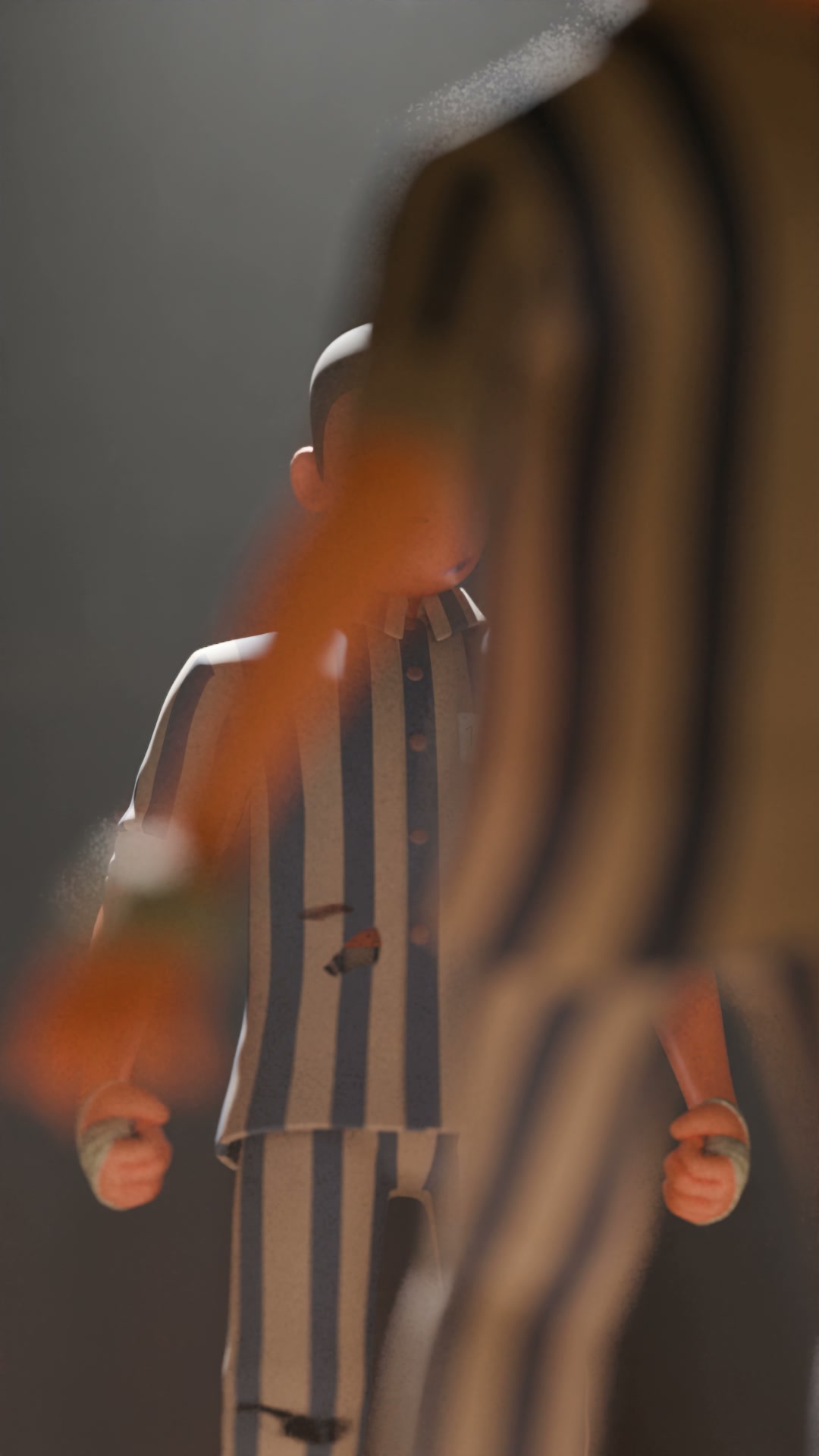
One word. That is all.
No analysis yet. Just one word for what you are feeling right now.
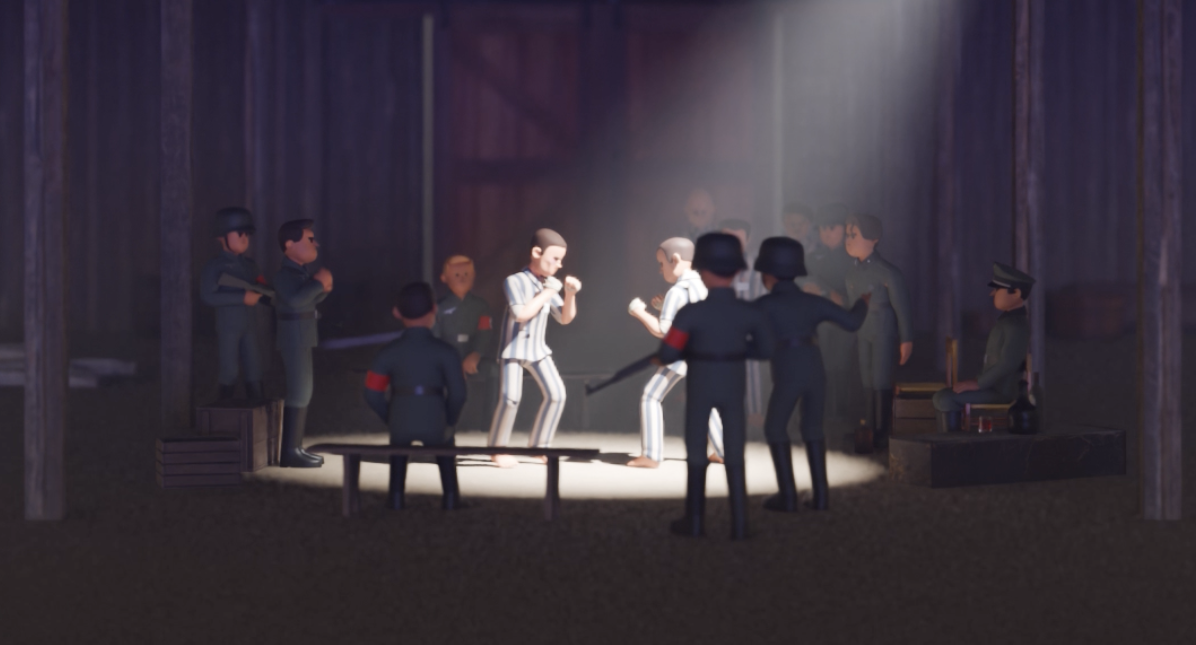
Same sport. Different world.
Salamo learned boxing in a gym in Thessaloniki, for medals and trophies. In Auschwitz the very same skill kept him alive, because the SS wanted something to watch.
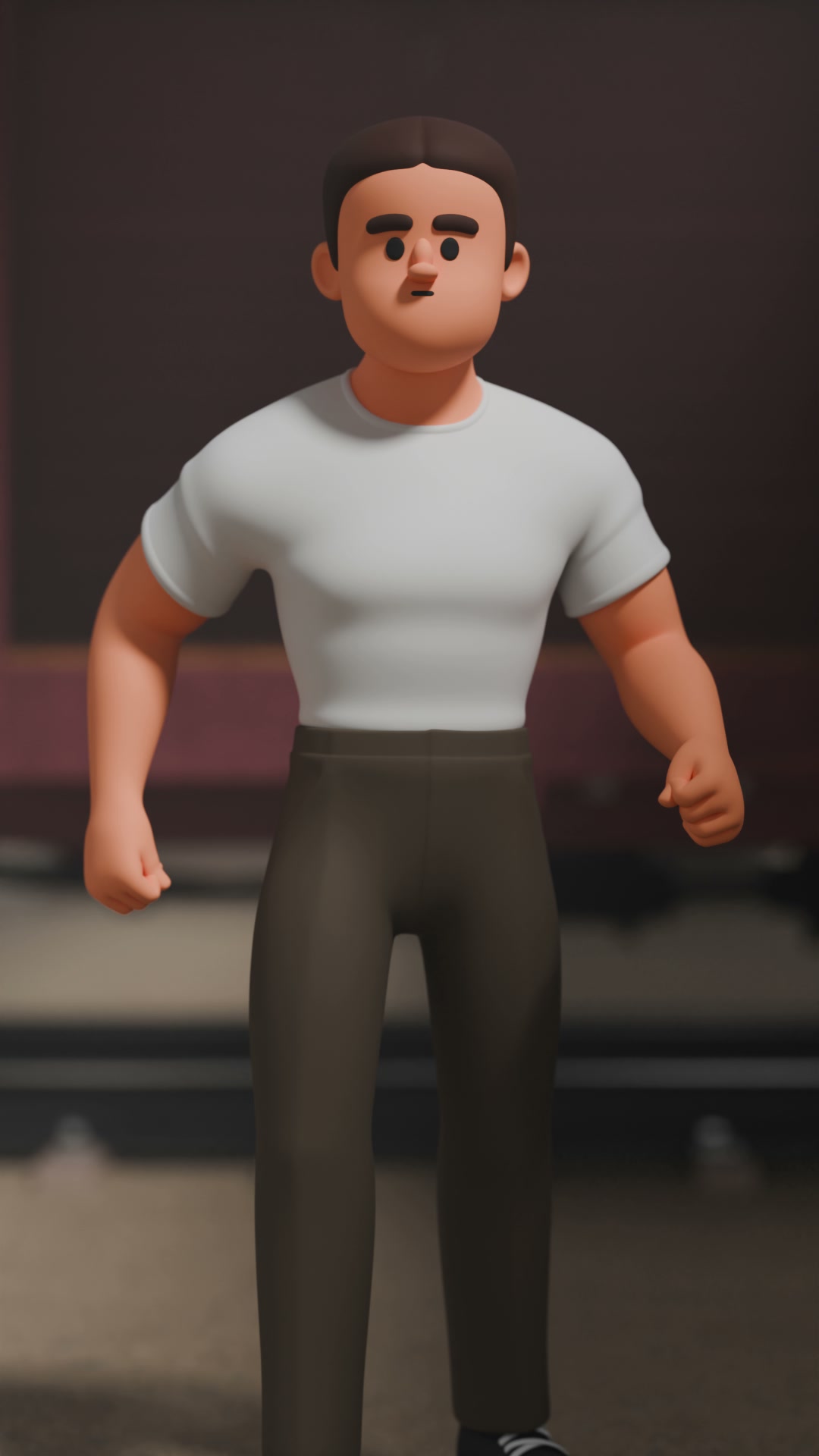
When every door is a bad one.
"A choiceless choice is a moment when none of the options left to you is a good one." Based on Lawrence Langer, Versions of Survival, 1982
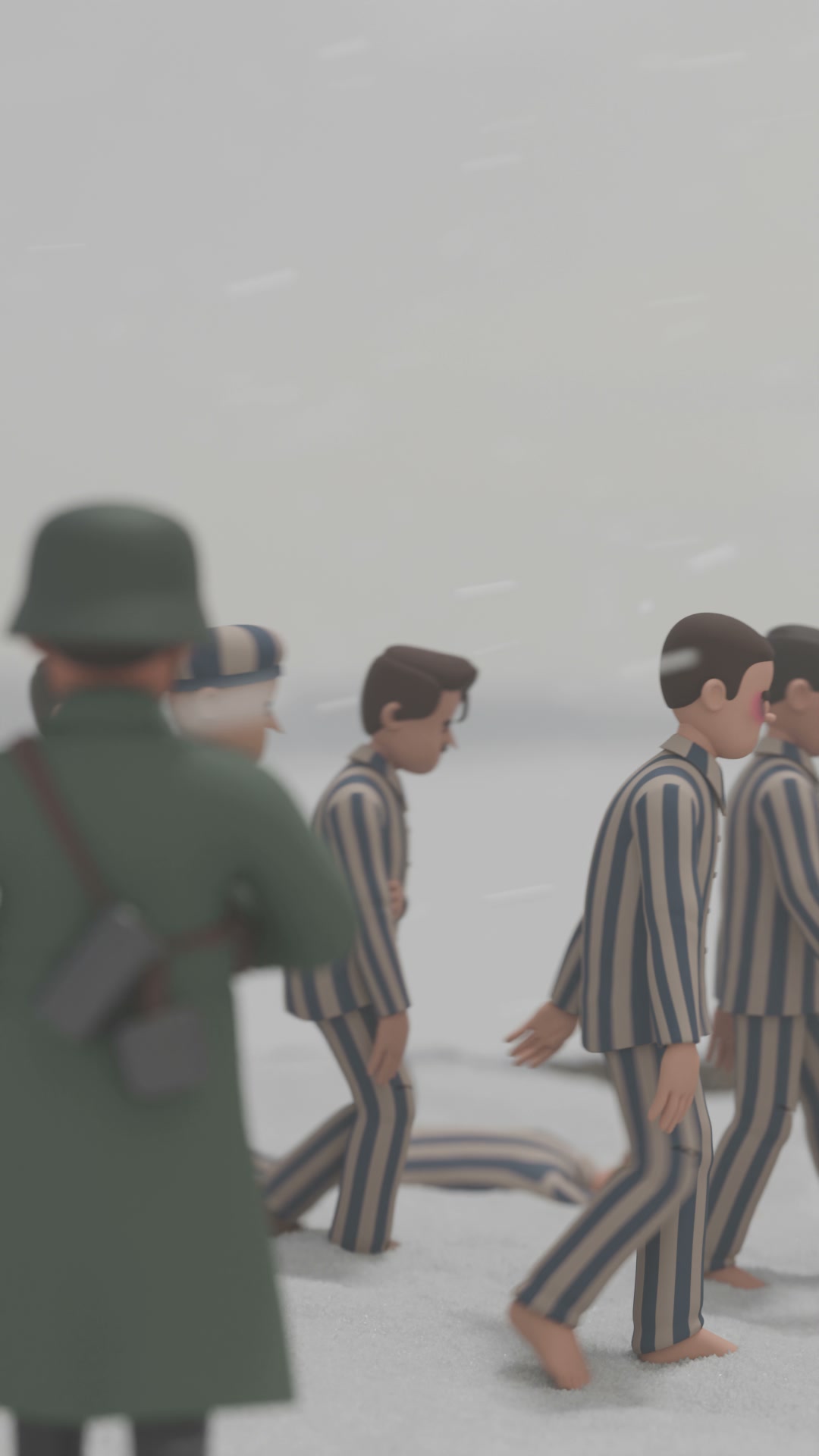
Two hundred fights. Then a march through snow.
- He fought month after month for nearly two years. By his own count, more than two hundred fights. He never lost.
- In January 1945 the Nazis forced him and thousands of other Jews to march out of Auschwitz through the snow.
- He reached Bergen-Belsen and survived there until British soldiers freed the camp in April 1945. He was twenty-two.
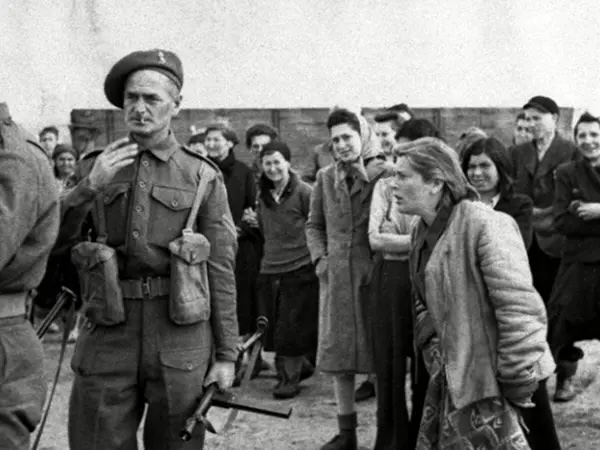
Was surviving a victory?
After the war Salamo married Marta, whom he met in a hospital at Bergen-Belsen. They were married sixty-four years and raised four children. He lived to be eighty-six.
Tell one true story.
Pick one real person who faced a moment where every option was bad. Keep it short enough that every word counts.
Pick how you want to make it.
Put in
One real name. One hard moment. One thing the person carried afterward.
Leave out
Cheering. Slow-motion victory music. Words you invented for a real person who never said them.
What changed for you?
He carried the weight of every fight for the rest of his life. That is not a figure of speech.
Before this film, I thought surviving meant ___. Now I think it can also mean ___. The hardest part of Salamo's story for me is ___, because ___.