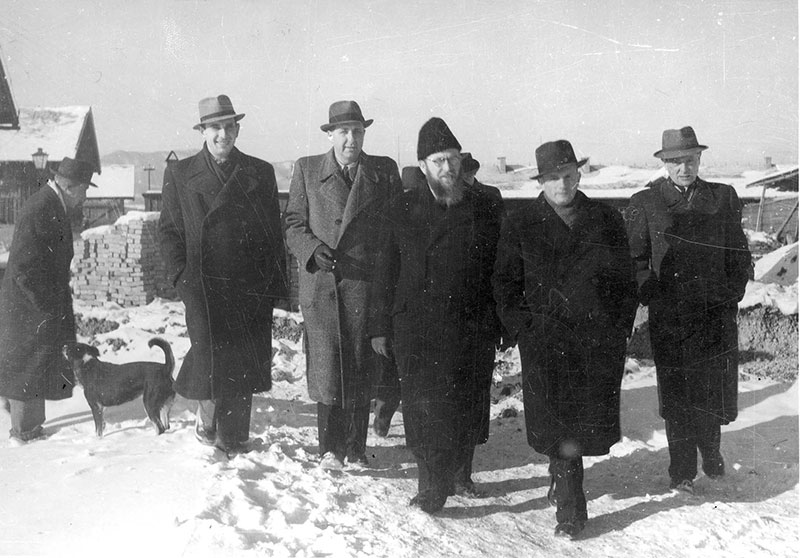
He helped stop the trains for two years. The day they came for his own family, he could not stop them — so he sawed his way out and went on alone.
Read
Before You Read
What this article holds
Topic and time
The story behind Project Witness Episode 6: Rabbi Michoel Ber Weissmandl, a Torah scholar from Nitra, Slovakia, and the clandestine Bratislava Working Group in which he served as chief strategist — alongside his relative Gisi Fleischmann, who led it. Their rescue diplomacy is tied to a documented outcome: deportation trains from Slovakia stopped for nearly two years. About twelve minutes to read, including the embedded ninety‑second microshort.
What this article describes
Rescue by intellect and nerve — a bribe paid to an SS officer, letters forged in the name of a Swiss official who did not exist, and administrative stalling; then the arrest of Weissmandl, his wife, and five children in September 1944, the saws he handed to strangers at the Seredʼ transit camp, the wire hidden in a loaf of bread, and the leap from a sealed cattle car. It names what he did, what he could not stop, and what is documented versus contested.
What this article does not depict
No graphic violence and no bodies. The murder of Weissmandl’s wife and five children at Birkenau is held through absence and architecture — empty rails, a sealed door, a distant gate. The family appears only as silhouette and silence; his wife’s name is never used. The embedded microshort is hand‑animated in stylized 3D by a human animation team — not archival footage and not AI‑generated.
Take a breath. Find your feet on the floor. You can stop at any point.
For nearly two years, the deportation trains that carried Slovakia’s Jews toward Auschwitz did not run. Behind that silence was a small clandestine network in Bratislava — a Jewish–Christian rescue group that bribed, forged, and stalled its way into buying time. Its leader was Gisi Fleischmann. Its chief strategist was a brilliant young rabbi from Nitra named Michoel Ber WeissmandlUSHMM. The methods were unglamorous and the record is disputed, but the outcome is documented: the trains from Slovakia stopped.
Then, in the autumn of 1944, they started again — and this time they came for him. On September 7, 1944, the Nazis arrested Weissmandl, his wife, and their five children at home in Nitra. He could not stop that train. But he had spent months teaching strangers how to cut their way off the cattle cars, and he had hidden a wire inside a loaf of bread. In the dark of a sealed car bound for Auschwitz, he sawed through the lock. He begged his wife and children to jump, and jumped first to show them it was possible. They could not. He went alone. His wife and five children were murdered at Birkenau. He survived, wept day and night for the rest of his life, and built a yeshiva that still teaches todayweissmandl.org. This article is the context behind the ninety seconds.
Watch
The microshort
Ninety seconds. Watch first, read after.
Final film arriving at picture-lock
Filmed in 9:16 for vertical screens.
Final film in production — the animation is being locked; the video and its captions will be wired in at picture-lock. The narration and twenty subtitle tracks are complete and already attached to this player. English narration · 90 seconds · Project Witness Microshort Stories
Why This Story Matters
Rescue at scale, and the one rescue he could not make
Holocaust education often reaches for two figures: the perpetrator and the victim. Rabbi Weissmandl belongs to a harder third category — the rescuer who saved thousands of strangers and could not save his own. The Bratislava Working Group is credited, in the documented record, with a two-year halt in the deportation of Slovak Jews. And yet the man at its strategic center watched his wife and five children carried off on the very trains he had spent years learning how to defeatweissmandl.org. That gap between rescue at scale and the intimate failure is the whole weight of this story.
The second reason is that his rescue was made of intellect, not arms. There was no uprising here, no smuggled rifle. There was a bribe, a forged signature in the name of a Swiss official who did not exist, a census slow-walked, a saw pressed into a stranger’s hand, a wire hidden in bread. This is resistance as nerve and ingenuity — and it forces a harder ethical question than a clean act of heroism ever could: what does it mean to negotiate with a mass murderer in order to buy time?
Third, the story corrects a “great man” simplification before it can form. Weissmandl did not lead the Working Group — Gisi Fleischmann did, and she was one of the most consequential Jewish leaders of the wartime resistance in Slovakia. He was its chief strategist; her leadership and his strategy belong to the record together, neither reducible to the other. Weissmandl, for his part, remains a contested figure: revered in some quarters, disputed in others, including the historian Yehuda Bauer’s reluctance to credit an Orthodox Slovak rabbi as the strategic mind of the operation. This article holds to the strictest standard — most accurate, most carefully sourced — and keeps the documented outcome separate from the claims that remain in dispute.
Historical Context
Slovakia, the Working Group, and the two years the trains did not run
A scholar from Nitra
Michoel Ber Weissmandl was born on October 25, 1903, in Debrecen, Hungary, and grew up into one of the outstanding Torah scholars of his generation. As a young man he traveled to England to research Hebrew manuscripts at Oxford’s Bodleian Library — earning the nickname “the Bodleian rabbi” — and in 1937 he married the daughter of his mentor, Rabbi Shmuel Dovid Ungar of Nitra. By the time Slovakia became a Nazi-aligned client state in 1939, Weissmandl was a rabbi with international scholarly contacts and an unusual gift for improvisation under pressure — the exact combination the coming years would demand.weissmandl.org
In the spring of 1942, as the first deportations of Slovak Jews to Auschwitz began, a clandestine rescue network took shape in Bratislava — the Pracovná skupina, or Working Group. It was headed by Gisi Fleischmann, a Zionist activist and communal leader, and it drew Jews and sympathetic Christians into a single covert operation. Weissmandl, Fleischmann’s relative, became its chief strategist. Within months the Group had settled on a desperate gamble: to buy the deportations to a stop.
The bribe, the forgery, and a documented outcome
The Group’s target was SS-Hauptsturmführer Dieter Wisliceny, Adolf Eichmann’s deputy in Bratislava — the official directly responsible for deporting more than 57,000 Slovak Jews to Auschwitz and other camps in German-occupied Poland. They offered him a bribe of roughly fifty thousand US dollars. The first twenty-five thousand was found and delivered in Bratislava; the second twenty-five thousand, awaited from abroad, arrived too late. To make the money credible, Weissmandl forged letters in the name of a fictitious Swiss official, “Ferdinand Roth” (per Fuchs, The Unheeded Cry), so that the funds would appear to come from powerful international Jewish organizations. Alongside the bribery ran a broader ransom proposal the Group called the Europa Plan — an attempt to buy the rescue of European Jewry as a wholeweissmandl.org.
What followed is documented, and it is also disputed — and the two must be kept apart. The documented fact is that, from the autumn of 1942 to the autumn of 1944, the deportation trains from Slovakia stopped. The Group bribed, forged, and stalled, and for nearly two years the trains did not run. What historians dispute is the cause: whether the bribery actually produced the halt, or whether it coincided with shifts in German and Slovak policy the Group did not control. This episode states the outcome the record supports — the trains stopped — without asserting the causal claim the record does not settle.
The trains resume, and the arrest
In late summer 1944, in the wake of the Slovak National Uprising, the Germans resumed deportations. On September 7, 1944, they arrested Weissmandl, his wife, and their five children at home in Nitra, and took them to the Seredʼ transit camp in western Slovakia. There the Rav did what he had learned to do: he distributed hand-saws and emery wires to fellow prisoners about to board the trains, and taught them how to cut through the locks of the cattle cars. Gisi Fleischmann was at Seredʼ as well. On the platform, a German “Not Wanted” sign was pinned to each of them before boarding — Weissmandl tore his off; Fleischmann did not.
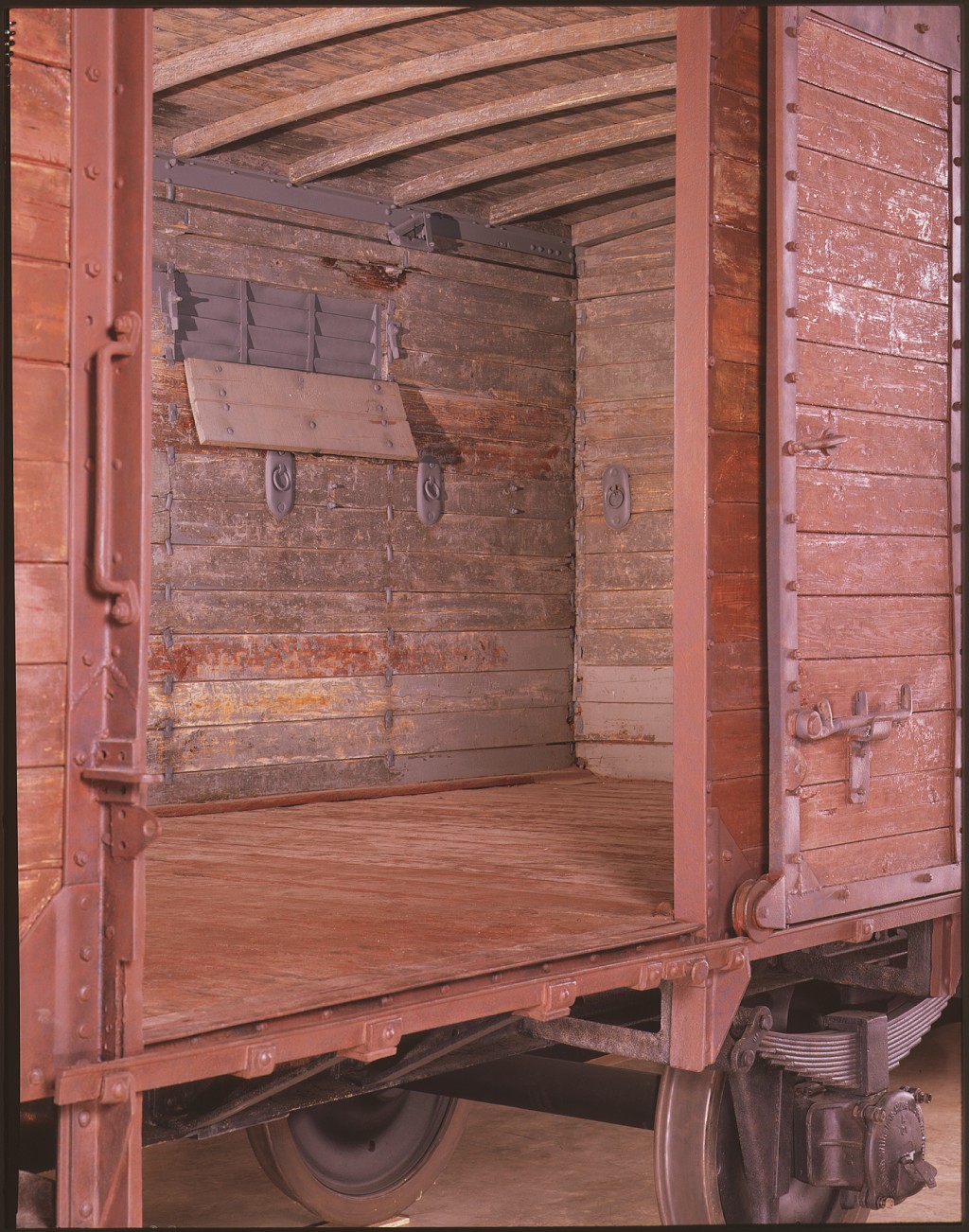
A month later, in the second week of October 1944, the Germans sealed Weissmandl and his family inside a cattle car bound for Auschwitz. He had hidden a wire inside a stale loaf of bread. In the dark, he sawed through the lock. He begged his wife and their five children to jump — and, to show them it was possible, he jumped first. They could not follow; they feared the guards would shoot. He landed alone, broke his leg in the fall, and made his way back toward Bratislava, finding shelter in a nearby village. His wife and five children were carried on to Birkenau, where they were murdered. Gisi Fleischmann did not jump either; an eyewitness later testified that she paused on the ramp at Auschwitz to wave to children pulled off the platform before she was taken to the gas chambers.
Inside a cattle car — slat-light through the wooden walls. Photo: archival reference
He was found and hidden by a righteous Slovak Christian named Julius Natali, who risked his own life for him. From there the Rav was brought into a clandestine bunker in a suburb of Bratislava, where a group of Jews and their rescuers lived concealed underground; and in the spring of 1945 he was evacuated to safety in Switzerland. Rabbi Weissmandl survived the war a widower and a bereaved father, the sole survivor of his household. That he had begged them, that he had gone first, that they could not follow — this is the precise shape of the loss. He did not leave them. He could not save them.
A note for educators, held apart from the film. The route to Switzerland ran through one of the war’s most contested episodes — the transport negotiated by Rudolf Kasztner and the SS officer Kurt Becher, by which a number of Jews were ransomed out of Nazi hands. Historians still argue over what those negotiations meant and cost. The ninety-second microshort keeps this off screen and closes on the intimate story of the man and his family; it is companion context for the classroom, not part of the film, and it should be taught as disputed rather than settled.
The People
A strategist, the leader beside him, the Nazi he bribed, and the Christian who hid him
The Working Group was not one man’s work. It was led by Gisi Fleischmann and strategized by Weissmandl; its diplomacy ran through the SS officer they bribed; and Weissmandl himself survived only because of a Slovak Christian who chose to shelter him. The wife and five children who were murdered are honored here through absence — their faces are never modeled, and her name is never used.
Rabbi Michoel Ber Weissmandl
Chief strategist · Bratislava Working Group
b. Oct 25, 1903, Debrecen · d. Nov 29, 1957, Mount Kisco, NY
Torah scholar from Nitra, Slovakia; researched Hebrew manuscripts at Oxford’s Bodleian Library in the 1930s. As chief strategist of the Working Group he bribed SS-Hauptsturmführer Wisliceny and forged letters from a fictitious Swiss official. Arrested with his family on September 7, 1944; sawed his way out of a cattle car to Auschwitz and survived alone. Wept day and night the rest of his life, and rebuilt his father-in-law’s yeshiva — first in Somerville, New Jersey (1946), then on a farm in Mount Kisco, New York (1949). It still teaches today.weissmandl.org
Zionist activist and communal leader who led the Bratislava Working Group and was Weissmandl’s relative by marriage — a central figure of the wartime Jewish rescue effort in Slovakia. Deported in the autumn of 1944; an eyewitness testified that she paused on the Auschwitz ramp to wave to children pulled from the platform before she was taken to the gas chambers.Yad Vashem
Dieter Wisliceny
SS-Hauptsturmführer · Eichmann’s deputy in Bratislava
SS perpetrator · executed for war crimes, 1948
Adolf Eichmann’s deputy in Slovakia and the official responsible for deporting more than 57,000 Slovak Jews to Auschwitz and other camps in German-occupied Poland. He was the man the Working Group bribed with tens of thousands of dollars to slow his own program. The bribe was compromise, not friendship: Wisliceny was a mass murderer, and negotiating with him was a morally weighted attempt to buy time. Captured after the war, he testified at Nuremberg and was tried and executed in Czechoslovakia in 1948.
Julius Natali
Righteous Slovak Christian · rescuer
Hid Weissmandl after his escape, 1944
A righteous Slovak Christian who found Weissmandl after his escape from the cattle car and risked his own life to hide him — the first link in a chain that led to a clandestine bunker outside Bratislava and, by the spring of 1945, evacuation to Switzerland. Project Witness interviewed Natali’s children for its documentary on Weissmandl, and his name is spoken in the microshort and inscribed on its end card — a deliberate honoring of the non-Jew who chose to save a hunted rabbi. His face is never modeled; he is present in the film through hands and shoulder, and here through the city where he sheltered a man the state wanted dead.
Rabbi Shmuel Dovid Ungar
Mentor & father-in-law · founder of the Nitra Yeshiva
Rosh yeshiva of Nitra · fled to the mountains; died in hiding, early 1945
The great rosh yeshiva of Nitra, Weissmandl’s teacher and, from 1937, his father-in-law. When the deportations closed in he fled with a group of followers into the mountains above Nitra and died in hiding in the bitter early months of 1945, not long before liberation. It was Ungar’s yeshiva — the institution Weissmandl had joined as a young scholar — that Weissmandl set out to rebuild after the war, together with his brother-in-law Rabbi Sholom Moshe Ungar. The line runs unbroken from the Nitra of before the war to the farm in Mount Kisco that carries the Nitra name today: a school rebuilt as an act of memory.
The Sequence
Four moments — the network, the saws, the lock, the gate
Four stages, following the film’s four beats. The Working Group forms. The saws pass hand to hand at Seredʼ. The wire cuts the lock in the dark. The gate stands, and beyond the loss, a school is rebuilt.
Scroll to step through · click the image to view full screen
Step 1 · The network
A rescue group takes shape in Bratislava
Step 2 · The saws
A blade pressed into a stranger’s hand
Step 3 · The lock
A wire from a loaf of bread, and the leap
Step 4 · The gate, and after
Birkenau, and a school rebuilt
Click to expand
Step 1 · The network
A rescue group takes shape in Bratislava
Spring 1942. As the first deportations of Slovak Jews to Auschwitz begin, a clandestine Jewish–Christian network forms in Bratislava — the Working Group, led by Gisi Fleischmann. Weissmandl, her relative, becomes its chief strategist. Over an oil lamp and a map, they settle on a gamble made of money and paper: bribe the SS, forge the guarantees, and stall the machinery of deportation for as long as it can be stalled.
September 1944. Arrested with his family and taken to the Seredʼ transit camp, the Rav turns captivity into instruction. He distributes hand-saws and emery wires to prisoners about to board the deportation trains and teaches them how to cut through the locks of the cattle cars. It is rescue reduced to its barest tool: a blade, a lesson, a chance passed to someone he will never see again.
Source · The Weissmandl Rescues, Project Witness microshort · Fuchs, The Unheeded Cry
Step 3 · The lock
A wire from a loaf of bread, and the leap
The second week of October 1944. Sealed in a cattle car bound for Auschwitz, Weissmandl works the wire he has hidden in a stale loaf of bread against the iron lock. In the dark, it gives. He begs his wife and five children to jump — and jumps first, to show them it is possible. They cannot. He goes alone, breaking his leg in the fall. The defining image of the film is this: the wire, the lock, the open door, and a single figure gone.
Source · The Weissmandl Rescues, Project Witness microshort
Step 4 · The gate, and after
Birkenau, and a school rebuilt
The train he could not stop carried his wife and five children through the gate at Birkenau, where they were murdered. The film renders this through architecture and absence — the arch, the empty rails — never bodies. Hidden by the righteous Slovak Christian Julius Natali, then in a bunker outside Bratislava, and evacuated to Switzerland in the spring of 1945, Weissmandl survived. He wept for the rest of his life, and he rebuilt his father-in-law’s yeshiva on a farm in Mount Kisco, New York. It still teaches today.
Source · The Weissmandl Rescues, Project Witness microshort · weissmandl.org
Voices and Sources
What the record holds
Weissmandl left his own account of these years in his writings, and Project Witness has recorded the last living voices connected to the Working Group. What we have are those testimonies, the institutional archives of USHMM and Yad Vashem, the scholarship gathered by Abraham Fuchs, and the yeshiva that carries the story forward — each linked directly below.
From a hidden room in Bratislava to a farm in Westchester County
Hidden first by Julius Natali, then in a clandestine bunker in a suburb of Bratislava, and evacuated to Switzerland in the spring of 1945, Weissmandl came out of the war a widower and a bereaved father, the sole survivor of his household. He did not recover in any ordinary sense. Students who knew him afterward testified that he wept day and night for the rest of his life, blaming himself both for the family he could not bring off the train and for the Jews he could not save. And yet, out of that grief, he builtweissmandl.org.
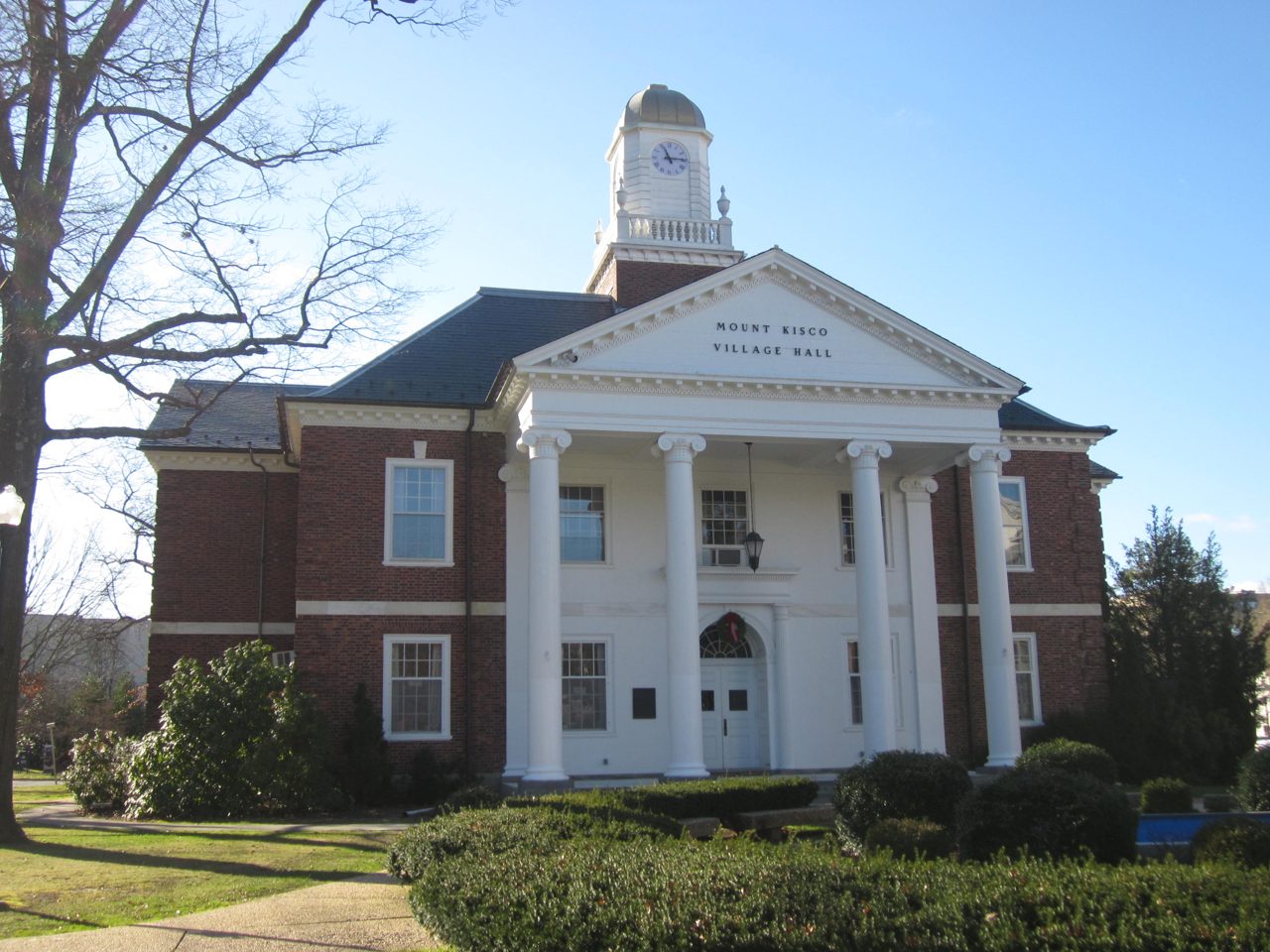
With his brother-in-law Rabbi Sholom Moshe Ungar, he set out to re-establish the Nitra Yeshiva — his father-in-law’s institution — on American soil. It began in Somerville, New Jersey, in 1946, and in 1949 moved to a farm in Mount Kisco, New York: the Yeshiva Farm Settlement, a self-sustaining agricultural Torah community. He remarried, to Leah Teitelbaum, and had six more children — a second family built after the first was lost. He died of heart disease on November 29, 1957, at the age of fifty-four. The settlement he founded still operates today.
The town of Mount Kisco, New York, where he rebuilt the yeshiva. Photo: archival (Village Hall)
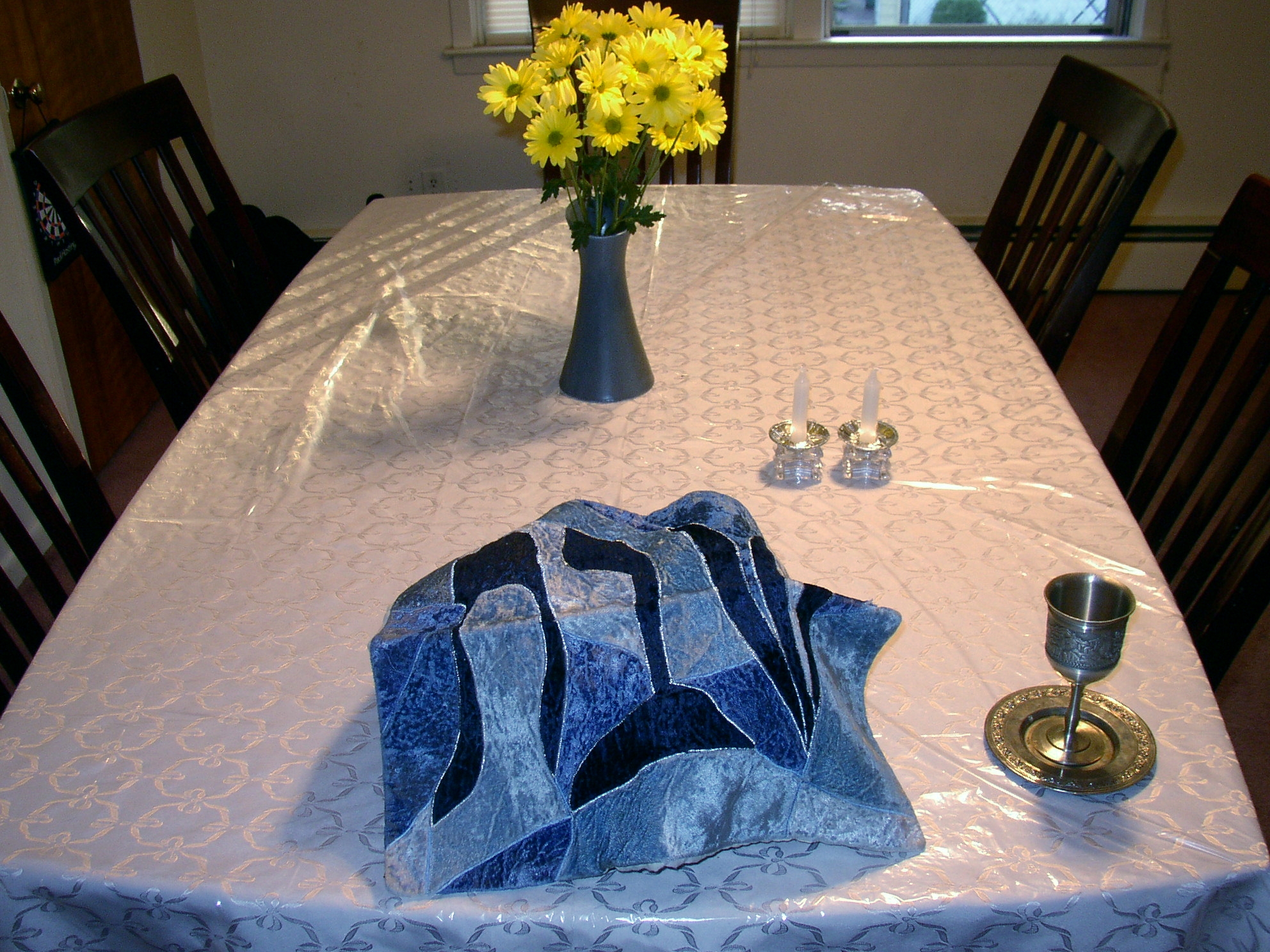
A Sabbath table — continuity rebuilt. Photo: archival
The cry that went unanswered
There is a larger chapter to Weissmandl’s war that the ninety-second film deliberately leaves off screen — but that belongs in any full account. During the war, Weissmandl and the Working Group received the Auschwitz Protocols, the detailed eyewitness report by escapees Rudolf Vrba and Alfred Wetzler describing the killing at Auschwitz-Birkenau. Weissmandl drafted the broader Europa Plan for the rescue of European Jewry and sent urgent warnings abroad — including, in the historical record, an appeal to the Allies to bomb the rail lines to Auschwitz and the death camp itself. The appeals went largely unanswered. This is the bystander dimension of the story: the free world that could have acted and did not. It is treated at length in Fuchs’s The Unheeded Cry and in the Project Witness documentary; it is background to — not depicted in — the microshort, which holds to the intimate story of the man and his family.weissmandl.org
Then & Now
Nitra before the war, and the yeshiva that carries its name today
The Jewish quarter of Nitra — the world Weissmandl came from — was destroyed in the Shoah. The yeshiva he rebuilt on a farm in Mount Kisco still carries the name of Nitra and still teaches, an unbroken line from the town that no longer holds the community that made it.
Then · Nitra, 1929
The town Weissmandl came from
Nitra’s old town seen from the castle hill, 1929. Its prewar Jewish quarter was destroyed in the Shoah, and Weissmandl was arrested here with his family in 1944. Fortepan (ID 11683), public domain
Now · Mount Kisco, NY
Mount Kisco, Westchester County
Where Weissmandl rebuilt the Nitra Yeshiva on a farm in 1949; it still teaches today — the name of Nitra carried forward. Photo: present-day aerial
Native Language Versions
Watch in French, Hebrew, or Polish
Each language version is narrated natively, not dubbed. French, Hebrew, and Polish native narrations are recorded for this episode, and twenty subtitle tracks accompany the film.
🇫🇷
Les Sauvetages de Weissmandl
Narration française native
Available
🇮🇱
הרב מיכאל בער ווייסמאנדל
קריינות עברית
Available
🇵🇱
Ratunki Weissmandla
Polski lektor natywny
Available
For the classroom
What does it mean to bargain with a murderer to buy time — and to save thousands, yet not your own?
For Educators
Teaching The Weissmandl Rescues
This episode is built for graded classroom use across three bands. The human story — a father, saws in a transit camp, a wire in a loaf, a leap, a rescuer, and a school that still runs — carries grades 7–8, with the murders held through absence. Grades 9–10 add the Working Group’s mechanics (bribe, forgery, stall), shared leadership with Gisi Fleischmann, and the moral question of negotiating with the SS. Grades 11–12 take on the full ethical weight: the impossible choices, the Europa Plan and the free world’s inaction, and the discipline of holding a documented outcome apart from a contested cause.
Interactive student experience
›Interactive lesson — coming soonGrades 9–10 · use the graded PDF for now›Interactive lesson — coming soonGrades 11–12 · use the graded PDF for now
“The Working Group bribed a mass murderer to slow his own deportations. Was that resistance, collaboration, or both at once — and what does the answer depend on?”
“The trains from Slovakia stopped for two years, but historians dispute whether the bribery caused it. What is the difference between a documented outcome and a proven cause, and why does the distinction matter for how we tell this story?”
“Weissmandl saved thousands of strangers and could not save his own wife and five children. What does the frame ‘he could not save them’ — rather than ‘he left them’ — ask us to hold?”
Teaching notes
The film’s heaviest moments are conceptual, not graphic: the wire against the lock, the open door, the empty rails, the gate at Birkenau seen only as architecture. There is no violence and there are no bodies on screen; the wife and five children appear as silhouette only, and her name is never used. Give Gisi Fleischmann her full weight as leader, and Julius Natali his name as rescuer. The cognitive load is in the ethical complexity — rescue at scale beside intimate failure, documented outcome beside contested cause. Plan classroom time so the room ends with the discussion, not the film.
One factual note the film deliberately leaves off screen but that belongs in a full account: after the leap, Weissmandl was hidden by Julius Natali, then concealed in a clandestine bunker in a suburb of Bratislava, and evacuated to Switzerland in the spring of 1945 on the transport negotiated by Rudolf Kasztner and the SS officer Kurt Becher. Present the Kasztner–Becher negotiations to older students as one of the war’s genuinely contested episodes — ransom that saved lives and remains fiercely argued over — not as a settled verdict. It is companion context, not part of the ninety-second microshort.
Safe Out
Before you close this page
Pause
He begged them, he went first, they could not follow, and he landed alone. That is a hard thing to carry, and it is meant to be. Take a few breaths before you move on.
Why we tell it anyway
Because rescue is rarely clean, and this story refuses to pretend otherwise. A man saved thousands and could not save his own; a leader named Gisi Fleischmann is given her due; a Christian named Julius Natali chose to hide a hunted rabbi. And because the school Weissmandl rebuilt still teaches — grief turned, over a lifetime, into continuity.
What to do with this feeling
Read Fuchs’s The Unheeded Cry. Watch the Project Witness documentary. Look up the Bratislava Working Group at Yad Vashem, and read about the free world’s unanswered appeals. Say the name Gisi Fleischmann, and the name Julius Natali. Talk to someone. The work of witness is not finished by reading one article.
Where to go next on Weissmandl, the Working Group, and rescue in Slovakia
The institutions and primary sources below hold the deepest published record on this episode. Each link goes directly to the relevant page.
Films and archival records to sit with when you are ready. Pick from the queue on the right; the featured player swaps in place. Click the player to play a clip, or to open the archive.
U.S. House of Representatives · Rep. Nydia Velázquez
Congress moves to award Rabbi Michoel Ber Weissmandl the Congressional Gold Medal
On the House floor, a member of Congress lays out what Reb Michoel Ber Weissmandl risked to save Slovak Jewry.
Project Witness primary-interview archive — Andrei Steiner, sole surviving member of the Bratislava Working Group (recorded in Atlanta at age 101); the children of Julius Natali; the grandson of the Stropkov Rebbe (bunker eyewitness) · Rabbi Michoel Ber Weissmandl’s own wartime writings, as gathered in Abraham Fuchs, The Unheeded Cry · recorded English narration, Episode 6.
Abraham Fuchs, The Unheeded Cry: The Gripping Story of Rabbi Chaim Michoel Dov Weissmandl (weissmandl.org) · supporting entries at weissmandl.org and the Yeshiva of Nitra.
Image provenance & rights
Slovak deportation still — Jews assembled for deportation beside the railway, Púchov, Slovakia, March 1942 · United States Holocaust Memorial Museum, Holocaust Encyclopedia · USHMM Photo Archives(not public domain — USHMM/source rights to be cleared before publication). Prewar Nitra — Nitra old town seen from the castle hill, 1929 · Fortepan / Wikimedia Commons, public domain (FOTO:Fortepan, ID 11683). Nitra origin synagogue and all remaining archival stills on this page are working references pending picture-lock; each non-public-domain image must have its rights cleared, or be replaced with a rights-clean or final asset, before publication.
Companion documentary
Project Witness, In the Footsteps of the Giant: The Life and Leadership of Harav Michoel Ber Weissmandl (2019; rescreened July 2024) · producer, Ruth Lichtenstein.
Microshort production
Project Witness · stylized 3D “Amber Clay” animation, Elaion pipeline · English narration; French, Hebrew, and Polish native narrations; twenty subtitle tracks · script and shot list LOCKED (Production Guide v16, May 26, 2026). Final film in production — animation not yet locked; visuals on this page are WIP placeholders pending picture-lock.