He signed the decree against his own Jewish subjects. Then did everything in his power to undermine it.
Read
Before You Read
What this article holds
Topic and time
The story behind Project Witness Episode 4: Sultan Mohammed V of Morocco, who at thirty-one signed a Vichy anti-Jewish decree he could not safely refuse, then spent the next two years undermining it through administrative delay and public acts of solidarity. About twelve minutes to read, including the embedded ninety‑second microshort.
What this article describes
Vichy antisemitic legislation extended to French North Africa, discriminatory laws and forced relocations under Vichy authority in Morocco, and the symbolic and administrative leverage one ruler used to protect a Jewish community of roughly 250,000 from the worst outcomes. The article names what the Sultan did, what he could not stop, and what is documented versus remembered.
What this article does not depict
No graphic violence. No deportation imagery. Real hardship under Vichy in Morocco is named honestly. The heaviest moments are conceptual: the hovering royal seal, the buried decree, the empty railway platform. The embedded microshort is hand‑animated in stylized 3D by a human animation team — not archival footage and not AI‑generated.
Take a breath. Find your feet on the floor. You can stop at any point.
On October 31, 1940, in the throne room of the Royal Palace in Rabat, a thirty‑one‑year‑old sultan named Sidi Mohammed ben Youssef—known to history as Mohammed V—affixed his Great Seal to a French decree that extended Vichy’s antisemitic laws to the Cherifian Empire of Morocco. The decree was titled, with the antiseptic precision of a colonial bureaucracy, the Dahir relatif à l’application en zone française de l’Empire chérifien de la loi du 3 octobre 1940 portant statut des juifsBO. The royal opening formula of the document, in the Sultan’s voice, read: Praise to God alone! Let it be known by these presents… What followed was a list of quotas, professional exclusions, property restrictions, and census provisions that mirrored the machinery destroying Jewish communities across occupied Europe.
He signed because open refusal under the French Protectorate carried the threat of deposition, exile, and worse. Then he and his administration spent the next two years doing the only thing left to do: dragging their feet on enforcement, telling Jewish leaders in private and in public that they remained the Sultan’s subjects, and at the November 1941 Feast of the Throne seating rabbis and Jewish community elders at the royal table as guests of honor, with Vichy officials watching from across it. By the time American troops landed in November 1942 and Vichy authority in Morocco effectively ended, real hardship had occurred — discriminatory laws, forced relocations into mellahs, internment camps for foreign refugees. But not a single Moroccan Jew had been deported to a Nazi extermination campUSHMM. A community of roughly a quarter million survived largely intact. This article is the context behind the ninety seconds.
Watch
The microshort
Ninety seconds. Watch first, read after.
Filmed in 9:16 for vertical screens.
English narration · 90 seconds · Project Witness Microshort Stories
Why This Story Matters
A young sultan, a sealed decree, and the difference between compliance and consent
Most Holocaust education focuses, with good reason, on continental Europe. The geography of the Nazi extermination program runs through Poland, Germany, Lithuania, Ukraine, Hungary, France, the Netherlands, Greece. Morocco rarely appears on the map. And so the story of what happened in French North Africa under Vichy — and what one ruler did within it — is largely absent from the standard curriculumUSHMM. That absence matters in three ways.
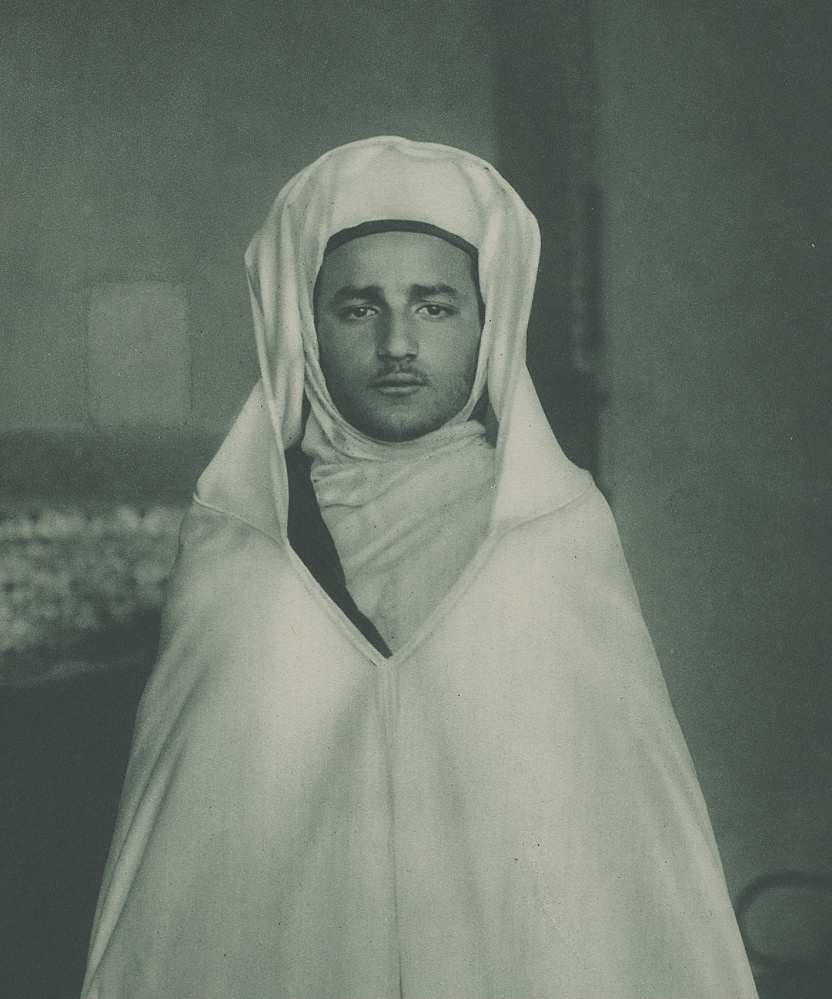
Sultan Mohammed V, ceremonial portrait c. 1927, the year of his accession. Photo: archival, public domain
First, it makes the Sephardic and Mizrahi experience of the Holocaust era invisible. Roughly 250,000 Jews lived in Morocco in 1940 — a community with continuous roots going back centuries before Islam reached North Africa, and far longer than most Ashkenazi communities of Europe. They were among the Jews of the Holocaust’s shadow. Naming what happened to them is part of telling the story wholeUSHMM.
Second, the Sultan’s story rebukes the binary that Holocaust pedagogy sometimes accidentally teaches: heroes vs. monsters, rescuers vs. perpetrators, those who resisted vs. those who collaborated. Mohammed V did both. He signed the decree. He undermined it. Both are true. The historian Robert Satloff, whose book Among the Righteous is the foundational English-language study of the Arab world’s wartime record with respect to Jews, has written that what happened in Morocco resists the simple categoriesSatloff. The complexity is the lesson.
Third, the story names a specific kind of moral act that is hard to recognize when we are trained to look only for grand refusals. Mohammed V did not throw his seal into the fire. He stamped the wax. Then his administration filed the decree at the bottom of the stack. Whether that counts as resistance is a question this film, and this lesson, leave open for the room. What is documented is the outcome: zero deportations from Morocco to Nazi extermination camps, no yellow star imposed, no stripping of citizenship, and roughly a quarter million people who survived where parallel communities elsewhere did not.
Historical Context
What was happening when the seal pressed the wax
Vichy France and the French Protectorate of Morocco
After Nazi Germany’s defeat of France in June 1940, the southern unoccupied zone was governed by the collaborationist Régime de Vichy under Marshal Philippe Pétain. Vichy’s authority extended to France’s overseas territories — including Algeria, Tunisia, and the French Protectorate of Morocco. Morocco’s formal head of state was the Sultan, of the Alaouite dynasty that had ruled the country since the seventeenth century. Real administrative power lay with the French Résident général, General Charles Noguès, who served from September 1936 to June 1943. The Sultan’s seal was constitutionally required to give French legislation the force of Moroccan law, but the Sultan’s capacity to refuse was limited by colonial reality. France had previously deposed or exiled Moroccan sultans who became inconvenient; the threat was credibleUSHMM.
The Vichy anti-Jewish legislation of October 3, 1940 — the original Statut des Juifs — was law in France within days. Its extension to Morocco took the form of a Moroccan royal decree, the dahir, signed October 31, 1940. The decree was published in the official gazette eight days later. The Sultan’s seal made it law in his own voice. Noguès countersigned for promulgation and execution.
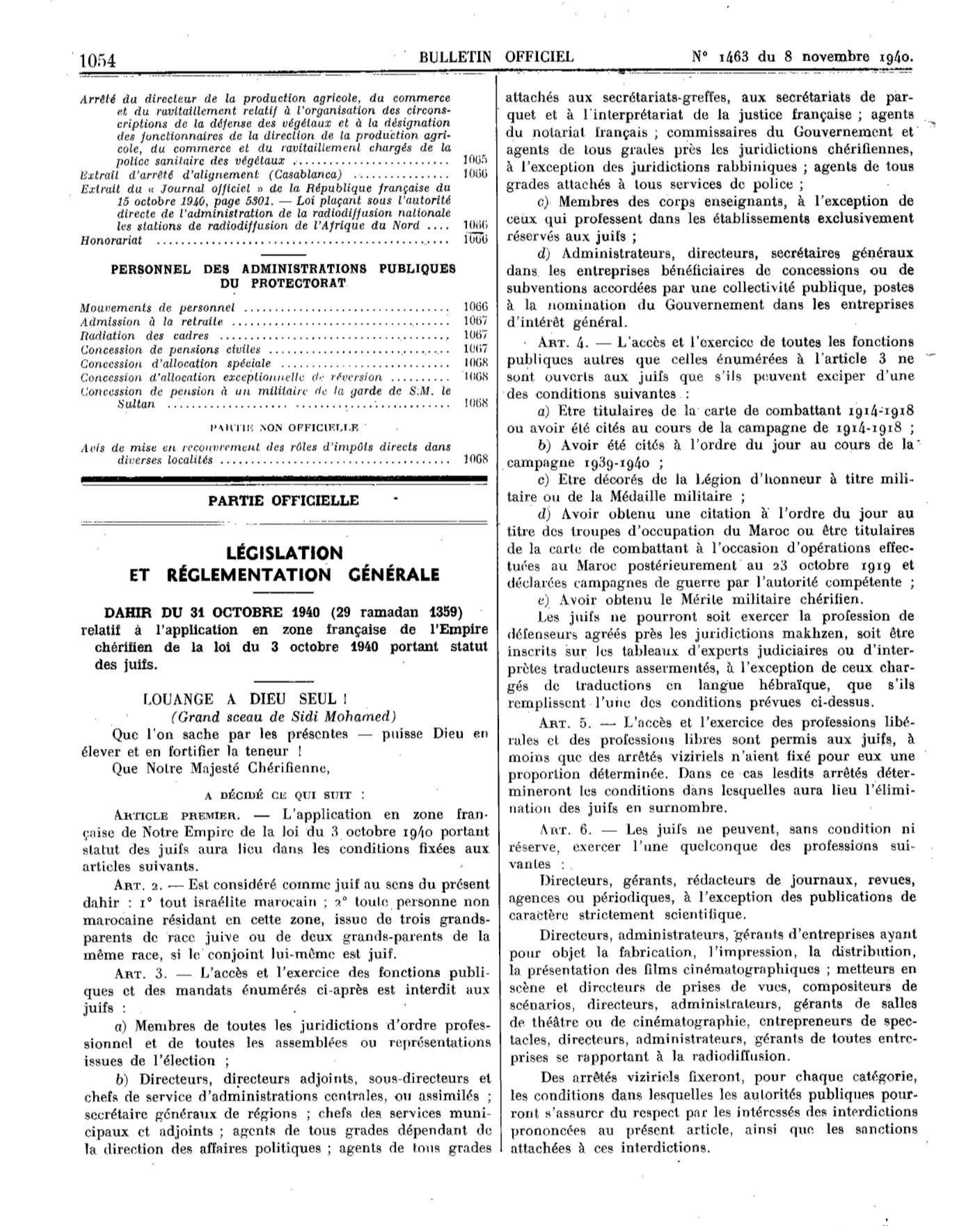
The Dahir of 31 October 1940 — the primary source
The decree itself survives in the public record. It was published in the Bulletin officiel de l’Empire chérifien, N° 1463, dated 8 November 1940, pages 1054–1056. The full PDF scan is hosted by the Africa Gazettes Archive and is accessible to anyone with an internet connection. The document opens, in the Sultan’s formal voice, with the Islamic royal preamble:
In English: Praise to God alone! Let it be known by these presents — may God elevate and strengthen their content! Our Cherifian Majesty has decided as follows… The contrast between the religious opening formula and what the decree then enacts — quotas barring Jews from professions, restrictions on property and residence, census obligations — is part of what the film’s opening shot is asking the audience to feel. The Sultan’s seal was an instrument of his religious as well as political authority. He stamped it onto a document that violated the principles that authority was supposed to express.
A page of the actual Dahir of 31 October 1940, as published in the Bulletin officiel de l’Empire chérifien N° 1463, 8 November 1940. Source: Africa Gazettes Archive · primary source PDF
What the decree did, and what then happened
The Vichy statute, as applied in Morocco, imposed numerical quotas on Jewish participation in the professions, restricted property rights, mandated a census of the Jewish population, and authorized administrative measures including, in some cities — Fez most prominently — the forced relocation of Jews from European neighborhoods back into the traditional Jewish quarters known as mellahsUSHMM. The mellahs were ancient: they had existed for centuries before Vichy, as recognized Jewish neighborhoods within Moroccan cities, with their own synagogues, courts, ovens, and markets. Forcing Jews back into them — out of mixed European-Moroccan districts where many middle-class Jewish families had moved in the protectorate decades — converted those neighborhoods into de facto containment zones. Overcrowding was severe in Fez. Documented typhus outbreaks followed in the overcrowded mellah, particularly in 1941–42. The Fez, Casablanca, and Marrakech mellahs had distinct histories and characters — Fez ancient and densely rabbinical, Casablanca newer and commercial, Marrakech bound spatially to the royal palace — and the forced relocations did not land identically across these communities.
A separate network of Vichy labor and internment camps operated across French North Africa, holding mostly foreign refugees and other people Vichy authorities classified as “undesirables.” Conditions in those camps were harsh. Moroccan Jewish nationals were not the principal population, but some were among the interned, and deaths occurred under those conditions — Bou Arfa, Oued Zem, and others held Jews on Moroccan soil. The absence of trains to Auschwitz was not the absence of mortality. The historian Michel Abitbol and others have documented these measures in detail.
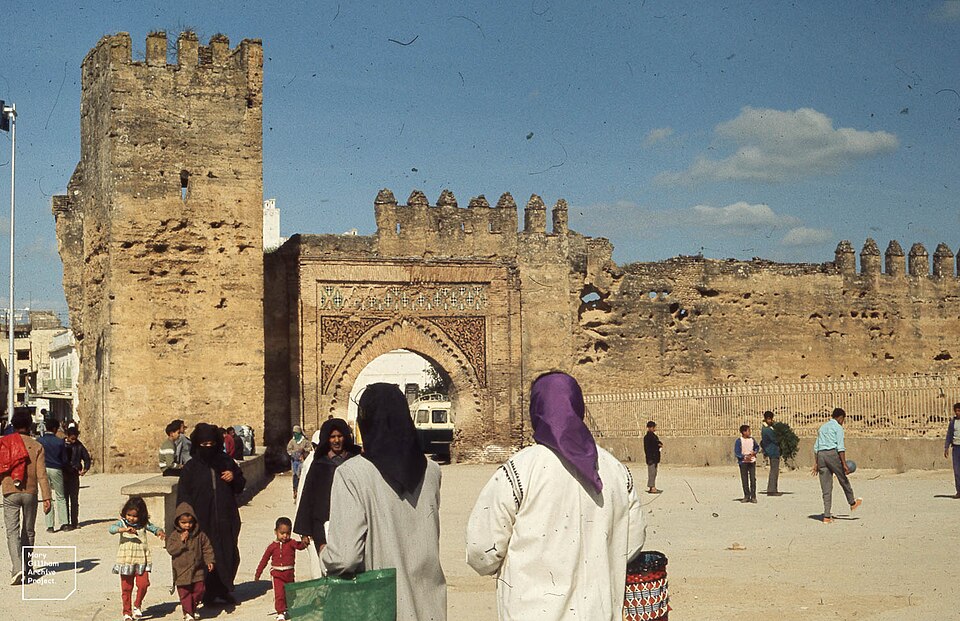
The Mellah of Fez. Photo: archival
What did not happen in Morocco, however, is the central historical fact this episode rests on. Among the categories of persecution imposed by the Nazi-Vichy machinery across occupied Europe, the following were absent in Morocco: there was no systematic imposition of the yellow star badge on Moroccan Jews; there was no formal stripping of Moroccan Jews’ status as the Sultan’s subjects; and most consequentially, there were no documented deportations of Moroccan Jews from Morocco to Nazi extermination camps. That last claim must be stated precisely. Moroccan-origin Jews living in continental France during the war were deported — some to Auschwitz. But Jews living in Morocco were not pulled out of their cities and shipped east. The trains did not comeUSHMM.
The Sultan’s resistance, in three documented forms
What Mohammed V did, within the constraints of his position, is documented in three forms. First, administrative delay: implementing decrees in Morocco required successive viziriel regulations, censuses, and bureaucratic operations that the Moroccan administration consistently slow-walked. Some provisions were never fully executed. The Sultan’s government did not refuse; it processed slowly, lost files, and asked for clarificationsSMI. The historian Michel Abitbol notes that Moroccan officials also participated actively in some Vichy administrative measures, and the delay was not uniform across the administration; the protective effect was real but not coordinated as a single strategy from the palace. Second, private reassurance: Mohammed V reportedly told Jewish community leaders, in private audiences, that the decrees had not changed their relationship to him as their sovereign. The line widely attributed to him — “There are no Jews in Morocco, only Moroccan subjects” — is not secured to a contemporaneous transcript. Robert Satloff and USHMM both flag it as oral tradition. The film honors that distinction by introducing the quote with the framing “As remembered by those he protected…”
Third, public solidarity: at the Feast of the Throne in November 1941 — the annual ceremony celebrating the Sultan’s accession — Mohammed V seated rabbis and Jewish community elders beside him at the royal table as guests of honor. Vichy officials were present in the hall, watching the protocol unfold. As recounted by Robert Satloff in Among the Righteous and supported by participant memoir and contemporaneous press, this 1941 Throne Day prominently included Jewish notables in places of honor; the precise seating choreography rests on Satloff’s synthesis of those accounts rather than on a discrete French administrative protocol record. By every standard of Moroccan court convention, the gesture was a public declaration: the Sultan was choosing, in front of his French overseers, to elevate Jewish leaders to the highest visible position of honor in his courtSMI. The gesture was performed at a moment when Vichy was visibly stripping Jewish communities of dignity everywhere else.
The People
One sultan, one general, two communities, one scholar who told the story
The decree was a transaction between two men — Mohammed V and Charles Noguès — whose names appear on it. What the decree affected was two communities. What the story has become — in English-language scholarship — began with one historian who insisted on the record.
Sultan Mohammed V
Sultan of Morocco · Alaouite dynasty
Moroccan · b. Aug 10, 1909 · d. Feb 26, 1961
Acceded to the Alaouite throne in 1927 at age eighteen. Was thirty when France fell in June 1940, turning thirty-one that August. Sealed the Vichy anti-Jewish dahir on October 31, 1940. Used administrative delay, private reassurance, and public solidarity to protect his Jewish subjects through to the end of Vichy authority in November 1942. Was exiled by France in 1953 for resisting French rule on independence; returned in triumph in 1955. Became the first king of independent Morocco in 1957. Is the grandfather of the current king, Mohammed VI.USHMM
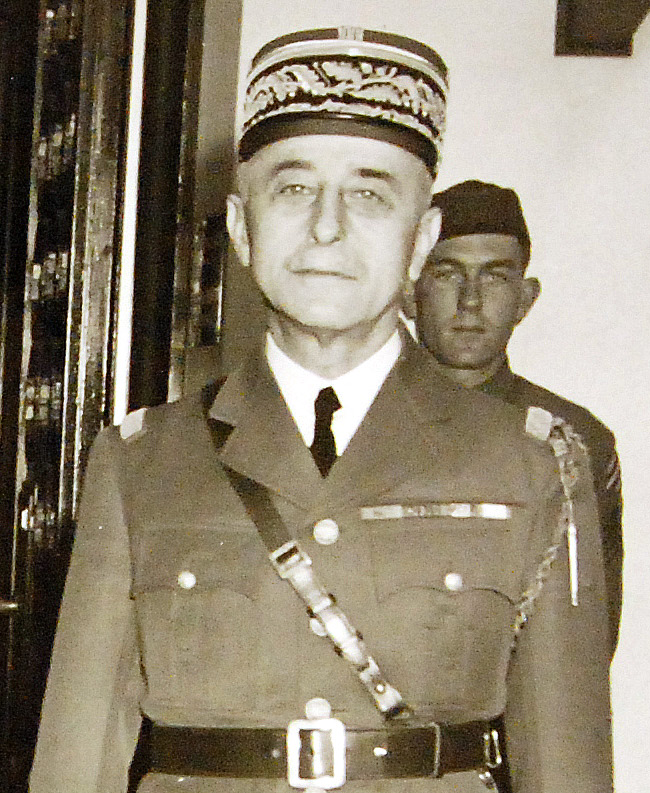
General Charles Noguès
Résident général · French Protectorate
French · b. Aug 13, 1876 · d. Apr 20, 1971
Career French Army officer; appointed Résident général of Morocco in September 1936. After the fall of France, retained office under Vichy through June 1943. Delivered the Vichy anti-Jewish statutes to the Sultan and countersigned the Dahir for execution. Continued to exercise day-to-day authority in Morocco until the Allied landings of November 1942 and the subsequent transfer of allegiance to the Free French. After the war faced charges related to his Vichy-era conduct; spent years in exile in Portugal before being amnestied.
Yahya Zagury
President · Conseil des Communautés Israélites du Maroc
Moroccan-Jewish lay leader · Vichy era
Yahya Zagury (also Yahyia Zagouri) served as president of the Conseil des Communautés Israélites du Maroc — the council representing Morocco’s organized Jewish communities — throughout the Vichy period. He was the principal lay liaison between Mohammed V’s palace and the community council during the Dahir period and was present at the November 1941 Feast of the Throne, among the Jewish notables the Sultan seated as guests of honor. Documented in Abitbol’s Les Juifs d’Afrique du Nord sous Vichy and successor scholarship.USHMM
Rabbi Sha’ul ibn Danan
Chief Rabbi of Fez · Aben Danan rabbinical line
Moroccan-Jewish religious leader · Vichy era
Rabbi Sha’ul ibn Danan (also Aben Danan) was Chief Rabbi of Fez during the Vichy period and heir to a Sephardic rabbinical line that had served the Fez community for centuries. He led the spiritual leadership of the community through the forced relocations into the Fez mellah and through the public protections of 1941–42. The Aben Danan Synagogue in the Mellah of Fez — bearing the family name — was restored in 1999 with Moroccan state support and now operates as a heritage site under King Mohammed VI, the contemporary grandson of his Sultan.
Robert Satloff & the scholarship
Historian · Among the Righteous
American · b. 1962
Executive director of the Washington Institute for Near East Policy. Published Among the Righteous: Lost Stories from the Holocaust’s Long Reach into Arab Lands in 2006 — the foundational English-language study of the Holocaust in Arab North Africa, including detailed examination of Mohammed V’s record. Satloff’s work is also where some of the more inflated heroic legends about Mohammed V are flagged as oral tradition lacking documentary support. He is rigorous on both directions: defending what the documentary record supports, declining to confirm what it does not. The lesson built on his work has to hold both.Satloff
The Sequence
From the demand to the table — four moments in two years
Four stages. The order arrives. The seal presses. The decree is buried. The table is set. Each step is small. Together they are the architecture of a protection that was not total but was not nothing.
Scroll to step through · click the image to view full screen
Step 1 · The demand
An order arrives in the throne room
Step 2 · The seal
A signature he could not safely refuse
Step 3 · The resistance
The decree disappears beneath a stack
Step 4 · The table
A public hand on a Jewish shoulder
Click to expand
Step 1 · The demand
An order arrives in the throne room
October 1940. General Noguès, the Résident général, presents the Vichy anti-Jewish statutes to Sultan Mohammed V in the throne room of the Royal Palace in Rabat. Under Protectorate law, the statutes cannot be applied to Morocco without the Sultan’s seal. Open refusal under occupation carries credible threat of deposition; sultans have been removed before. The Sultan listens. The Sultan receives the document. The Sultan does not interrupt. The geometry of constraint is already in the room.
Source · The Sultan Who Said No, Project Witness microshort
Step 2 · The seal
A signature he could not safely refuse
October 31, 1940. The Sultan affixes his Great Seal to the dahir extending Vichy’s antisemitic legislation to Morocco. Noguès countersigns for promulgation. The text is published on November 8 in the official gazette, the Bulletin officiel de l’Empire chérifien, N° 1463. The opening formula of the document is Islamic: Praise to God alone. What follows is a list of measures to strip a people. The contradiction is not a literary device. It is on the page.
Source · Bulletin officiel N° 1463 · 8 Nov 1940
Step 3 · The resistance
The decree disappears beneath a stack
The film shows it as a single shot in the administrative wing of the palace. An anonymous Moroccan official’s hand places one document on top of the signed decree. Then another. Then another. The decree slides down into shadow. The light stays on the top of the stack. This is the visual shorthand for what the historical record documents: the Moroccan administration processed the Vichy measures slowly, asked for clarifications, lost paperwork, and let provisions lapse where it could. Some never were fully executed.
Source · The Sultan Who Said No, Project Witness microshort
Step 4 · The table
A public hand on a Jewish shoulder
November 1941. The Feast of the Throne. The Sultan seats the chief rabbi and Jewish community elders beside him at the royal table as guests of honor. Vichy officials are present in the hall, watching. The hand on the Rabbi’s shoulder, the toast, the inclined head — these were performed deliberately in front of the French. It was a public declaration of belonging at a moment when Vichy was teaching Europe that Jewish belonging was a thing of the past. The inclusion of Jewish notables at the 1941 Throne Day is recounted by Robert Satloff and corroborated by participant memoir; the granular seating choreography rests on those accounts rather than on a discrete archival protocol.
Source · The Sultan Who Said No, Project Witness microshort · Satloff, Among the Righteous
Voices and Sources
What the record holds
There is no surviving voice recording of Mohammed V on this question. The Jewish leaders he protected published little contemporaneous testimony. What we have are decrees, archival photographs, the institutional analyses of USHMM and Yad Vashem, the scholarship of Robert Satloff, and the collective memory of Moroccan Jewry — recorded long after the events.
From Operation Torch to the King who would become the father of modern Morocco
Vichy authority in Morocco effectively ended on November 8, 1942, when American and British forces landed at Casablanca, Mehdia, and Safi as part of Operation Torch. Within days, the French commanders in North Africa transferred allegiance to the Free French under General Henri Giraud, and later to Charles de Gaulle. The Vichy antisemitic legislation in Morocco was not fully repealed until 1943, but the political ground under it collapsed within weeks of the landings. The remaining Sultan-led acts of resistance occurred within a ~2.5-year window of Vichy control: from June 1940 to November 1942USHMM.
Mohammed V’s position after the war hardened toward Moroccan independence. In 1953, France deposed and exiled him to Madagascar for resisting French rule. The exile galvanized Moroccan nationalism. He returned in November 1955 to a national celebration, and on March 2, 1956, Morocco achieved independence from France. The Sultan took the title of King in 1957. He died on February 26, 1961, at age fifty-one. His son Hassan II reigned for thirty-eight years; his grandson Mohammed VI is the present King of Morocco.
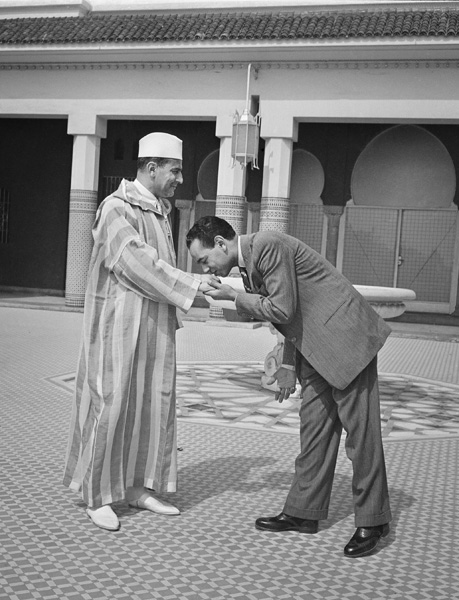
Mohammed V c. 1950. Photo: archival
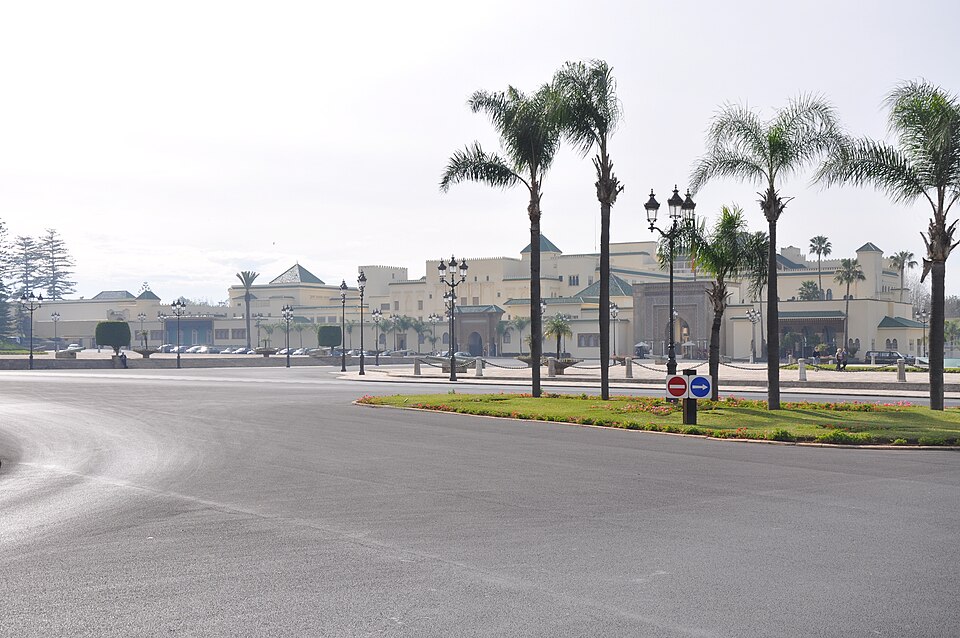
The Royal Palace in Rabat. Photo: archival
The Yad Vashem question
Mohammed V has not been recognized by Yad Vashem as Righteous Among the Nations. The Yad Vashem program requires documented life-risking rescue acts on behalf of specific Jewish individuals, and the formal criteria do not easily accommodate a head of state who acted through symbolic gestures and administrative leverage rather than personal hiding-of-individuals. Public proposals and campaigns for his recognition have circulated for decadesYV. The historical record — precisely as the film presents it — sits without that institutional honor. The question of whether it should is one of the open arguments the lesson invites students to take up.
Then & Now
Rabat, the palace, and the synagogue that still stands
The Royal Palace in Rabat is still the seat of the Moroccan monarchy. The Aben Danan Synagogue in the Mellah of Fez — the same quarter into which Vichy measures forcibly relocated Jewish families — was restored in 1999 with support from the Moroccan state and reopened as a heritage site.
Then · 31 Oct 1940
The seal presses the wax
The central act, as depicted in the microshort — the moment the hovering Hook resolves. Illustration: Project Witness microshort
Now · Fez
The Aben Danan Synagogue
One of the surviving Jewish heritage sites of Morocco, restored and reopened in 1999. Photo: archival
Native Language Versions
Watch in French or Hebrew
Each language version is narrated natively, not dubbed. French and Hebrew narrations are available for this episode.
🇫🇷
Le Sultan Qui A Dit Non
Narration française native
Available
🇮🇱
הסולטאן שאמר לא
קריינות עברית
Available
For the classroom
What does meaningful resistance look like when refusal is not a survivable option?
For Educators
Teaching The Sultan Who Said No
Three grade‑band lesson plans accompany this episode. Each includes a launch routine, vocabulary, anticipation question, comprehension and analysis prompts, a creative or analytical product, and a structured reflection. The lessons are designed to hold the historical complexity honestly — the Sultan signed, the Sultan resisted, real hardship occurred, the worst was prevented, and the famous quote is collective memory rather than secured transcript.
“Mohammed V signed the decree, then undermined it. Is that resistance, or is that complicity with a fig leaf? What does the answer depend on?”
“The most famous line of the story — ‘there are no Jews in Morocco, only Moroccan subjects’ — is collective memory, not documented transcript. What is the right relationship between historical accuracy and the stories a community needs to tell itself?”
“What does this episode teach that a story of grand refusal — a Schindler, a Wallenberg — would not?”
Teaching notes
The lesson plans build in regulation prompts before and after the microshort. The film’s heaviest moments are conceptual: the hovering royal seal, the buried decree, the empty platform that stays empty. The Vichy search of a Jewish home is depicted with restraint — an officer’s hands through a cabinet, a mezuzah in soft focus as silent anchor. There is no violence on screen. The cognitive weight is in the ethical complexity: a leader who complied formally and resisted substantively. Plan classroom time so the room ends with the discussion, not the film.
Safe Out
Before you close this page
Pause
This story refuses easy categories — signed and undermined, complicit and resistant. That ambiguity is itself a thing to sit with. Take a few breaths.
Why we tell it anyway
The Sephardic and Mizrahi communities of the Holocaust’s shadow have been quietly absent from much of the standard curriculum. Mohammed V’s Morocco is one of the few cases where the documented outcome — zero deportations from Morocco, the community largely intact — lets us teach not only what was lost but what, in one specific place, by one specific architecture of restraint, was preserved.
What to do with this feeling
Look up the Bulletin officiel scan. Read the opening preamble. Read Satloff’s chapter on Morocco. Look at a photograph of the Aben Danan Synagogue, restored in 1999. Talk to someone. The work of witness is not finished by reading one article.
Where to go next on Morocco, Vichy North Africa, and Sephardic Jewry
The institutions and primary sources below hold the deepest published record on this episode. Each link goes directly to the relevant page.
Videos and documents to watch and read when you are ready. Pick from the queue on the right; the featured player swaps in place. Click the player to load the video.
USHMM · Encyclopedia
USHMM · Morocco during the Holocaust
The institutional summary of what the Vichy statutes did in Morocco, what the Sultan did within them, and what the documented outcome was for the Moroccan Jewish community.
Dahir du 31 octobre 1940 (29 ramadan 1359) relatif à l’application en zone française de l’Empire chérifien de la loi du 3 octobre 1940 portant statut des juifs · published in Bulletin officiel de l’Empire chérifien, N° 1463, 8 November 1940, pages 1054–1056 · full PDF scan hosted by the Africa Gazettes Archive.
Robert Satloff, Among the Righteous: Lost Stories from the Holocaust’s Long Reach into Arab Lands (PublicAffairs, 2006) · Susan Gilson Miller, A History of Modern Morocco (Cambridge, 2013) · Michel Abitbol, Les Juifs d’Afrique du Nord sous Vichy (Riveneuve, 2008) · Richard Hurowitz, In the Garden of the Righteous (Harper, 2023).
Project Witness · stylized 3D animation Elaion Studio · English narration Todd · French and Hebrew narrations native · script v7 (April 23, 2026), historical claims verified against the v5 verification table.