He was seven — the youngest prisoner in Buchenwald. His father’s last charge was that the chain must not break. His brother made sure it did not.
Read
Before You Read
What this article holds
Topic and time
The story behind Project Witness Episode 5: Rabbi Yisrael Meir Lau — “Lulek” — who at age seven became the youngest known prisoner of Buchenwald, was kept alive by his elder brother, a Soviet prisoner, and an American chaplain, and grew up to be Chief Rabbi of Israel. About twelve minutes to read, including the embedded ninety‑second microshort.
What this article describes
A father’s deportation and death, a mother’s murder, two years of child forced labor, the Buchenwald children’s block, liberation on 11 April 1945, and a new life carried from a German camp to the port of Haifa. The article names a family’s destruction and the chain of people who kept one boy alive. Release of the microshort is pending the personal approval of Rabbi Lau.
What this article does not depict
No corpses, no gas chambers, no graphic violence. The mother’s face is never shown; the father’s death is kept off‑frame; the children are clothed and alive in every frame. The heaviest moments are carried by sound, posture, and shadow. The embedded microshort is hand‑animated in stylized 3D by a human animation team — not archival footage and not AI‑generated.
Take a breath. Find your feet on the floor. You can stop at any point.
He was seven years old when his mother pushed him away from her. It was November 1944, on a deportation platform in occupied Poland, and the guards were dividing the transport — women to one side, men to the other. Chaya Lau put her youngest son, Lulek, into the men’s line, toward his older brother Naftali. It was the last decision she would make for him. She was sent to Ravensbrück and murdered. The two brothers survived. The younger of them, Yisrael Meir Lau, would one day become the Ashkenazi Chief Rabbi of IsraelUSHMM.
Between that platform and that office lie two years of forced labor, a camp called Buchenwald, a Soviet prisoner who fed a hungry child, an American army chaplain who could not believe how old the boy sounded, and a father’s dying charge — given two years earlier, before he was deported to Treblinka — that a chain of generations must not be broken. This is the context behind the ninety seconds. It is not a story of a child who saved himself. It is the story of everyone who refused to let him be lost, and of the brother who kept a promise made to a murdered father.
A seven-year-old prisoner, a father’s charge, and a chain that was not broken
Most Holocaust testimony we inherit comes from adults who lived it and remembered it as adults. The child survivors are a smaller, more fragile record: many were too young to hold the names and dates, and many did not survive at all. Yisrael Meir Lau was seven years and ten months old when American soldiers reached Buchenwald — the youngest known prisoner in the camp. That he lived to tell it, in precise and lifelong detail, makes his testimony rare in a specific wayUSHMM. That absence, and that survival, matter in three ways.
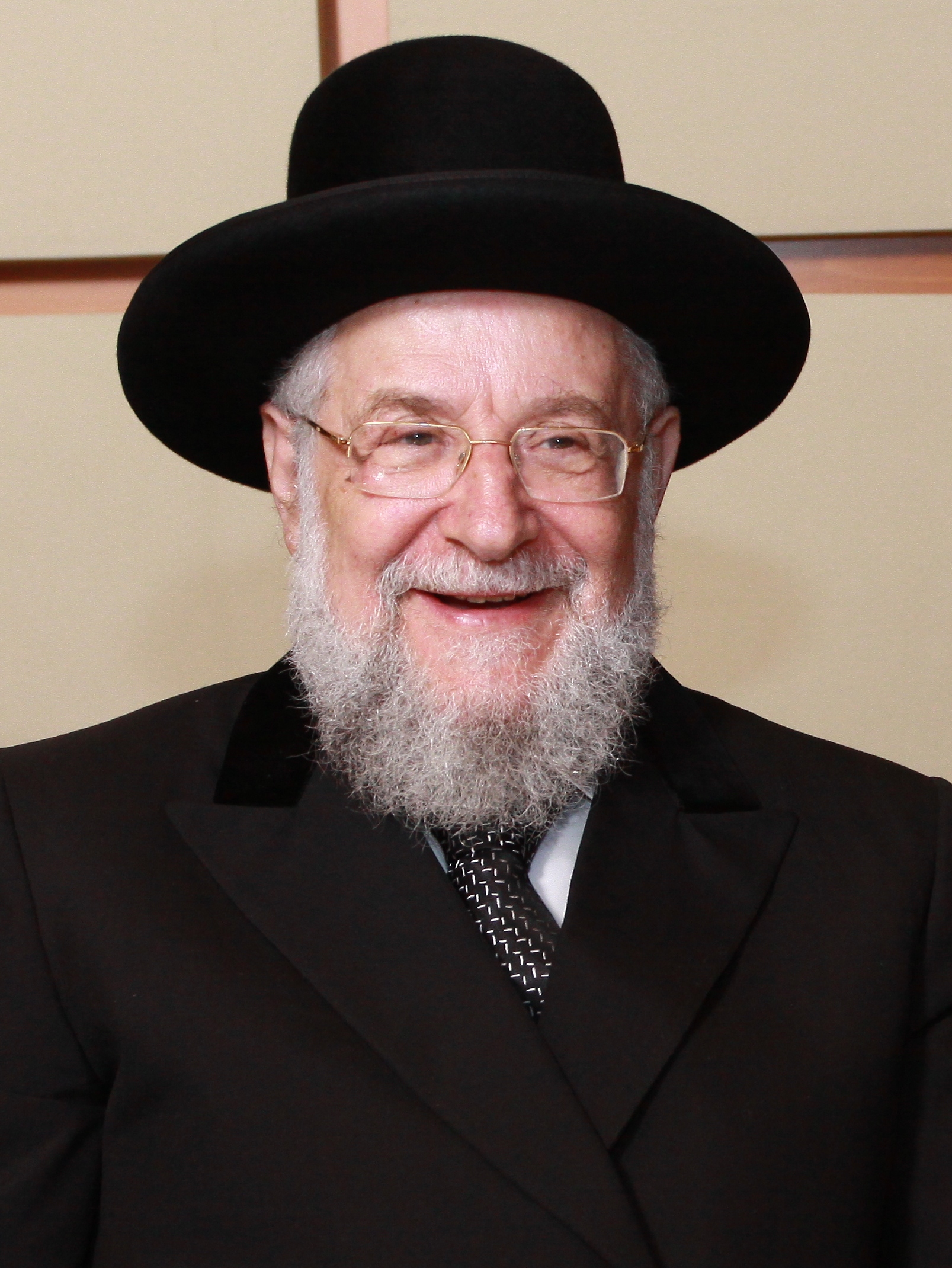
Rabbi Yisrael Meir Lau, later Chief Rabbi of Israel. Archival photograph.
First, it puts a child at the center of the frame without turning him into a symbol. Lulek is not an emblem of innocence; he is a specific boy from Piotrków with a name, two brothers, and a place as heir to a rabbinic line thirty‑seven generations deep — the thirty‑eighth himself. The film insists on the particular: his dark, watchful eyes; the carts he pushed between furnaces; the potato pressed into his hand. Precision is a form of dignity.
Second, it is a story about being saved, not about saving oneself. A mother’s shove on a platform. An older brother who smuggled him in a sack. A Soviet prisoner who stole potatoes for him. An American chaplain who lifted him in his arms. At every step the boy was kept alive by someone else’s decision to protect him. The heroism in this story is almost entirely other people’s.
Third, it is a story about transmission. Before he was deported to Treblinka, Lulek’s father charged his elder son with a task larger than survival: to carry an unbroken chain of rabbis into the next generation. That the youngest son became Chief Rabbi of Israel fifty‑one years later is the answer the film builds toward — an answer secured not by the child but by the brother who kept the promise.
Historical Context
Piotrków, Treblinka, and the road to Buchenwald
A living Jewish city and its rabbi
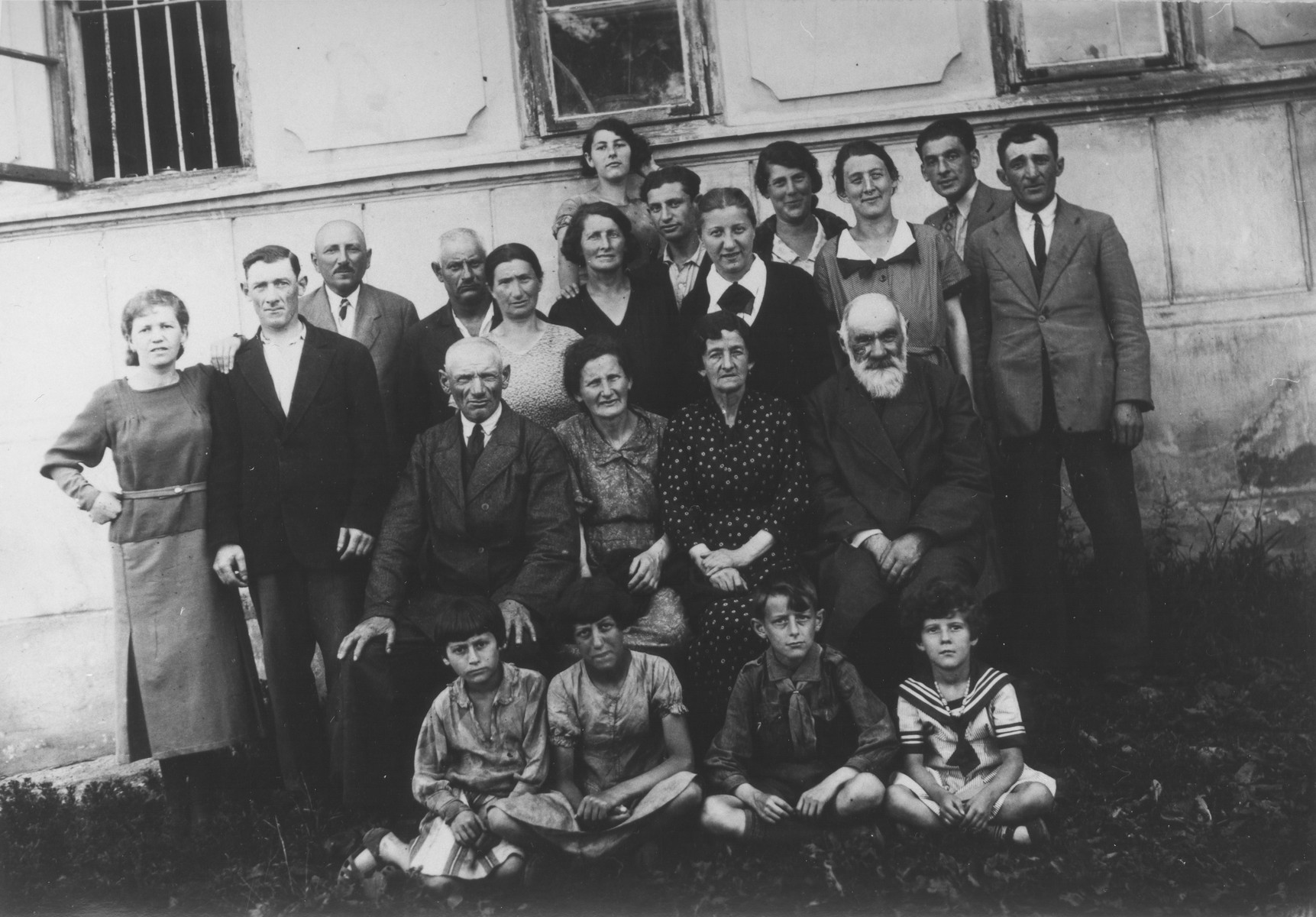
Yisrael Meir Lau was born on 1 June 1937 in Piotrków Trybunalski, a Polish city with a deep and living Jewish community. His father, Rabbi Moshe Chaim Lau, was the last chief rabbi of Piotrków and, by the family’s own reckoning, the thirty‑seventh generation in an unbroken line of rabbis. In October 1939 Piotrków became the site of the first Jewish ghetto in Nazi‑occupied Europe. Lulek was a small boy inside it, the youngest of three brothers — eleven years younger than Naftali, the eldestUSHMM.
In October 1942, as the ghetto was being liquidated, German police beat Rabbi Moshe Chaim Lau for refusing to shave his beard. He staggered, and he straightened. Before he was deported and murdered at the Treblinka extermination camp that same month, he gave his eldest son, Naftali, a charge that would become the spine of this whole story: he named himself the thirty‑seventh generation, said the Germans meant to break the chain, and told Naftali that if he survived he must be a father to Yisrael — the chain must not break.
The father’s charge — the primary source
The words of that charge survive because both surviving sons recorded them. Rabbi Lau set them down in his memoir Out of the Depths (Sterling, 2011), and his brother Naftali Lau‑Lavie gave his own account in Balaam’s Prophecy (Koren, 2015). The charge is the reason Naftali refused, again and again over the next years, to be separated from his little brother:
From roughly the age of five and a half, Lulek was put to forced labor, pushing iron‑wheeled glass carts between the furnaces of the Hortensja glass factory in Piotrków — work near heat that reached well over a hundred degrees. When the remaining prisoners were moved west in November 1944, the family was caught up in the deportation. On the platform, Chaya Lau pushed her seven‑year‑old into the men’s line beside Naftali. She was sent to Ravensbrück. She did not come back.
Buchenwald and the children’s block
After the separation, the brothers were held for a time at the HASAG forced‑labor camp at Częstochowa. As the Soviet advance neared, the surviving prisoners were transported west, and in January 1945 Naftali smuggled his little brother into the Buchenwald concentration camp, hidden in a sack wrapped inside a feather quilt. Lulek was placed in Block 8, one of the camp’s children’s blocks, which held Soviet prisoners of war and a small number of Jewish children. There a Soviet prisoner named Feodor Mikhailichenko, himself only about eighteen, fed the boy stolen potatoes and knit him earmuffs from wood splinters against the cold. Feodor protected Lulek as a Polish child — not as a Jewish one — and that distinction matters to telling the story honestly. Naftali, elsewhere in the camp, slipped his brother pieces of bread whenever he couldYV.
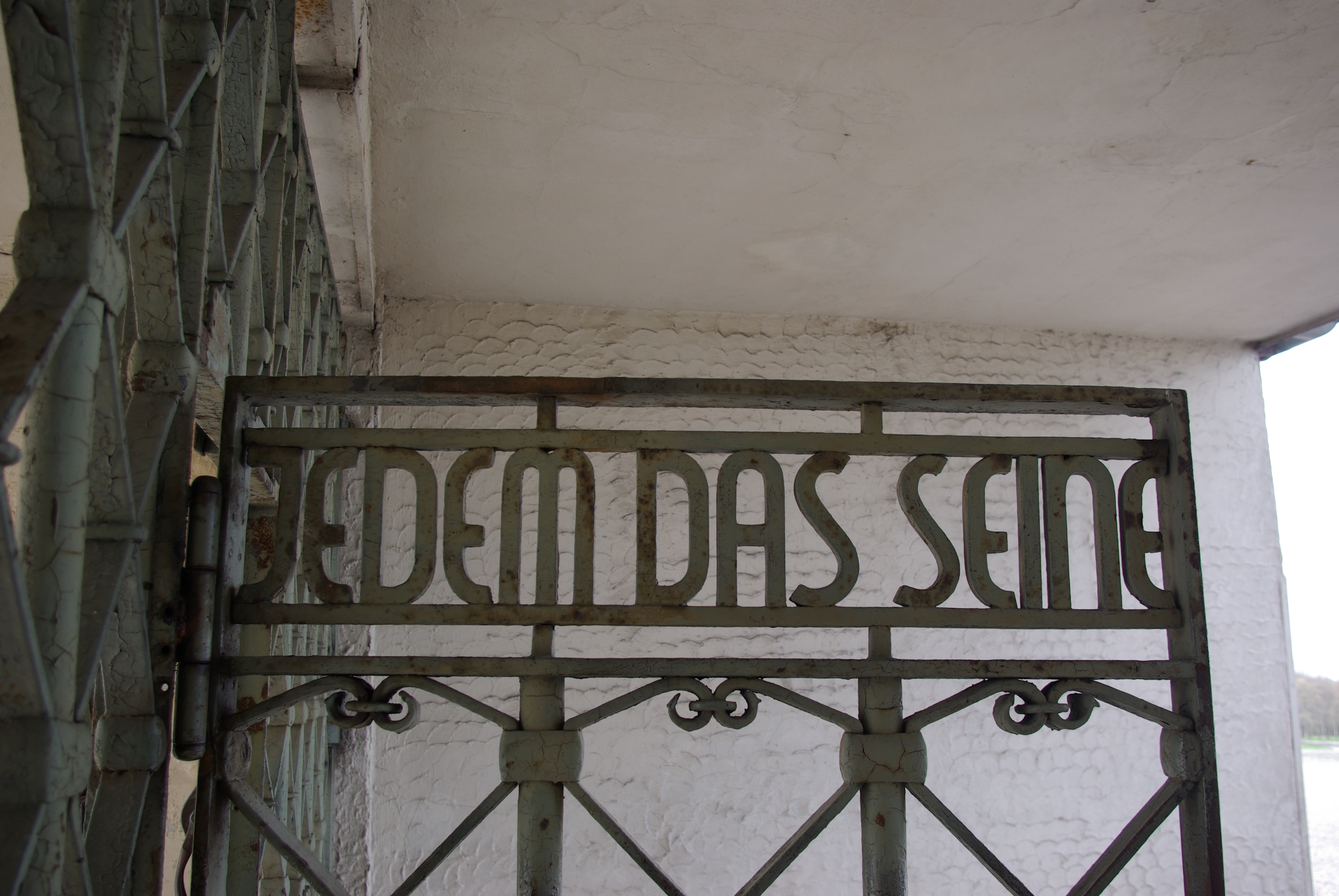
The main gate of Buchenwald. Archival photograph.
Liberation, 11 April 1945
On 11 April 1945, soldiers of the United States 6th Armored Division reached Buchenwald. Among the survivors was a boy of seven years and ten months — the youngest known prisoner in the camp. He was not found on a corpse pile; he was found in the shadow of a barrack doorway, a frightened child in clothes too big for him. Within days a United States Army chaplain, Rabbi Herschel Schacter, was moving through the barracks calling out in Yiddish, and the exchange that followed between the young chaplain and the child who had stopped laughing would become the most documented moment of Lulek’s survival — and the emotional center of the filmUSHMM.
The People
A boy, the brother who kept him, and the three who fed and freed him
This is not the story of one child alone. It is the story of a family broken by murder and a chain of protectors — a father, a mother, an older brother, a Soviet prisoner, an American chaplain — each of whom made a decision that kept Lulek alive. The mother, Chaya Lau, is present in every telling and shown in none: her face is never depicted. The kerchief on the empty platform is the mother.
Rabbi Yisrael Meir Lau
“Lulek” · Child survivor · Chief Rabbi of Israel
Polish‑Israeli · b. June 1, 1937, Piotrków
The youngest of three brothers, son of Piotrków’s last chief rabbi and the thirty‑eighth generation of an unbroken rabbinic line. Put to forced labor at the Hortensja glass factory from about age five and a half; smuggled into Buchenwald at seven; liberated on 11 April 1945 at seven years and ten months — the camp’s youngest known prisoner. Raised in Haifa, he entered a Jerusalem yeshiva at his bar mitzvah, served as Ashkenazi Chief Rabbi of Israel from 1993 to 2003, and has chaired the Yad Vashem Council since 2008.USHMM
Naftali Lau‑Lavie
“Tulek” · Elder brother · The keeper of the charge
Polish‑Israeli · b. 1926
Eleven years older than Lulek; eighteen at the November 1944 deportation, nineteen at liberation. He received their father’s charge to be a father to Yisrael and keep the chain unbroken, and he made it the organizing decision of his young life: he smuggled his brother into Buchenwald in a sack, slipped him bread, and after the war steered him to Eretz Yisrael. He became an Israeli diplomat and journalist and served as Consul of Israel in New York. Project Witness interviewed him in Israel, months before his passing. He is the thesis of this story: the chain held because of the brother.
Rabbi Moshe Chaim Lau
The father · Last chief rabbi of Piotrków
Polish · murdered at Treblinka, October 1942
The thirty‑seventh generation of the family’s rabbinic line and the last chief rabbi of Piotrków. In October 1942 German police beat him for refusing to shave his beard; he staggered and straightened — resistance, not victimhood. Before he was deported to Treblinka and murdered, he charged his eldest son to carry the chain into the future. His death is never shown on screen; it is carried by sound and posture. The whole ninety seconds is built to answer his last request.
Feodor Mikhailichenko
Soviet prisoner of war · Buchenwald Block 8
Russian · Righteous Among the Nations, 2009
A Soviet prisoner of war from Rostov‑on‑Don, only about eighteen himself, held in Buchenwald’s Block 8. He fed the small boy stolen potatoes and knit him earmuffs from splinters of wood to keep him from freezing. Crucially, Feodor protected Lulek as a Polish child — he did not know the boy was Jewish, and the honesty of the story depends on not implying otherwise. Decades later, at Rabbi Lau’s urging, Yad Vashem recognized Feodor Mikhailichenko as Righteous Among the Nations in 2009.YV
Rabbi Herschel Schacter
United States Army chaplain · Liberation of Buchenwald
American · with the U.S. force at Buchenwald, April 1945
A United States Army chaplain of about twenty‑eight, attached to the American force that reached Buchenwald. He went through the barracks calling out “Shalom Aleichem, Yidden — ihr zint frei!” (“Peace unto you, Jews — you are free!”) and found Lulek hiding. Their exchange — “How old are you, my child?” / “I am older than you” — is the moment the whole film turns on. In every frame he wears the American officer’s uniform and the chaplain’s tablets; he never looks like a prisoner. Project Witness interviewed him in the Bronx.
The Sequence
From the platform to the port — five moments in one life
Five beats. A mother’s hand. A father’s charge. Two years of labor and a camp. A chaplain who could not believe how old the boy sounded. And a new life carried to Haifa. Each moment is a decision by someone to keep one child alive.
Scroll to step through · click the image to view full screen
Beat 1 · The hand
A mother pushes her son into the men’s line
Beat 2 · The charge
A father’s last words before Treblinka
Beat 3 · Two years
Carts between the furnaces, then a camp
Beat 4 · Liberation
“How old are you, my child?”
Beat 5 · The chain holds
From a German camp to the port of Haifa
Click to expand
Beat 1 · The hand
A mother pushes her son into the men’s line
November 1944. On the deportation platform, the guards divide the transport — women one way, men the other. Chaya Lau pushes her seven‑year‑old, Lulek, toward his older brother Naftali in the men’s line. It is the last decision she makes for him. She is sent to Ravensbrück and murdered. In the film her face is never shown; a kerchief left on the empty platform is the mother. The heaviest thing in the frame is a gesture of love that looks, for a moment, like rejection.
Source · Lau, Out of the Depths · Project Witness microshort
Beat 2 · The charge
A father’s last words before Treblinka
October 1942, two years earlier. In Piotrków, German police beat Rabbi Moshe Chaim Lau for refusing to shave his beard. He staggers, then straightens. Before he is deported to Treblinka and murdered, he charges his eldest son, Naftali: I am the thirty‑seventh generation. The Germans want to break this chain. If you survive, be a father to Yisrael. The chain must not break. His death is kept entirely off‑frame. What survives is the charge — and a brother who will spend the war keeping it.
Source · Naftali Lau‑Lavie, Balaam’s Prophecy · Lau, Out of the Depths
Beat 3 · Two years
Carts between the furnaces, then a camp
From about the age of five and a half, Lulek is put to forced labor, pushing iron‑wheeled glass carts between furnaces at the Hortensja works in Piotrków. In January 1945 Naftali smuggles him into Buchenwald, hidden in a sack wrapped in a feather quilt, and gets him into Block 8, a children’s block. There a Soviet prisoner named Feodor feeds him stolen potatoes and knits him earmuffs from wood splinters; Naftali slips him bread. A seven‑year‑old is kept alive by an older brother and a stranger who thinks the boy is simply Polish.
Source · USHMM · Yad Vashem · Project Witness microshort
Beat 4 · Liberation
“How old are you, my child?”
11 April 1945. The U.S. 6th Armored Division reaches Buchenwald. A chaplain, Rabbi Herschel Schacter, moves through the barracks calling out in Yiddish and finds a frightened boy. “How old are you, my child?” he asks. “I am older than you,” the boy answers. “You are older than me?”“You laugh and cry like a child — but I haven’t laughed in years.” The camera holds on Lulek’s eyes; it turns to the chaplain’s silent tears only on the last line. The exclamation is weight, not volume — the quiet incredulity of a child.
Source · Lau, Out of the Depths · Project Witness interview with Rabbi Herschel Schacter
Beat 5 · The chain holds
From a German camp to the port of Haifa
After liberation, Lulek is brought west to the OSE children’s home at Écouis, France, and then sails for the Land of Israel aboard the RMS Mataroa, reaching Haifa on 15 July 1945. He is raised in Haifa by an aunt and uncle; at his bar mitzvah he enters a yeshiva in Jerusalem. Decades later he becomes Ashkenazi Chief Rabbi of Israel — securing, through his older brother, the generational chain for which his father had died. The thirty‑seventh generation’s charge is answered by the thirty‑eighth.
Source · USHMM · Lau, Out of the Depths · Project Witness microshort
Voices and Sources
What the record holds
This story is unusually well‑documented for a child survivor’s, because the two brothers who lived it wrote it down and because Project Witness recorded the people who were there. What follows are the institutional records, the survivors’ own memoirs, and the primary interviews on which this article rests.
From Écouis to Haifa to the office his father died for
After liberation, Yisrael was moved west with other child survivors to the OSE children’s home at Écouis in France, one of the transit points where Jewish relief organizations gathered orphaned children. From there he sailed for the Land of Israel aboard the RMS Mataroa, arriving at the port of Haifa on 15 July 1945 — three months and four days after Buchenwald’s gate opened. He was eight years oldUSHMM.
In Haifa he was raised by an aunt and uncle. At his bar mitzvah he entered a yeshiva in Jerusalem, and the rabbinic education his father’s line had carried for thirty‑seven generations resumed in him — the thirty‑eighth. He served as Ashkenazi Chief Rabbi of Israel from 1993 to 2003, and since 2008 he has chaired the Council of Yad Vashem. His brother Naftali, who had kept him alive and steered him home, became an Israeli diplomat and journalist and served as Consul of Israel in New York.
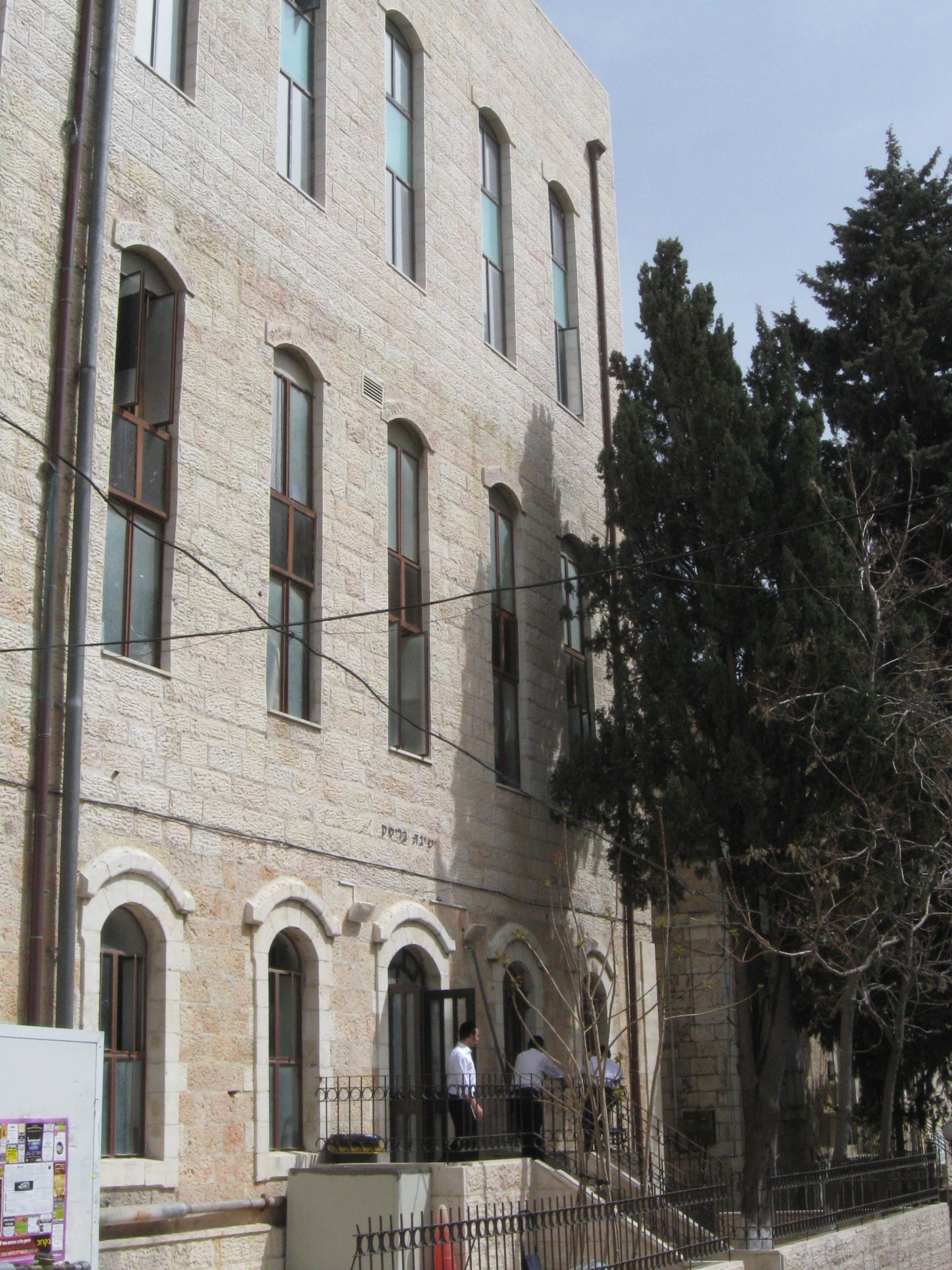
A Jerusalem yeshiva — where the chain resumed. Archival photograph.
The thesis: the brother, not the boy
It would be easy to tell this as the story of a miraculous child. The film refuses that. At every turn Lulek is saved — by his mother’s shove, his father’s foresight, his brother’s bread and sack, Feodor’s potato, Schacter’s arms. The chain of generations survived the Holocaust not because of the youngest son but because of the eldest, Naftali, who took a dying father’s charge and made it the work of his own life. When Rabbi Lau was installed as Chief Rabbi, his brother went with him to the Western WallYV.
Then & Now
The boy at the gate, and the guardian of memory
On 11 April 1945 he was the youngest prisoner in Buchenwald, a child in a barrack doorway. Since 2008 he has chaired the Council of Yad Vashem, the world’s center for Holocaust remembrance. The distance between the two images is the whole story.
Then · 11 Apr 1945
Buchenwald, at liberation
American soldiers of the force that reached Buchenwald, where the youngest prisoner was found in a barrack doorway. Archival photograph.
Now · Yad Vashem
The survivor as guardian
Rabbi Yisrael Meir Lau, who has chaired the Council of Yad Vashem since 2008 — the child survivor become a guardian of memory. Archival photograph.
Native Language Versions
Watch in the language of your classroom
This episode ships with native narrations in English, French, Hebrew, Spanish, and Polish, and subtitle tracks in roughly twenty languages so it can be taught anywhere.
🇺🇸
The Child Survivor of Buchenwald
Native English narration
Available
🇫🇷
L’Enfant Survivant de Buchenwald
Narration française native
Available
🇮🇱
הילד ששרד את בוכנוואלד
קריינות עברית
Available
🇪🇸
El Niño Superviviente de Buchenwald
Narración nativa en español
Available
🇵🇱
Dziecko, które przeżyło Buchenwald
Polska narracja
Available
Subtitle tracks are shipped in English, Arabic, Cantonese, Dutch, Farsi, French, German, Hebrew, Hindi, Italian, Japanese, Korean, Mandarin, Polish, Portuguese, Russian, Spanish, Turkish, Urdu, and Yiddish — roughly twenty languages, selectable from the video player above.
For the classroom
What does it mean to be saved — and who has to survive with you for you to survive at all?
For Educators
Teaching The Child Survivor of Buchenwald
This episode is built for age‑tiered teaching across grades 7–8, 9–10, and 11–12. Younger students meet the human relationships and the Schacter dialogue — the boy who was older than a grown man — with the mechanics of death kept implied and off‑frame. Older students take up the deathbed charge and the thirty‑seventh‑to‑thirty‑eighth‑generation chain, the moral nuance of Feodor protecting a “Polish” child, and the ethics of representation: why the film refuses to show corpses, the mother’s face, or the father’s death.
“At every turn Lulek is saved by someone else — his mother, his brother, Feodor, Schacter. What does this story teach about survival that a story of a self‑rescuing hero would not?”
“Feodor Mikhailichenko protected Lulek believing he was a Polish child, not a Jewish one. Does that change what his act means? Why is it important that we tell it accurately?”
“A father’s charge — ‘the chain must not break’ — was answered fifty‑one years later. What is the relationship between one family’s continuity and the survival of a whole people after genocide?”
Teaching notes
The film observes strict boundaries that the classroom should honor: no corpses, no gas chambers, no SS faces in close‑up, and the children clothed and alive in every frame. The mother’s face is never shown and her death is off‑frame; the father’s beating is carried by sound and posture, with no blood, and his death at Treblinka is never depicted. The Schacter exchange is the emotional center — the exclamation in “I haven’t laughed in years” is weight, not volume. Plan classroom time so the room ends with the discussion, not the film. Note for planning: public release of the microshort is pending the personal approval of Rabbi Lau.
Safe Out
Before you close this page
Pause
A child said, “I haven’t laughed in years.” That sentence is a lot to hold. You do not have to move past it quickly. Take a few breaths and find your feet on the floor.
Why we tell it anyway
Child survivors are among the rarest witnesses of the Holocaust, and most did not live to speak. Lulek did — and he grew into a guardian of the memory itself. His story lets us teach not only what was destroyed but the chain of people who refused to let one boy be lost, and the promise a brother kept across fifty‑one years.
What to do with this feeling
Read the brothers’ own words in Out of the Depths and Balaam’s Prophecy. Look up Feodor Mikhailichenko’s recognition as Righteous Among the Nations. Learn the name of one child survivor near you. Talk to someone. The work of witness is not finished by reading one article.
Where to go next on Buchenwald, child survivors, and Rabbi Lau
The institutions and memoirs below hold the deepest published record on this episode. Each link goes directly to the relevant page.
Rabbi Yisrael Meir Lau, Out of the Depths: The Story of a Child of Buchenwald Who Returned Home at Last (Sterling, 2011) · Naftali Lau‑Lavie, Balaam’s Prophecy: Eyewitness to History, 1939–1989 (Koren, 2015) · Project Witness primary interviews with Rabbi Yisrael Meir Lau, Rabbi Herschel Schacter (Bronx), and Naftali Lau‑Lavie (Israel).
The child in the hero image and in the story of the departure from Écouis (IMG 01) and the portrait of the father, Rabbi Moshe Chaim Lau (IMG 05), are courtesy of the United States Holocaust Memorial Museum (the Écouis / RMS Mataroa series). The prewar Jewish family of Piotrków, c.1935, is courtesy of the United States Holocaust Memorial Museum, Photo Archives (Photo #44239, courtesy of Dr. Mark Wolraich) — rights being cleared. The two Lau brothers, Naftali and Yisrael (“Lulek”), 1945, are courtesy of the United States Holocaust Memorial Museum, Photo Archives (Photo #38341, courtesy of Vivette Herman Samuel) — rights being cleared. Rabbi Herschel Schacter leading the Shavuot service at liberated Buchenwald, 18 May 1945, is a U.S. Army Signal Corps photograph held by the United States Holocaust Memorial Museum courtesy of the National Archives and Records Administration (Photo #26278) — public domain. Remaining archival images are marked “Archival — source to be confirmed” where the holding repository is not yet verified; none are AI‑generated. Image rights and licensing for every archival photograph must be confirmed in writing before any public release of this article.
Image provenance & rights
Verified repositories for the sourced photographs used in this article: the prewar Piotrków Jewish family, 1935 — USHMM Photo Archives #44239 (courtesy Dr. Mark Wolraich), rights being cleared; the two Lau brothers, 1945 — USHMM Photo Archives #38341 (courtesy Vivette Herman Samuel), rights being cleared; Rabbi Herschel Schacter leading Shavuot at liberated Buchenwald, 18 May 1945 — U.S. Army Signal Corps / NARA #26278 (held at USHMM), public domain. Images still marked “Archival — source to be confirmed” have not yet had their holding repository verified and will be cleared or replaced before public release; none are AI‑generated.
Scholarly works
Kenneth Waltzer, research on the Buchenwald children’s blocks and the rescue of young prisoners · the Rabbi Herschel Schacter Foundation record of the liberation chaplaincy · Yad Vashem archival scholarship on the Piotrków ghetto and the HASAG camps.
Long-form journalism
Contemporary obituary and feature coverage of Rabbi Herschel Schacter and of Rabbi Yisrael Meir Lau’s survival and reunion with the family of Feodor Mikhailichenko.
Microshort production
Project Witness · stylized 3D animation in the “Amber Clay” style · native narrations in English, French, Hebrew, Spanish, and Polish · subtitles in roughly twenty languages · script and historical claims verified against the locked v16.2 production guide and the 26 May 2026 locked narration. Public release is pending the personal approval of Rabbi Yisrael Meir Lau.